
Home Security Camera Laws in Canada: Avoiding Disputes
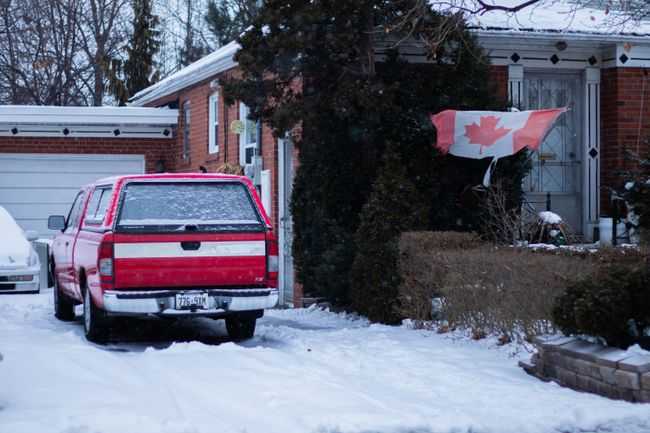
A search for home security camera laws in Canada can conjure up plenty of opinions and not much clarity. That's because there is no single, standalone security camera law in this country. Recording your own property is legal almost everywhere by default.
This is where the ambiguous fine lines create risk, spread across four layers of law, and this guide is created to walk you through each of the four layers so you know where the real lines sit.
- Is a Home Security Camera Legal in Canada?
- Does PIPEDA (or Your Province's Privacy Law) Actually Apply to Your Camera?
- Where You Can't Point a Camera
- Recording Audio Is a Different, Stricter Question
- Condo, Strata, and Rental Rules That Go Beyond Provincial Privacy Law
- If Your Camera Doubles as an Alarm: Permits, False-Alarm Fines, and Insurance
- Best Practices That Aren't Legally Required (But Will Save You a Dispute)
- FAQs
- Conclusion
Is a Home Security Camera Legal in Canada?
Yes. Installing a security camera at a private home is legal across every province and territory. No federal or provincial licence is required, as long as it's pointed at your own property. Recording your porch, driveway, yard and front door is legal in Canada. Incidentally catching a public sidewalk or street in the background doesn't change that.
However, four things can turn a legal camera into a legal problem.
-
Aiming it deliberately at a neighbour's private space
-
Capturing audio without a lawful basis
-
Ignoring a condo or rental rule stacked on top of the general law
-
Skipping a municipal permit some cities require for camera-triggered alarms
There's no single "Canadian security camera act" that covers all of this in one place. Four layers of law cover it instead. Criminal law, privacy law, civil law and local bylaws each play a part.
None of this means a home security camera system is legally risky by default. It just means "legal" and "dispute-proof" aren't quite the same thing. The difference comes down to those four points.
Does PIPEDA (or Your Province's Privacy Law) Actually Apply to Your Camera?
No. PIPEDA (Personal Information Protection and Electronic Documents Act) and its provincial equivalents almost never apply to a homeowner's personal security camera. These laws are written to govern organizations collecting personal information for commercial purposes, not individuals recording their own property.
PIPEDA carries a personal or domestic purpose exemption. So do BC's Personal Information Protection Act, Alberta's Personal Information Protection Act and Quebec's Act Respecting the Protection of Personal Information in the Private Sector. Under PIPEDA section 4(2)(b), an individual collecting information strictly for personal purposes falls outside the law's scope entirely. The Office of the Privacy Commissioner of Canada confirms this directly.
In practice, a homeowner doesn't need to post a privacy notice or get consent from everyone who walks past. They also don't need to follow PIPEDA's ten fair-information principles just because they own a doorbell camera system. Those obligations apply to organizations, not to individuals recording their own home.
The exemption disappears the moment the camera stops being purely personal. A condo board monitoring a lobby, a landlord monitoring tenants and an Airbnb host are all organizations under these laws. So is a small business with a camera at its door. Each one needs to think about notice, consent and limited retention, the same responsibilities any business already has. The OPC's guidance on covert video surveillance is also written specifically for organizations, not homeowners.
Where You Can't Point a Camera
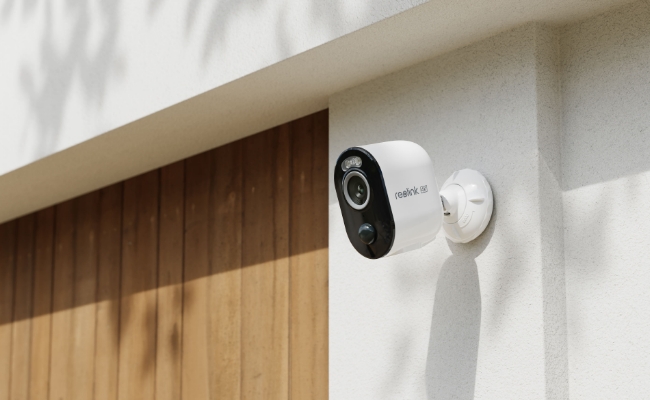
The real legal risk isn't having a camera. It's deliberately and continuously aiming one at a place where your neighbour has a reasonable expectation of privacy, like their bedroom window, backyard or pool. That risk splits into two separate questions, one criminal and one civil.
Can You Be Criminally Charged for Pointing a Camera at a Neighbour's Window?
The criminal question is narrower than most people assume. Criminal Code section 162 makes it an offence to surreptitiously observe or record someone with a reasonable expectation of privacy. That offence needs one more thing to be true. The person is somewhere they could reasonably expect to be nude or engaged in explicit sexual activity. Or they actually are in that state, and the recording is made to capture it. Or the recording itself is done for a sexual purpose. A camera that happens to catch a slice of a neighbour's yard almost never meets that bar. A camera deliberately aimed into a bedroom or bathroom window very well could.
Can Your Neighbour Sue You Over a Security Camera?
Yes. If a camera is deliberately pointed at a neighbour's private space, they have some real legal route open to them. It just goes by a different name depending on the province.
The civil question is the far more realistic risk for most disputes, and it's a lawsuit rather than a criminal charge. A neighbour who feels genuinely surveilled has a real, fact-specific route to sue. Which route applies depends entirely on the province. Here's a quick guide:
Pro Tip: Reolink's guide on what to do if a neighbour complains about your camera covers the practical side of defusing this before it reaches a lawsuit.
What Counts as a Reasonable Expectation of Privacy?
Both the criminal test and the civil routes above hinge on this same everyday idea, even though each one applies it slightly differently. Courts don't use a single bright-line rule. Instead, they weigh several factors together.
Visibility matters most: Could the space be seen from a public sidewalk, street, or a neighbour's ordinary sightline anyway? A porch or driveway facing the street carries a low expectation of privacy. A bedroom window, a fenced backyard, or a space behind a screen or curtain carries a high one.
What the space gets used for matters too: Areas tied to intimate or personal activity, like a bathroom, a bedroom or a private pool area, get more protection than a shared driveway or a front yard.
Steps already taken to stay private count in the homeowner's favour: A closed blind, a privacy fence or a screened-in porch signals an expectation the law is more likely to recognize.
How deliberate and sustained the aim is changes everything: A camera that occasionally catches a slice of a neighbour's yard in the background is treated very differently from one aimed continuously and specifically at a private space.
None of this requires a lawyer to work out in the ordinary case. If your camera is pointed at your own property and only incidentally catches a public-facing sliver of a neighbour's yard, it almost never crosses the line. The risk shows up when a camera is deliberately angled toward somewhere a neighbour would reasonably expect not to be watched.
Recording Audio Is a Different, Stricter Question
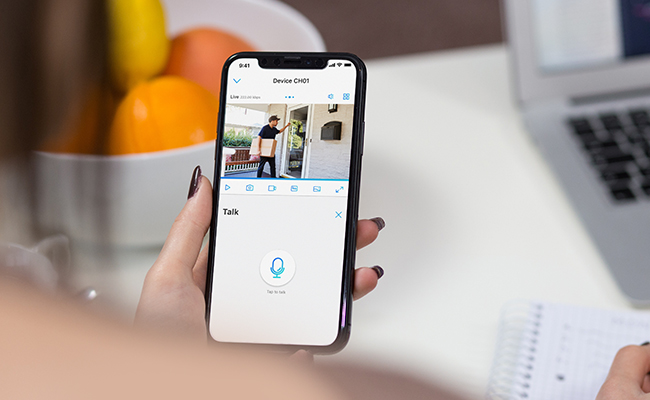
Audio recording runs on a different legal test than video, and it's generally the stricter one of the two. Intercepting a private communication without consent is a Criminal Code offence under Part VI, section 184.
There's a real, practical exception built into the same section though. Under section 184(2)(a), it's lawful to intercept a communication with consent from either the sender or the person they intended to receive it. That consent can be expressed or implied. This is commonly called one-party consent.
Apply that to a doorbell camera scenario when you're the one talking to a delivery driver or a visitor on your own porch. In this case, you're the intended recipient of that conversation. Recording the audio is fine under section 184(2)(a), because you're consenting to your own side of an exchange you're personally part of.
The murkier zone is a camera microphone passively picking up two other people's conversation, like two neighbours chatting on the sidewalk. Neither one has consented to being recorded in that scenario. If audio consent is ever in doubt, the practical habit worth adopting is either:
-
Turn audio recording off in the camera's settings,
-
Or, check whether it defaults to on, since several devices ship that way.
Condo, Strata, and Rental Rules That Go Beyond Provincial Privacy Law
If you're living in a condo or a rental apartment, there's a second set of rules on top of everything already covered.
Condos and Strata
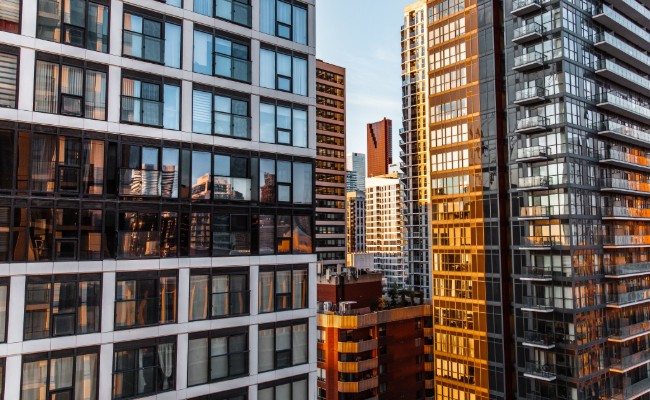
Installing a camera that affects common property generally needs council or board approval first. That includes the building's entrance, a shared hallway or an exterior wall. This is true even if the camera itself is perfectly legal under every other rule in this article.
BC's Civil Resolution Tribunal ruled on this exact scenario in Parnell v. The Owners, Strata Plan VR 2451, 2018 BCCRT 7. It held that mounting a camera outside a strata lot counted as an "alteration" to common property. The tribunal confirmed the strata corporation could refuse permission, and that an owner has no automatic right to install one without the bylaws allowing it.
Most other provinces' condo legislation follows a similar board-approval logic for common-property changes, even without a single named case for each one.
In a Quebec co-ownership, the rule is stricter still. Under the Civil Code of Québec, the co-owners as a body, called the syndicate, administer the common portions. Installing a camera there counts as an alteration, which needs a three-quarters majority vote of the co-owners, not a single owner deciding unilaterally, even from inside their own unit, if it would capture common portions of the building. Reolink's guide to security cameras for condos and HOAs covers camera options that fit within board-approved common-area rules. CHOA BC's guidance for strata councils covers this exact situation, including cameras installed by tenants, and is a useful reference for any board drafting or navigating a building's camera policy.
Rentals
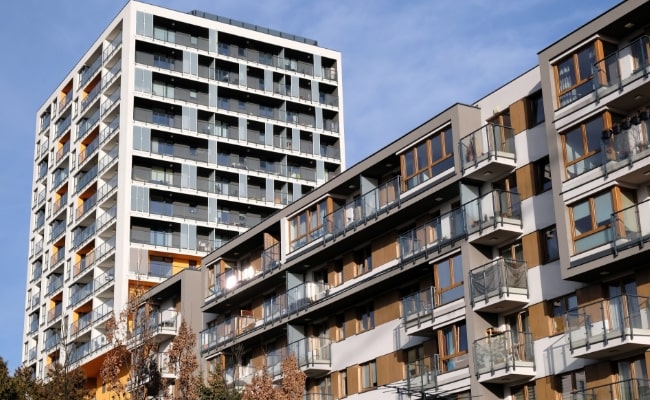
A landlord isn't exempt either. Pointing a camera at a tenant's private space without good reason triggers the same civil-law route as a neighbour doing it, whichever one applies in that province.
If Your Camera Doubles as an Alarm: Permits, False-Alarm Fines, and Insurance
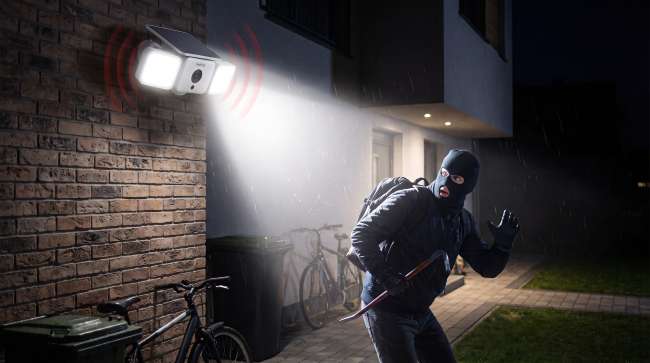
A camera with a built-in siren, spotlight or motion-triggered alert is functioning like a lightweight home alarm system. A few Canadian cities have bylaws that care about that distinction, even when the camera itself is perfectly legal.
Some municipalities, Calgary and Edmonton among them, require a permit for an alarm system and can fine repeat false alarms. These bylaws generally target systems built to summon a monitored response, like a central monitoring station calling police, rather than a camera's own local siren. Whether a specific camera setup counts depends on how the city defines "alarm system" in its own bylaw. That definition varies from one municipality to the next. The honest advice here is to check directly with your city or local police service rather than assume either way.
Monitored alarm systems commonly qualify for a home insurance discount. A standalone camera system usually doesn't, according to CAA-Quebec's guidance on choosing a home security setup. However, this could vary by insurer and by whether the camera is paired with a monitored alarm. So, ask your own insurer to know for sure.
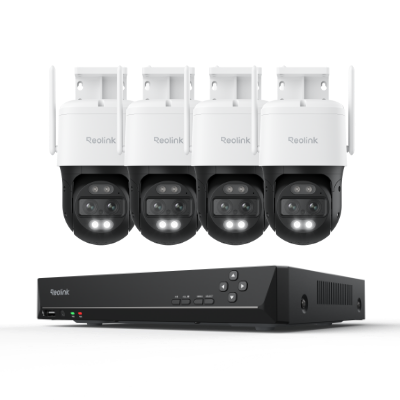
Check This Out: Reolink's RLK8-800TM4 kit pairs four dual-lens TrackMix cameras with an 8-channel NVR, giving each camera its own spotlight and siren triggered by person or vehicle detection for whole-property coverage.
Reolink RLK8-800TM44K Dual-Lens PoE Security System with Auto-Zoom Tracking
4 pcs 8MP Ultra HD Security Cameras; 2TB HDD 8-Channel NVR for 24/7 Recording; Person/Vehicle Detection; 6X Hybrid Zoom; Dual View, Dual Tracking.
None of this makes a camera with a siren a bad idea. A camera with a built-in siren and spotlight, like Reolink's Argus PT Ultra, adds a real deterrence layer on top of recording, usually at a fraction of the cost of a professionally monitored alarm system with its installation and monthly fees. Because it isn't a true "monitored alarm system," it likely won't need a permit, though it also won't come with a monitored alarm's insurance discount. For a tighter budget, that trade-off is often worth it. It's still worth confirming locally, since city bylaws don't all draw that line the same way.
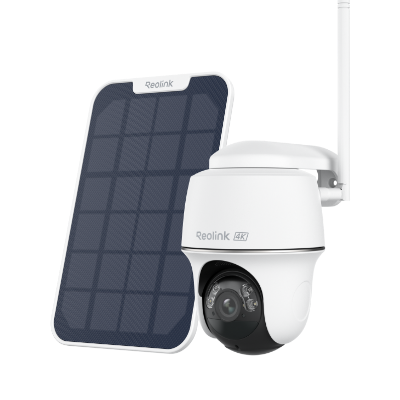
4k 100% Wire-Free PT Camera
4K 8MP Ultra HD; 5GHz/2.4GHz WiFi; Rechargeable Battery & Solar Powered; 355° Pan & 140° Tilt; IP65 Certified Weatherproof; Clear Night Vision; 2-Way Audio; 122° Wide Viewing Angle.
Best Practices That Aren't Legally Required (But Will Save You a Dispute)
None of the habits below are legal requirements for a personal home camera. But, they're good practices that keep a legal question from ever coming up in the first place.
Post a small "video surveillance in progress" sign
It isn't required, since PIPEDA's personal-use exemption already covers a homeowner's camera, but it's the easiest way to head off a neighbour's complaint before it becomes a civil claim.
Use privacy zones or masking in the camera's app
Blanking out a neighbour's window or yard, if either falls within the camera's field of view, removes the "deliberately aimed at their private space" argument entirely.
Talk to the neighbour directly
Doing this before or right after installing a camera that might catch part of their property resolves most disputes without a lawyer or a bylaw complaint.
FAQs
Do I need a permit to install a security camera at my house in Canada?
No, a private homeowner's own security camera doesn't require a permit or licence anywhere in Canada. The one exception is a camera paired with a monitored alarm that can summon police. Some cities require a separate alarm permit for that pairing, not for the camera itself.
Can my neighbour force me to take down my security camera?
Not automatically. If it's genuinely and deliberately aimed at their private space, they likely have a real legal route, just not usually a criminal one. The realistic risk is a civil claim, using whichever route their province provides, rather than a criminal charge.
Is it legal to record my nanny, babysitter, or cleaner without telling them?
In most of Canada, yes for video, under the same personal-use exemption that applies to a homeowner's own indoor camera. Quebec is the clear exception. There, notifying household staff before recording them is required, a rule most competitor guides on this topic miss entirely. Disclosing it anyway, regardless of province, avoids an awkward conversation later even where it isn't strictly required.
Does a home security camera lower my home insurance premiums in Canada?
Usually not by itself. Monitored alarm systems are the ones insurers commonly discount, not standalone cameras. A camera paired with a monitored alarm may qualify through the alarm side of that pairing. Policies vary enough between insurers that a direct call is the only way to confirm.
Do I need to post a sign if I have security cameras at my home?
No, not for a personal home camera, since PIPEDA's personal-use exemption already covers that situation. A condo board, landlord or business using cameras is a different story. Those are "organizations" under privacy law and generally do need to think about notice and signage.
Conclusion
There's no single "camera law" to look up in Canada. What actually matters is four real risk points. Aiming at a neighbour's private space is one. Recording audio without a lawful basis is another. Skipping a condo or rental rule is a third. For alarm-connected cameras, a municipal permit is the fourth. Run through those four before you worry about anything else.
If your setup includes a built-in siren or spotlight, it adds deterrence. It doesn't change how privacy, criminal, civil or local rules apply to the camera itself. Anyone weighing a camera-plus-alarm setup can browse Reolink's security camera systems to compare options.
This article is general information, not legal advice. Rules vary by province, city and building. Anyone facing an actual dispute should talk to a lawyer or their local bylaw office.
Search
Subscribe for the Latest Updates
Security insights & offers right into your inbox