
Dog Barking Camera: Monitor Your Dog Remotely & Reduce Barking

A dog barking camera helps pet owners monitor their dogs remotely and quickly identify barking triggers from any location. Dogs frequently bark due to separation anxiety, outside noises, boredom, hunger, or physical discomfort. Unchecked barking can cause neighbor disputes and distress for your pet. A smart dog camera combines live video feeds, real-time alerts, AI motion tracking, and two-way audio to help maintain control over your home environment.
- What Is a Dog Barking Camera?
- How Does a Dog Barking Camera Work?
- Can a Camera Detect Dog Barking?
- Why Use a Video Dog Barking Camera?
- 5 Key Features to Look for in a Dog Barking Camera
- Recommended Reolink Cameras for Dog Monitoring
- Dog Barking Camera vs. Standard Pet Camera
- Can a Camera Help With Separation Anxiety?
- How to Set Up Your Dog Camera for Success
- Frequently Asked Questions
- Conclusion
What Is a Dog Barking Camera?
A dog barking camera is a smart indoor or outdoor security camera designed to monitor, record, and interact with pets via a mobile application. It provides a real-time audio and video feed to your smartphone, letting you observe pet behavior, receive motion or sound alerts, and speak to your dog remotely.
How Does a Dog Barking Camera Work?
A dog camera captures continuous or event-based video while monitoring the room with a built-in microphone and motion sensors.
-
Event Detection: When the camera detects movement or supported audio activity, it triggers a instant push alert to your mobile phone.
-
Live Streaming: Opening the notification launches a live video feed, allowing you to observe your dog's current surroundings and listen for environmental triggers.
-
Two-Way Audio: Using the integrated speaker and microphone, you can speak directly to your pet through the app to soothe them or interrupt unwanted barking.
Can a Camera Detect Dog Barking?
Audio detection capabilities vary significantly across security camera models. Standard sound detection identifies general decibel spikes (such as loud crashes or crying), whereas dedicated bark recognition uses targeted software algorithms to isolate canine vocalizations.
Sound Detection vs. AI Pet Detection
Why Use a Video Dog Barking Camera?
Using a video dog camera provides critical context regarding why your pet acts out while you are away:
-
Identify Barking Triggers: Observe whether barking is caused by outdoor passersby, delivery drivers, or separation anxiety. The AKC and ASPCA attribute home-alone barking to boredom, fear, and separation stress. Video footage reveals what occurs immediately before the behavior starts.
-
Remote Interaction via Two-Way Audio: Listen to the room before speaking to reassure your dog, give familiar commands, or interrupt disruptive behavior.
-
Real-Time Attention Alerts: Receive mobile push alerts when your pet moves or creates noise so you can respond immediately without staring at a video feed all day.
Expert Note: Some dogs with severe separation anxiety may become more confused or distressed when hearing their owner's voice from an unseen speaker. Test two-way audio while observing your dog's reaction to see if remote voice commands are effective for your pet.
5 Key Features to Look for in a Dog Barking Camera
When selecting a camera specifically to address dog barking, focus on audio-centric capabilities and tracking tools that help identify triggers and stop unwanted noise:
1. Dedicated Audio & Sound Event Alerts
Choose a camera with sound detection or dedicated acoustic monitoring that triggers instant mobile notifications when decibel levels spike, alerting you to barking the moment it starts.
2. Two-Way Audio with Noise Reduction
A clear, built-in speaker and noise-canceling microphone let you listen for environmental triggers (like doorbells or outdoor noise) before speaking through the app to soothe your pet or interrupt a barking episode.
3. Custom Detection Zones & Sensitivity Adjustments
Adjustable sound and motion sensitivity—combined with custom activity zones—prevent false alerts from TV noise, passing traffic, or street sounds, ensuring notifications only fire for true doorstep or room disturbances.
4. Pre-Roll & Event Video Buffering
Cameras that save a few seconds of video before a noise event is triggered let you review the exact moment that caused your dog to start barking, making it easier to identify specific stress triggers.
5. Subscription-Free Local Event Storage
Storing noise-triggered clips on a local microSD card or NVR ensures you have a continuous, private video record of your dog's daily barking patterns to share with trainers or vets without paying monthly cloud fees.
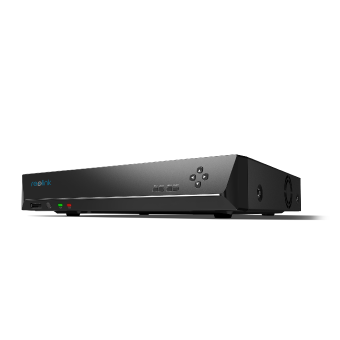
12-Channel PoE NVR
Supporting Up to 16MP, Power over Ethernet, 24/7 Continuous Recording, Expandable Storage Up to 16TB.
Recommended Reolink Cameras for Dog Monitoring
Reolink cameras can help you watch your dog, detect pet movement, check live video, and use two-way audio on supported models. However, Reolink cameras do not currently support dedicated dog barking detection or barking-triggered alerts. Pet detection identifies animals visually rather than recognizing the sound of a dog barking.
Best Indoor Choice: Reolink E1 Zoom
The Reolink E1 Zoom is a strong choice for monitoring dogs inside the home. Its pan-and-tilt design provides flexible room coverage, while pet detection can alert you when your dog moves through the monitored area. Two-way audio also lets you listen and speak to your pet remotely.
Best for: Living rooms, pet rooms, and indoor areas where dogs move around frequently.

PTZ Wireless Smart Home Camera
Smart, Powerful and Affordable All-Round Home Protection. 355° Pan and 50° Tilt; 4K Ultra HD, 3X Optical Zoom, Two-Way Audio, 2.4/5 GHz WiFi, with Google Assistant Integration.
Best Outdoor Choice: Reolink Argus 4 Pro
The Reolink Argus 4 Pro is suitable for yards, patios, and outdoor dog areas where running power cables is difficult. Its battery-powered design provides flexible placement, while the 180° panoramic view helps monitor a wider area with fewer blind spots.
Best for: Backyards, dog runs, and outdoor pet monitoring where wide coverage and wire-free installation matter.
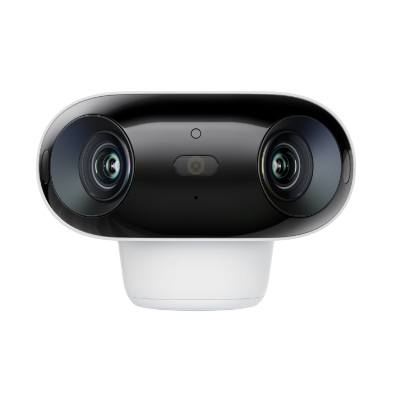
4k 180° Wire-free Color Night Vision Camera
4K UHD 180° Blindspot-free View; Color Vision Day and Night; 30% More Battery Life; Dual-band Wi-Fi 6; Smart detection.
Best Choice for Large Spaces: Reolink TrackMix PoE
For larger yards or properties, the Reolink TrackMix PoE offers pan-and-tilt coverage and auto tracking to follow moving subjects across a wider area. Its dual-lens design provides both a broader view and a closer view of tracked activity.
Best for: Large yards, farms, kennels, and other spaces where dogs may move across a wide monitoring area.
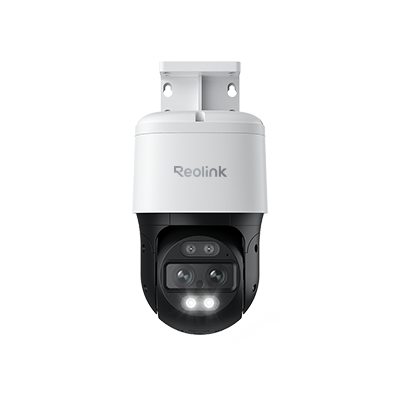
4K Dual-Lens PTZ Camera with Dual Tracking
4K 8MP Ultra HD, Wide & Telephoto Lenses, Pan & Tilt, Auto-Tracking, Person/Vehicle Detection, Power over Ethernet, Two-Way Audio.
Note: If your main requirement is receiving an alert specifically when your dog barks, these Reolink cameras are not designed for that function. They are better suited to visual pet detection, live monitoring, recording, and two-way communication.
Dog Barking Camera vs. Standard Pet Camera
Can a Camera Help With Separation Anxiety?
While a security camera cannot cure separation anxiety on its own, it serves as a vital diagnostic tool. Video recordings reveal whether pacing, whining, scratching, or destructive behaviors begin immediately after you leave—a key indicator of separation distress highlighted by the ASPCA. You can share this video evidence with a veterinarian or certified professional dog trainer to design an effective desensitization plan.
How to Set Up Your Dog Camera for Success
-
Optimize Placement: Position indoor cameras high enough to view living areas, crates, or doorways while keeping power cords safely out of your dog's reach. For outdoors, mount weather-rated cameras near gates or yards.
-
Configure Detection Zones: Adjust motion sensitivity and create exclusion zones over windows or TVs to prevent unnecessary notifications.
-
Test Before Leaving: Run a complete test of live streaming, night vision, two-way audio, and notification delivery before leaving your pet alone.
Frequently Asked Questions
Can a standard security camera detect dog barking?
Some security cameras feature general sound detection that triggers on loud noises, while specialized bark recognition depends on specific software and camera models.
Do dog cameras require Wi-Fi?
Most smart pet cameras require an active Wi-Fi or cellular network connection to send real-time push alerts and stream live video to your phone. However, some models can still record footage locally to an SD card without internet access.
Are subscription plans required for dog cameras?
No. Many cameras, including selected Reolink models, offer local storage options (microSD card or NVR) that allow full access to video recording and smart alerts with no monthly fees.
Can I leave my dog alone as long as I have a camera?
No. A camera is a monitoring tool, not a substitute for proper care, adequate exercise, feeding schedules, fresh water, and bathroom breaks.
Conclusion
Combining live video feeds, two-way audio, smart alerts, and local storage gives you the exact context needed to manage dog barking and identify behavioral triggers remotely. Whether you need compact indoor monitoring with the E1 Series, wire-free outdoor coverage with the Argus Series, or pan-tilt tracking for large areas, matching the camera type to your space helps maintain a quiet, stress-free home for both you and your pet.
Search
Subscribe for the Latest Updates
Security insights & offers right into your inbox