
Types of CCTV Security Cameras: A Complete Overview
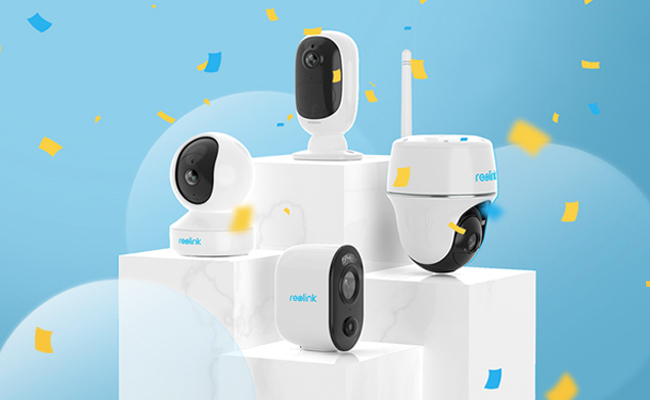
Security cameras evolve very fast to meet your every possible security need in all situations: No WiFi, No power, No cable, front door, backyard, garden, garage, driveway, you name it.
But at the same time, you may get lost in the endless types of security cameras. Selecting the correct type is vital for the optimal application. This article will introduce different cctv camera types and help you choose the right one.
- Quick Summary: Choosing the Right Security Camera Types
- Security Camera Type By Network Connectivity
- Types By Environmental Placement: Indoor vs. Outdoor
- Types By Infrastructure & Wiring: PoE Fixed vs. Wire-Free Battery Setups
- Types By Form Factors & Mechanics
- How to Choose the Right CCTV Security Camera Type for Your Home and Business?
- FAQs
- Conclusion
Quick Summary: Choosing the Right Security Camera Types
To find the perfect security camera, classify your needs into 4 core categories:
- Wiring: PoE (Wired) for maximum stability vs. WiFi/Cellular (Wireless) for easy DIY setup.
- Form Factor: Bullet (visible deterrence), Dome (discreet monitoring), or PTZ (dynamic tracking).
- Placement: Indoor (compact, privacy-focused) vs. Outdoor (weatherproof, IP66+ rating).
- Recording: NVR/DVR for local 24/7 heavy storage vs. Cloud for remote, card-free access.
Security Camera Type By Network Connectivity
security cameras are fundamentally categorized into two types based on data transmission technology: Analog (CCTV) and IP (Internet Protocol/Network) cameras. Choosing the right connectivity type impacts your system's video resolution, scalability, and integration capabilities.
Analog Security Cameras
Analog security cameras capture raw video signals and transmit uncompressed data over RG59 coaxial cables to a centralized Digital Video Recorder (DVR), which compresses the footage for storage.
-
Suitable For: Budget-conscious retrofits or upgrading existing coaxial cable infrastructure without rewiring.
-
Technical Specs: Analog systems are limited to lower maximum resolutions (typically up to 5MP/4K with HD-TVI/AHD variants, but with high signal degradation over long distances). They lack edge intelligence, edge storage, and native encryption. Advanced features like two-way audio or detailed video analytics require separate specialized cabling.
IP Security Cameras
IP (Internet Protocol) cameras operate as standalone digital computing devices. They encode and compress video data directly on the device ("on the edge") and transmit it digitally over a local area network (LAN) via Ethernet cables (Cat5e/Cat6) or wireless frequencies (2.4GHz/5GHz WiFi).
-
Best For: High-definition modern surveillance, remote multi-user access, and smart home/business automation.
-
Technical Specs: IP cameras natively support 4K UHD, 12MP, and higher resolutions with zero signal loss over network limits. They feature onboard processing for AI analytics (human/vehicle detection), dual-way audio, and decentralized storage options—saving data directly onto internal MicroSD cards, a Network Video Recorder (NVR), or secure Cloud storage server.
Quick Type Comparison: Analog vs. IP Cameras
Types By Environmental Placement: Indoor vs. Outdoor
Where a security camera is installed shows its physical build, durability specs, and feature sets. Based on the deployment, CCTV cameras can be divided into indoor, outdoor, and video doorbells.
Indoor Cameras
Indoor security cameras are suitable for interior residential and commercial spaces (offices, retail floors, living rooms). Because they do not need to fight the elements, their design prioritizes compact aesthetics, advanced audio capture, and smart integrations.
Indoor models regularly feature two-way audio, wide viewing angles to maximize room coverage, and native integration with smart voice assistants.
Premium modern indoor models include physical privacy shutters or digital geofencing modes that automatically cut lens recording when authorized users arrive home.
Outdoor Cameras (IP65 or Higher Standards)
Outdoor security cameras are built to maintain uninterrupted feed stability across hostile environments. They must endure extreme temperature fluctuations, consistent UV exposure, moisture, and potential physical vandalism.
Look for an IP65 or higher IP rating, ensuring the internal electronics are 100% sealed against heavy downpours, blowing dust, and snow. For high-risk public zones, select cameras with an IK10 vandal-proof rating to resist heavy kinetic impacts.
To ensure outdoor surveillance, some models utilize high-intensity infrared (IR) LEDs or integrated spotlights to provide vivid color night vision across long-range perimeters (up to 100 feet or more).
Video Doorbells for Front Door Security
A video doorbell is a specialized, entry-point security camera that bridges the gap between access control and perimeter defense. It replaces traditional doorbells by fusing a high-definition camera, a motion trigger, and a two-way intercom system into a single device.
Unlike wide-screen landscape cameras, front-door cameras frequently use a 1:1 or 4:3 Head-to-Toe viewing ratio to help owners see both a visitor’s face and packages left flat on the porch floor.
Advanced models use localized AI to run package detection algorithms, sending real-time instant alerts specifically when a delivery arrives or is moved.
Types By Infrastructure & Wiring: PoE Fixed vs. Wire-Free Battery Setups
A crucial architectural decision when deploying a surveillance system is the wiring infrastructure.
Hardwired Security Cameras
Hardwired systems rely on physical cabling to transmit both video data and electrical power. In modern network surveillance, this is predominantly achieved through Power over Ethernet (PoE) technology.
PoE cameras utilize a single network cable—typically Cat5e or Cat6 copper Ethernet lines—connected to a PoE Switch or Network Video Recorder (NVR). This single cable simultaneously delivers 48V DC power and high-bandwidth digital data.
Wireless Security Cameras (WiFi & 4G & Battery-Powered Options)
Wireless security cameras utilize radio frequencies to transmit video data to a local router, access point, or smart hub. However, users must understand the technical distinction between "Wireless" and "Wire-Free" models.
Reolink Wireless vs. Wire-Free:
-
Wireless WiFi Cameras: Transmit data via 2.4GHz / 5GHz dual-band WiFi frequencies, but still require a physical DC power cable plugged into an electrical outlet.
-
100% Wire-Free Cameras: Completely untethered devices powered by built-in rechargeable lithium-ion batteries or connected to local Photovoltaic Solar Panels. Data is transmitted via WiFi or cellular networks (4G/5G LTE).
Types By Form Factors & Mechanics
A camera’s physical housing determines its mechanical limitations, installation flexibility, field-of-view (FoV) depth, and baseline level of physical security.
Bullet Cameras
Bullet cameras feature a distinct cylindrical, elongated chassis that creates an obvious, overt security presence. They act as an immediate visual deterrent to trespassers and are designed to monitor fixed linear paths.
Bullet cameras typically utilize fixed-focal lenses (e.g., 2.8mm for broad views or 4mm for mid-range detail) or motorized varifocal lenses that adjust focal lengths dynamically to change the magnification level without losing focus.
Dome Cameras (Discreet Anti-Vandal Design)
Dome cameras enclose the camera module within a durable, transparent circular shield. Their primary advantage is visual ambiguity; the tinted dark cover obscures the exact direction the lens is pointing from a distance.
High-grade dome cameras are built with solid cast-aluminum bases and polycarbonate bubbles engineered to IK10 impact protection standards. This prevents direct physical tampering, baseball bat strikes, or stones from knocking the lens out of alignment.
Because their dome cover can trap reflection from dust, rain drops, or insect webs (known as "IR reflection bleaching"), dome cameras are best suited for indoor ceiling applications or covered exterior entryways.
Turret Cameras
Turret cameras—often known as "eyeball" cameras—feature a smooth ball-and-socket design. The lens housing sits completely independent of a structural dome cover, eliminating the common issue of infrared reflection entirely.
Turret hardware yields cleaner night vision results because the infrared LEDs are physically isolated from the main camera glass. They frequently integrate high-sensitivity external microphones directly into their flat front faces for clear audio capture.
Without a plastic dome shield to remove or clean, turret units are easier to clean and adjust on-site.
Fisheye Cameras
Fisheye cameras utilize an ultra-short focal length panoramic lens array to capture a massive, continuous hemispherical field of view exceeding 180 or even 360 degrees.
The raw optical capture produces a heavily distorted, circular "bubble" perspective. Advanced internal processors or backend software must run digital dewarping algorithms to split the panoramic circle into flat, natural quad-view grid angles.
A single ceiling-mounted fisheye camera can completely replace four standard fixed-lens cameras in wide-open environments like retail warehouses, parking garages, or corporate lobbies, drastically lowering total infrastructure wiring costs.
PTZ & Dual-Lens Systems
Pan-Tilt-Zoom (PTZ) cameras represent the highest tier of active perimeter monitoring. Unlike fixed-lens hardware, a PTZ camera is constructed on a motorized mechanical base. You can remotely control over directional orientation and optical focal length.
Standard PTZ units utilize precision step-motors to execute continuous 355-degree horizontal panning and 90-degree vertical tilting. This dynamic mobility is governed manually via software interfaces or automated via predefined cruise patterns and target guard points.
Advanced dual-lens systems house two distinct lens elements working in tandem. Such dual-lens cameras offer ultra-wide field of view and combination of optical and fixed lens.
Shape Types Comparison Table
How to Choose the Right CCTV Security Camera Type for Your Home and Business?
Selecting a surveillance type requires balancing specific environmental constraints against security priorities. Residential setups focus on user-friendly deployment, privacy, and immediate property deterrence, while commercial systems prioritize asset protection, scalability, and 24/7 high-throughput data retention.
Residential Security
Residential surveillance optimizes for seamless integration, minimal architectural disruption (no drilling through walls), and instant smartphone-driven alerts.
-
100% Wire-Free Battery/Solar Cameras (Best for Yards & Perimeters): For homeowners seeking a clean DIY setup without professional electrical routing. These wireless units mount to exterior siding, gutters, or fences, streaming via home Wi-Fi and utilizing localized solar panels for infinite off-grid power.
-
Video Doorbells (Best for Front Porch Security): The single most critical line of defense for modern residential properties. Optimized with a vertical aspect ratio (1:1 or 4:3) and edge-AI package detection algorithms, they provide real-time alerts to prevent porch-pirate theft and verify deliveries via two-way audio. For example, Reolink battery doorbell offers a head-to-toe view for monitoring your front door.
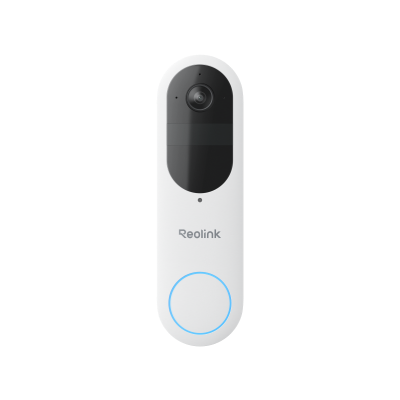
Smart 2K Dual-Band Wi-Fi Battery Doorbell
2K 4MP Head-to-Toe View; Person/Vehicle/Package Detection; Works with Reolink Home Hub & Wi-Fi NVR; 5/2.4GHz Dual-Band Wi-Fi.
- Compact Pan-Tilt Indoor Cameras (Best for Living Spaces & Pet Care): Built with smaller physical footprints to blend into home decor. They provide full-room coverage and feature hardware privacy shutters that physically block the lens when family members are at home. Some indoor models allow you to set up privacy zone, such as the Reolink E1 series.

PTZ Wireless Smart Home Camera
Smart, Powerful and Affordable All-Round Home Protection. 355° Pan and 50° Tilt; 4K Ultra HD, 3X Optical Zoom, Two-Way Audio, 2.4/5 GHz WiFi, with Google Assistant Integration.
Commercial Security
Business deployments must handle expansive square footage, manage legal liabilities, protect high-value inventory, and support multi-user monitoring workflows.
- Scalable PoE IP Camera Systems (Best for Multi-Site & Retail Infrastructures): Large commercial properties cannot rely on Wi-Fi bandwidth. A centralized multi-channel Network Video Recorder (NVR) linked to local PoE bullet or dome cameras provides an airtight, encrypted network capable of storing continuous 24/7 4K video feeds for months to comply with insurance policies. Reolink's multi-camera PoE kits offer localized, wide-area surveillance with robust expandable local storage architectures.
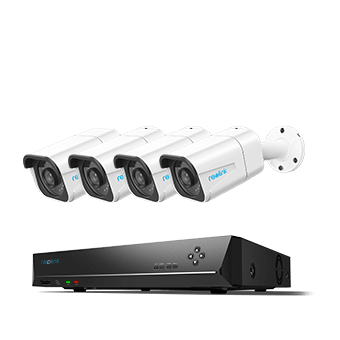
4K 8-Channel PoE Security System
4 pcs 4K Ultra HD Security Cameras; 2TB HDD 8-Channel NVR for 24/7 Recording; Person/Vehicle Detection; Plug & Play; 2 Network Solutions.
-
Motorized PTZ Cameras (Best for Warehouses, Loading Docks & Parking Lots): Ideal for large open commercial zones. A single high-speed PTZ unit can automatically lock onto moving delivery trucks or unauthorized personnel after hours, executing a seamless hybrid optical zoom to capture high-definition face or license-plate metrics across vast distances.
-
360° Fisheye Cameras (Best for Open Floor Plans & Lobbies): Instead of paying for separate hardware and cabling to monitor a retail floor or corporate lobby, a single ceiling-mounted fisheye camera creates complete panoramic situational awareness, with digital dewarping software splitting the feed into clean, navigable viewing angles.
FAQs
How many types of security cameras are there?
There is no specific amount of security camera types available in the market. Different criteria can classify security cameras into different kinds. Typical criteria include Internet connectivity, wiring options, shape, recording method, location, etc.
What types of cables are used to wire security cameras?
Several cables are commonly used to wire security cameras, each with its characteristics and applications. Twisted pair cables, such as Cat5e and Cat6 Ethernet cables, are commonly used for network IP cameras, while coaxial wires are widely used for analog security cameras. Security cameras also connect to monitoring devices via USB or HDMI cables.
Do security cameras record all the time?
No, it depends on the type of camera, the recording mode, and the settings. Some security cameras can be set to record continuously, but they result in a significant amount of stored video data. Other models can be configured to record only when motion is detected within their field of view. Users can also set schedules for when the camera should record.
Conclusion
Security cameras can be divided into different types according to various criteria. Whether you want to safeguard your home, business, or any other property, understanding the different kinds of security cameras is essential for making a better choice. We hope this article can be helpful for you. What types of security cameras do you use? How do you like them? Let us know your experience, and please share this article with your family and friends!
- Best Home Security Camera Buying Guide 2024: Making the Right Choice
- Wired Security Camera System: An Ultimate Guide
- 4K Security Camera Systems: Everything You Need To Know
- Color Night Vision Security Cameras: How They Work & Best Picks in 2024
- Security Cameras with Audio: Types, Best Picks with Videos & Laws
Search
Subscribe for the Latest Updates
Security insights & offers right into your inbox