
Can Deer See Red Light? Understanding Deer Vision Explained
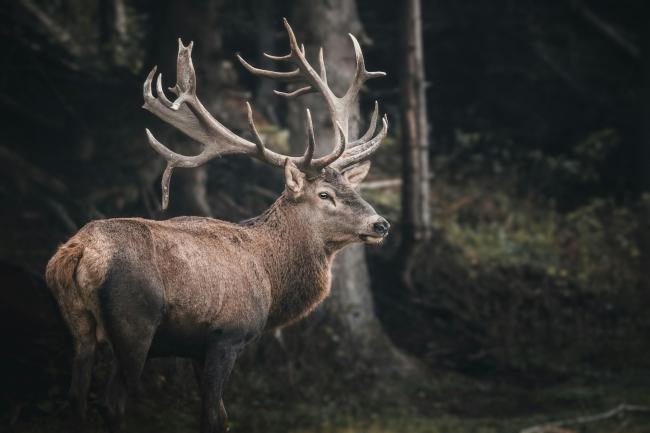
If you work around deer or watch them for fun, sooner or later, you will hear the debate: Can deer see red or green light? The concern is simple: nobody wants spooked deer running off, and choosing the right light color can decide whether the animal stays calm or bolts.
In this article, we walk through the basics of deer eyesight, explain how red and green lights do or do not register with deer, and give straightforward guidance for hunters and wildlife fans.
What Can Deer See?
To grasp any question about color, you first need to know how a deer’s eye is built. A deer eye sits on the sides of the head, giving the animal a wide, curved field of view, about 310 degrees without moving the head. That wide arc is useful for spotting danger early, but it sacrifices sharp detail in the center.
Inside the eye are two key cell groups: rods and cones.
- Rods work best in low light and let deer move with ease at dusk, dawn, and under moonlight.
- Cones pick up color. Humans carry three kinds of cone cells, giving us trichromatic vision and the ability to separate red, green, and blue. Deer have only two kinds of cone cells, so they are dichromatic. One cone type covers short blue wavelengths (roughly 425–470 nm). The other sits in the middle or green area (roughly 530–540 nm). Red wavelengths run from about 620 nm to 750 nm and fall outside both cone ranges.
Because red wavelengths do not activate deer cones, a red light appears dull or gray. Green wavelengths do hit their second cone, so deer can see pure green as a bright hue. That difference is the heart of the question and the rest of this guide.
Can Deer See Red Light?
No, deer cannot see red light well. They detect only its overall brightness, not its color. To a human eye, a red LED on a trail camera looks vivid. To a deer, the same LED glow looks much like any faint gray lamp set to low power. In practical language, the red LED does not flash a Rudolph-red warning; it more closely resembles a dim overhead porch bulb.
Field tests support this. Researchers have shown that deer rarely shift feeding posture, head orientation, or locomotion when they face red light sources at common brightness levels. The animals react far more strongly when the same power is put into green or white light. So if the goal is to avoid visual shock, red is indeed accepted by deer sight.
This does not mean the red light is invisible. A solid red floodlight shining directly into the eyes can still be noticed, because brightness, glare, and movement remain. Yet the color signal itself is nearly gone.
Can Deer See Red Light at Night?
At night, the deer's eye depends almost completely on rods. Rods cannot pick up color, so red light at night hits rods instead of cones and arrives as simple gray brightness. The result is the same as in daylight, they do not register the red hue, but in darkness, human sees an even stronger contrast, while the deer sees an even softer gleam.
Deer Vision in Different Lighting Conditions
- Daylight: Both rods and cones are active, though cones rule. Deer still lack red perception, but they see blue and green clearly. They also see UV, which mixes with blue and can make certain fabrics or detergents look bright. Shadows appear deeper to deer than to us because their eye gathers less sharp detail.
- Night: Rods dominate. The pupils open wide, and the reflective tapetum lucidum behind the retina bounces extra light back, giving deer that “eyeshine.” Colors disappear, and the scene shifts toward black, white, and various grays. A red lamp at this stage may stand out to us, but barely moves the deer’s brightness scale.
Can Deer See Red Light in IR Trail Cameras?
Standard IR trail cameras use 850 nm LEDs inside the red spectrum. This wavelength still resides on the outer edge of what deer cones can sense, and their ability to see it is extremely limited. To the deer, these LEDs give off a dull, close-to-infrared glow. Most hunters report deer walking past arrays of 850 nm bulbs with no change in pace.
Covert and black-flash models use 940 nm IR light. This wavelength is entirely beyond any deer receptor, so these units are even more silent, although they sacrifice illumination range. In either case, the red splash you see when the LEDs fire is far less obvious to the wildlife subject.
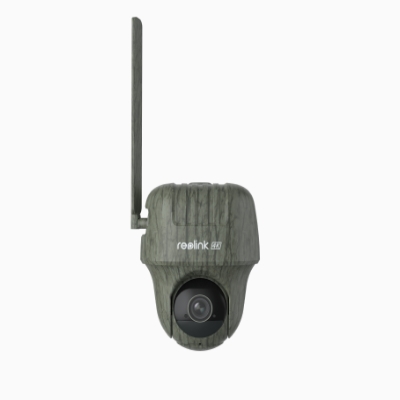
4K 4G LTE Wildlife Camera with 360° All-Around View
4G LTE Network, 4K 8MP Ultra HD, No-Glow IR LEDs, Person Detection, Animal Detection, Two-Way Audio, Battery/Solar Powered.
Red vs. Green Lights: Which Should Hunters Use?
Now that we know deer view red as dull gray and green as vibrant color, the choice for a headlamp, night vision clip-on, or truck spotlight becomes clearer. Here is a quick comparison:
How to Choose the Right Light Colors for Hunting or Wildlife Enthusiasts?
Matching the correct color to your task is easier than memorizing cone diagrams. Keep the next points in mind. These small steps, taken together, avoid most common mistakes and let you rely on basic biology rather than luck.
- Match your goal: Route walking to stand or blind, red light keeps your own night vision and reduces deer notice. High-detail tracking blood trail, green offers better contrast on leaves and soil, but accepts extra notice risk.
- Test before heading out: Turn on the chosen color in a dark room. If the beam feels too bright for your own comfort, it will seem harsh to close-range wildlife too. Dial down the output or pick a weaker LED strip.
- Use dim modes first: Modern headlamps offer low, medium, and high. Always start low. It gives you the color needed, and you can switch up only if evidence demands more lumens.
- Mind the background: In open hayfields, even a low amber or red shimmer can project against open sky. Drop the light or angle it just enough to bounce off the ground and cut visibility.
- Keep movement slow: Slow, steady steps with a steady light draw less attention than quick sweeps. Whatever the color, sudden flashes equal instant alerts.
- Cover other contrast cues: Gear reflects moonlight. White face masks, logos, and soda-can tabs can counteract the gain from red light. Tone them down with flat colors or camo tape.
FAQs
What color light doesn’t scare deer?
Red light remains the least alarming. It barely registers on deer cones and, therefore, keeps feeding or resting deer at ease when used at low to medium brightness.
Is red light good for hunting?
Yes, within limits. Red helps hunters move through dark timber, read maps, or adjust gear in close quarters. It is not ideal for far agility checks on treesteps or for precise blood trailing, so bring a green or white secondary light if those jobs arise.
Do animals see red light at night?
The most inclusive term, “animals,” is too broad. Dogs and cows lack strong red cone sensitivity, so they get the same dull gray. Some nocturnal birds and reptiles retain red-sensitive cells, so the same red lamp can cause a reaction in those species. In pure deer cases, the red wire is mostly invisible at night.
Conclusion
Red light does not trigger deer's color vision because their eyes have no cones tuned to the red band. Green light lands squarely inside their middle-wavelength cone and therefore draws attention. Red remains the safer choice for nighttime entry, maintenance, and discreet observation, while green suits situations where high contrast or distance matters more than keeping the animal unaware.
If you found these points useful or have your own field notes on red versus green, leave a comment. Real-world insights from readers help the whole group make smarter, simpler decisions when the woods get dark.
Search
Subscribe for the Latest Updates
Security insights & offers right into your inbox