
Body Camera vs Action Camera vs Security Camera: What’s the Difference?
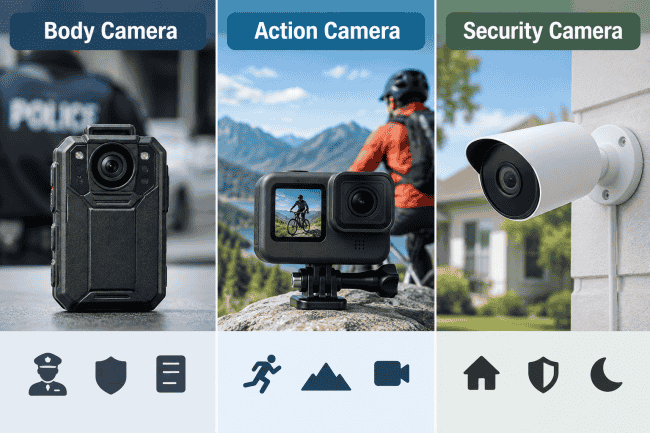
A body camera is worn on a person to record events from the wearer’s point of view. An action camera records sports, travel, and other activities, while a security camera monitors people, property, and events at a location.
The best choice depends on whether you need wearable evidence, activity footage, or ongoing property monitoring.
- What Is a Body Camera?
- What Is an Action Camera?
- What Is a Security Camera?
- Body Camera vs Action Camera vs Security Camera: Key Differences
- Body Camera vs Action Camera: What’s the Difference?
- Body Camera vs Security Camera: What’s the Difference?
- Action Camera vs Security Camera: What’s the Difference?
- Body Camera vs Action Camera vs Security Camera: Which Costs More?
- Which Camera Should You Choose?
- Best Camera Type for Different Scenarios
- Can Body Cameras and Action Cameras Be Used for Security?
- What Features Matter When Choosing Between Them?
- Best Reolink Security Cameras for Different Monitoring Needs
- FAQs
- Conclusion
What Is a Body Camera?
A body camera, or body-worn camera, is a compact device worn on clothing, a vest, or a uniform. It records from the wearer’s perspective and focuses on dependable event records.
Depending on the model, it may include time stamps, audio, pre-recording, GPS, password protection, or secure file management for incident and work records.
What Are Body Cameras Used For?
Law enforcement officers use body cameras for calls, stops, interviews, and public interactions. Security workers may use them during patrols and disputes, while delivery and field workers can record handoffs or workplace incidents.
People may also use body cameras for personal evidence when they need a hands-free event record. Their main purpose is to document what the wearer sees and experiences.
What Is an Action Camera?
An action camera is a compact, durable camera designed to record movement, sports, travel, and outdoor activities, often from a first-person view. Users can wear or mount it in several ways.
Action cameras usually focus on wide-angle video, image stabilization, high frame rates, and water-resistant or waterproof designs. Their main goal is clear footage during movement.
What Are Action Cameras Best For?
Action cameras work well for cycling, motorcycle rides, hiking, skiing, diving, travel, sports, and vehicle-mounted footage. They suit conditions with regular movement, vibration, weather, or water.
An action camera captures what the user is doing and usually offers stronger stabilization and more mounting choices than a body camera.
What Is a Security Camera?
A security camera monitors a location rather than following a person. It may stay fixed, allow remote pan and tilt control, or use pan, tilt, and zoom features.
Security cameras may record continuously, on a schedule, or after motion is detected. Many support remote viewing, night vision, smart detection, mobile alerts, local or cloud storage, network video recorder (NVR) storage, and two-way audio.
Homes use security cameras at entrances, driveways, garages, and yards, while businesses use them in stores, offices, and parking areas. Their main role is location monitoring.
Body Camera vs Action Camera vs Security Camera: Key Differences
The main difference comes from what each camera needs to record. A body camera documents events around a person, an action camera records an activity, and a security camera watches a place.
Body Camera vs Action Camera: What’s the Difference?
Both can be worn on the body, but their goals differ. A body camera focuses on evidence and event records, while an action camera focuses on smooth footage of sports and activities.
Recording Purpose
A body camera records interactions and incidents that may need review later. An action camera records rides, hikes, sports, and trips where movement and video quality matter more.
Video Quality and Stabilization
Action cameras focus more on stabilization, high frame rates, wide views, and image quality during movement. Body cameras focus more on reliable recording, time information, longer operation, and file control.
Mounting and Durability
Both can be worn, but action cameras usually offer more mounts for helmets, handlebars, vehicles, and sports equipment. Body cameras normally use clips for clothing and uniforms.
Recording Controls and Evidence Management
Body cameras often prioritize simple, reliable recording and evidence management. Depending on the model, they may include one-touch recording, timestamps, pre-recording, password protection, or controlled file access to help preserve incident records.
Action cameras give users more control over how footage is captured, such as resolution, frame rate, field of view, and shooting modes. Their footage is typically intended for viewing, editing, or sharing rather than formal evidence management.
Battery Life and Recording Time
Both body and action cameras rely heavily on battery capacity, but they are optimized for different recording patterns. Body cameras may prioritize longer operating time for shifts, patrols, or extended events, while action cameras may consume more power when using high resolutions, high frame rates, stabilization, or other performance-intensive features.
Actual recording time varies by model, battery size, video settings, temperature, and enabled features. For either type, users who need extended recording should compare rated battery life, storage capacity, and charging or replaceable-battery options.
Body Camera vs Security Camera: What’s the Difference?
A body camera follows the wearer and records what that person encounters, while a security camera monitors a chosen area.
Mobile vs Fixed Monitoring
A body camera moves with a person, so its view changes. A security camera stays in one location or moves within a set viewing range, giving the owner a steady area view.
Evidence vs Property Surveillance
Body cameras answer, “What did the wearer see?” Security cameras answer, “What happened at this location?” The first suits personal interactions, while the second suits property records.
Continuous Monitoring
Security cameras work better for unattended monitoring because many can use wired power, send alerts, record at night, and store video for long periods. Body cameras rely more on battery life and storage.
Action Camera vs Security Camera: What’s the Difference?
An action camera records an activity from the user’s perspective, while a security camera monitors an area for safety and security. Good video quality does not make an action camera a full replacement for a security camera.
Action cameras usually need the user to start and manage recording. Security cameras can detect activity, send alerts, stay installed, and connect with an NVR or another local storage system, which better suits unattended monitoring.
Body Camera vs Action Camera vs Security Camera: Which Costs More?
Which Camera Should You Choose?
Choose a Body Camera If You Need Portable Evidence
Choose a body camera if the camera needs to move with you and document interactions or incidents from your perspective. It fits security patrols, deliveries, inspections, field work, and other situations where hands-free evidence matters.
Choose an Action Camera If You Record Sports or Travel
Choose an action camera if smooth video during movement is more important than automatic surveillance. It is better suited to cycling, motorcycles, skiing, hiking, diving, travel, and other activities.
Choose a Security Camera If You Need Ongoing Monitoring
Choose a security camera if you need to monitor the same location even when nobody is there. Security cameras are better suited to homes, driveways, businesses, farms, job sites, and parking areas because they can support motion detection, remote alerts, night monitoring, and long-term recording.
Use More Than One Camera Type If Needed
A security worker may wear a body camera for direct interactions while fixed cameras record the wider area. A traveler may use an action camera on a trip while a security camera watches home.
Best Camera Type for Different Scenarios
Can Body Cameras and Action Cameras Be Used for Security?
In most cases, they cannot replace a security camera for regular property monitoring. Body and action cameras can record useful video, but they do not usually support unattended monitoring well.
Security cameras often provide motion detection, remote alerts, night monitoring, longer recording, and permanent installation. A body or action camera can handle short tasks but usually needs more direct handling.
What Features Matter When Choosing Between Them?
-
Recording Purpose: Match the camera to the job: body camera for evidence, action camera for activities, and security camera for property monitoring.
-
Portability: Body and action cameras are easier to carry and wear, while most security cameras work best after installation.
-
Continuous Recording: Wired security cameras and NVR systems support longer recording periods, while body and action cameras need more charging and storage management.
-
Remote Monitoring and Video Stabilization: Security cameras work best for remote live viewing and motion alerts. Action cameras generally provide the best stabilization for fast movement.
-
Storage: Body cameras may use internal, removable, or managed evidence storage. Action cameras commonly use microSD cards, while security cameras may use microSD cards, NVRs, local hubs, or cloud storage.
Best Reolink Security Cameras for Different Monitoring Needs
Reolink offers security cameras for different property sizes, monitoring goals, and network conditions. For wide spaces, consider a panoramic PoE camera; for active areas, a tracking camera can follow moving subjects; and for remote locations without Wi-Fi, a 4G LTE camera provides greater installation flexibility.
Best for Wide Property Coverage: Reolink Duo 3 PoE
The Reolink Duo 3 PoE is a strong choice for driveways, front yards, parking areas, and wide entrances. Its dual-lens design combines two views into a 16MP 180° panorama, allowing one camera to monitor a broad area with fewer blind spots.
PoE carries power and network data through a single Ethernet cable, providing a stable connection for permanent installations. It can also work with compatible Reolink NVRs for centralized storage and continuous recording.
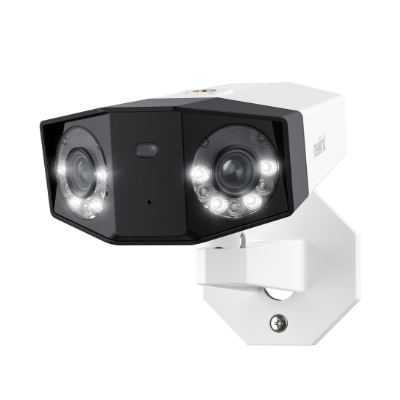
Groundbreaking 16MP Dual-Lens PoE Camera
16MP UHD, Dual-Lens, Motion Track, 180° Wide Viewing Angle, Power over Ethernet, Color Night Vision.
Best for: Wide driveways, large yards, parking areas, storefronts, and building exteriors.
Best for Large Areas and Tracking: Reolink TrackMix WiFi
The Reolink TrackMix WiFi is designed for areas where people, vehicles, or animals may move across the camera's field of view. Its dual-lens system combines a wide-angle view with a telephoto view, so you can see the overall scene while getting a closer look at the tracked subject.
With pan-and-tilt functionality and automatic tracking, TrackMix WiFi works well for yards, driveways, parking areas, and business properties where a fixed camera may not provide enough flexibility.
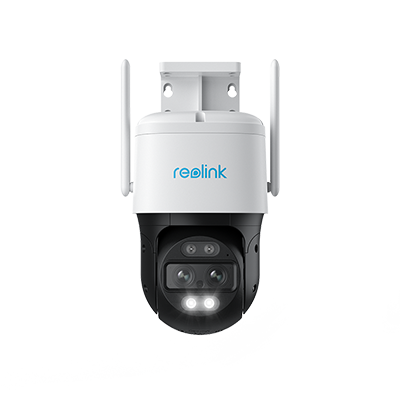
4K Dual-Lens PTZ Camera with Motion Tracking
4K 8MP UHD, Wide-Angle & Telephoto Lenses, Pan-Tilt-Zoom, Auto-Tracking, Person/Vehicle Detection, 2.4/5 GHz Dual-Band WiFi, Two-Way Audio.
Best for: Large yards, driveways, parking areas, entrances, and other locations where subject tracking matters.
Best for Remote Locations Without Wi-Fi: Reolink Go PT Ultra
The Reolink Go PT Ultra is a 4K 4G LTE security camera designed for locations where Wi-Fi and wired internet are unavailable. It connects through a compatible cellular network and uses a rechargeable battery, eliminating the need for Ethernet or a nearby power outlet.
Its pan-and-tilt design provides flexible coverage, while compatibility with a Reolink solar panel can reduce the need for manual charging. These features make it particularly useful for properties that are difficult to reach with conventional Wi-Fi cameras.
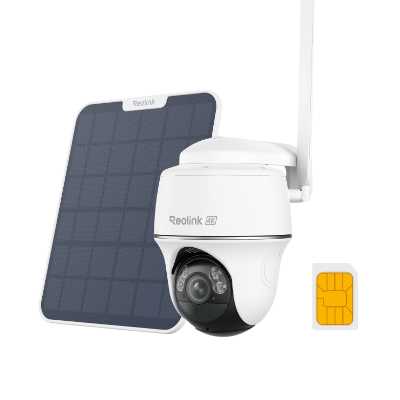
4K 8MP Wire-Free 4G LTE PT Battery Camera
4K 8MP; Smart Detection; 355° Pan & 140° Tilt; Battery/Solar Powered; Color Night Vision; Smart Real-Time Alert.
Best for: Farms, cabins, construction sites, remote gates, barns, and other off-grid locations without Wi-Fi.
FAQs
Can a body camera be used as a security camera?
It can record an area for a limited time, but it usually lacks long-term power, fixed installation, and regular remote alerts.
Is an action camera the same as a body camera?
An action camera is not the same as a body camera. It focuses on sports and activity footage, while a body camera focuses on event records and evidence from the wearer’s perspective.
Can an action camera be used for home security?
It can handle temporary recording, but a security camera is better for home monitoring because it can offer motion alerts, longer power options, and remote viewing.
Which camera is best for continuous recording?
A wired security camera with suitable local or NVR storage is generally the best choice for continuous recording.
Which type of camera has the best video quality?
No type has the best video for every use. Action cameras often handle movement better, security cameras can offer stronger night monitoring, and body cameras focus on dependable event records.
Do body cameras record all the time?
Some can record for long periods, but battery capacity, storage, settings, and model design affect recording time. Many users start recording when an event begins.
Do security cameras work without Wi-Fi?
Security cameras can work without Wi-Fi. PoE and other wired cameras can use a local network, while cellular cameras can use 4G LTE, and some systems can record locally without internet access.
Which camera is best for recording at night?
Security cameras often provide strong night monitoring through infrared or color night vision. Some body cameras also support night vision, while action camera low-light performance varies.
What Is the Difference Between a Body-Worn Camera and CCTV?
A body-worn camera moves with a person and records from that person’s position. CCTV cameras monitor set locations and often work as part of a larger property surveillance system.
Conclusion
Body cameras are best for wearable evidence, action cameras for recording sports and activities, and security cameras for ongoing property monitoring. Choose based on what needs to be recorded, where the camera will be used, and whether you need portability or unattended surveillance.
Search
Subscribe for the Latest Updates
Security insights & offers right into your inbox