
Zigbee vs WiFi: Which Smart Home Network Is Right for You?
Smart homes use wireless networks to connect things like lights, thermostats, and cameras. Two common choices are Zigbee vs WiFi. This article explains what makes Zigbee and WiFi different. It helps you decide which one works best for you. We’ll look at how they run, the difference between Zigbee and WiFi, where each shines, their good and bad sides, and how they stack up against Z-Wave.
Zigbee vs. WiFi: Understanding the Basics
You need to understand Zigbee and WiFi before picking one. This part explains what they are and how they help in smart homes.
What is Zigbee?
Zigbee is a computerized system that uses wireless connections in devices that do not consume a lot of energy. It just transmits small pieces of data, as in a turn-on signal. It is based upon a rule known as IEEE 802.15.4. Zigbee adopts a mesh network.
In the arrangement, gadgets communicate directly. They are also able to send messages using other devices. This takes the network further and keeps it powerful. It works wonderfully with door sensors, motion sensors, and long-lived battery-operated lights.
What is WiFi?
WiFi stands for Wireless Fidelity. It’s a fast wireless system based on the IEEE 802.11 rule. People use it for the internet and big data tasks at home or work. WiFi uses a star network. This means every device connects to one main router. It’s great for things that need quick data, like laptops, phones, and streaming gadgets. But WiFi uses more power. That can be a problem for devices running on batteries.
WiFi vs. Zigbee: Key Differences
Now you know what Zigbee and WiFi are. Let’s see how they’re not the same. These differences show you which fits your smart home better.
Network technology
Zigbee uses a mesh network. Devices talk to each other directly. This stretches the network farther. It’s handy in big houses where one router can’t reach everywhere. Say you’ve got a smart bulb in the garage. It can send its signal through a plug in the hallway to reach the hub.
WiFi uses a star network instead. All devices are linked to one router. If something’s too far away, it might not connect well. You can add extenders to WiFi, but they don’t flow as easily as a mesh does.
Frequency Bands
Zigbee operates on the 2.4 GHz band. Many technologies, including WiFi, Bluetooth, and microwaves, operate in this band. That may lead to mix-ups of signals. But Zigbee copes with it well since it does not require much data, and its mesh is beneficial. The bandwidth available to
WiFi is either 2.4 GHz or 5 GHz. The 5 GHz is faster and less cluttered. Nonetheless, it does not go up to 2.4 GHz. Therefore, in case you are streaming on a TV near the router, you can go with the 5 GHz. 2.4 GHz would be more ideal to have, however, with a camera across the house.
Data rates
Zigbee sends data at up to 250 kilobits per second (kbps). That’s fast enough for simple jobs, like turning on a light or checking a sensor. It can’t handle big tasks like video streaming, though. WiFi moves data way faster. Its speed goes from 11 megabits per second (Mbps) to several gigabits per second (Gbps). That makes WiFi awesome for watching movies or gaming online.
Range
One Zigbee device reaches 10 to 20 meters indoors. Its mesh network makes the range bigger by passing signals along. In a two-story house, a few Zigbee gadgets can cover everything. Imagine a sensor on the top floor talking to a hub downstairs through a light in the middle.
WiFi covers about 30 to 50 meters with one router indoors. In a big home, that might not reach every spot. You can add extenders or a mesh WiFi system to fix that, but it takes extra work.
Power consumption
Zigbee saves power. Its devices can last for years on a small battery. They do this by sleeping when not in use. This is perfect for sensors or buttons you don’t want to charge often. A Zigbee motion detector might go two years without a battery swap. WiFi needs more energy. Devices stay connected to the router, so batteries drain fast. That’s why WiFi fits better for plugged-in gadgets.
Cost
Zigbee devices usually cost less than WiFi ones. They use less power and simpler parts. But you might need a hub to connect Zigbee to your internet. That bumps up the starting price. WiFi devices might cost more each, but they work with your current router. If you’ve already got WiFi at home, you don’t need extra stuff. A WiFi camera might be pricier than a Zigbee sensor, but it’s ready to go without a hub.
Zigbee vs. WiFi: Comparison Table
A table makes it easier to see how Zigbee and WiFi differ. This part puts them side by side for you. Here’s a simple table with the key points:
Zigbee or WiFi: Where to Use?
Picking Zigbee or WiFi depends on what you need at home. This part explains where each works best. We’ll even look at security cameras as an example.
Applications of Zigbee
Zigbee rocks for devices that save power and send tiny data. Here are some applications:
- Smart Lights: Zigbee bulbs let you control one or many at once. You could turn off all kitchen lights together. The mesh keeps them linked, even far from the hub.
- Sensors: Door, window, and motion sensors last for years on batteries with Zigbee. You won’t need to fuss with them much.
- Smart Locks: Zigbee locks join your smart system. They don’t need new batteries often either.
- Business Use: Offices use Zigbee to run lights or check sensors in big spaces. It saves energy there, too.
Application of WiFi
WiFi fits devices that need fast data and usually plug in. Here are some applications of WiFi:
- Security Cameras: WiFi cameras send clear video to your phone or online storage. They need speed for that.
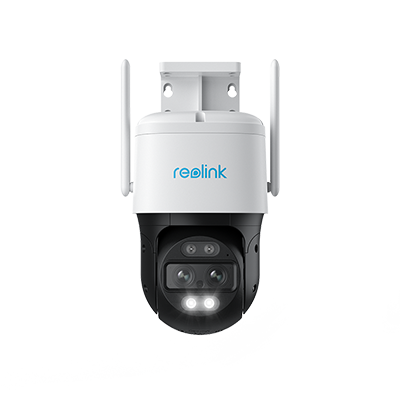 Reolink TrackMix WiFi
4K Dual-Lens PTZ Camera with Motion Tracking
4K 8MP UHD, Wide-Angle & Telephoto Lenses, Pan-Tilt-Zoom, Auto-Tracking, Person/Vehicle Detection, 2.4/5 GHz Dual-Band WiFi, Two-Way Audio.
- Smart TVs: These use WiFi to stream shows from the internet fast.
- Computers and Phones: WiFi gives quick internet for browsing or downloading.
- Smart Appliances: Things like fridges or ovens with smart features connect with WiFi.
WiFi vs. Zigbee: Pros and Cons
Knowing what’s great and what’s not helps you choose. This part lists the pros and cons of both. Here’s what each one offers and where it falls short.
WiFi: Pros and Cons
Pros:
- WiFi moves data fast. It’s perfect for videos and games.
- Most homes have WiFi already. Lots of devices work with it.
- Setup is easy. Devices just join your router.
- Apps make managing WiFi simple.
Cons:
- WiFi uses lots of power. Battery devices need to be charged a lot.
- Its range is shorter without extenders. Big homes might have dead spots.
- The 2.4 GHz band gets busy. That can slow things down.
- Nearby WiFi can mess with it in crowded places.
Zigbee: Pros and Cons
Pros:
- Zigbee saves energy. Devices run for years on one battery.
- The mesh network reaches far. It’s good for big homes.
- Devices cost less. They use basic parts.
- If one device dies, others keep working.
Cons:
- Zigbee sends data slowly. It can’t do video or big files.
- You might need a hub. That adds to the price.
- Fewer devices use Zigbee than WiFi. Choices are smaller.
- Setup takes more effort than WiFi.
Z-Wave vs. Zigbee vs. WiFi: Which One to Choose?
Z-Wave is another smart home option besides Zigbee and WiFi. This part compares all three to help you pick. Here’s how they match up:
- Power Use: Zigbee and Z-Wave save energy. They’re best for battery devices like sensors. WiFi uses more power and fits plugged-in stuff better.
- Data Speed: WiFi is super fast. It’s great for cameras or streaming. Zigbee and Z-Wave are slow and good for simple tasks.
- Range: Zigbee and Z-Wave use mesh networks. They cover more by teaming up. WiFi’s range is shorter unless you add gear.
- Device Fit: WiFi works with tons of stuff, like phones and TVs. Zigbee and Z-Wave are big in smart home gear.
- Cost: WiFi devices cost more, but use your router. Zigbee and Z-Wave might need a hub, raising the price.
- Interference: Z-Wave uses a quieter band (sub-1 GHz). Zigbee and WiFi share the busy 2.4 GHz band.
- Scalability: Zigbee handles up to 65,000 devices. Z-Wave does 232. WiFi slows down with too many.
FAQs
Is Zigbee better than Wi-Fi?
Zigbee is more appropriate for low-power, low data applications, such as with lights and sensors, as it conserves power and increases battery life. WiFi is superior to quickly scanning the internet or streaming videos. It all depends on the purpose you want to use it. Zigbee is great when you want devices that do not necessarily require charging to last long. WiFi is the best in case of fast data.
What are the downsides of Zigbee?
Zigbee has its demerits. Its data rate is low hence it is not in a position to handle videos or big files. There might be a need of a hub to hook it to your internet which is additional. there are fewer devices supporting Zigbee than WiFi and therefore your options remain few. It is also more complex to set-up as compared to WiFi.
Can Zigbee go through walls?
Yes, Zigbee signals penetrate through the walls, but this may limit their range by thick walls. A mesh network is useful as it enables devices to relay signals via other devices, using other channels around barriers. This increases its reliability in houses that have a lot of walls or large rooms.
Is Zigbee still being used?
Indeed, Zigbee is still popular in smart homes. It is used by brands such as Philips Hue, Samsung SmartThings, and Amazon Echo in lights, sensors, and locks. It is popular because it is conservor of power, performing well in a mesh network, thus suitable to low-power, low-data applications.
Conclusion
Zigbee and WiFi both make smart homes better, but they do different jobs. Zigbee saves power and reaches far with its mesh network. It’s awesome for sensors and lights. WiFi gives fast data, perfect for cameras or streaming. Choosing between them means looking at power, speed, range, and cost. Z-Wave is another choice if you want steady, low-power links with less signal clutter. Think about your devices and home size to pick the right one. Let us know what you think in the comments!
Search
Subscribe for the Latest Updates
Security insights & offers right into your inbox