
How to Present Video Evidence in Court (and Get it Admitted)
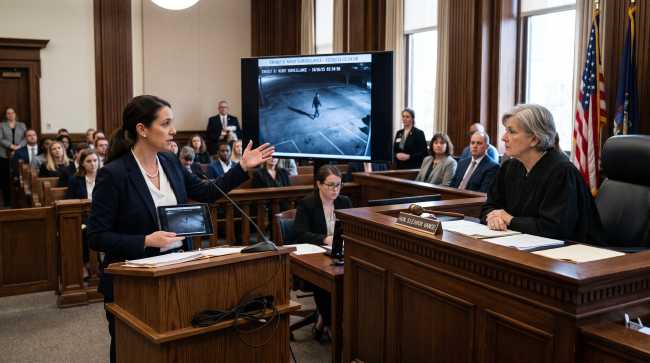
If you are wondering how to submit video evidence in court, you aren't alone. Whether your footage comes from a doorbell camera, a dashcam, or a smartphone, courts generally accept video as evidence but only if it clears specific legal hurdles.
Here is the direct answer: Video evidence in court is admissible across the U.S. But, only once it clears a specific legal bar, not just because the footage exists and looks real. That legal bar stays the same whether the case is in family court, small claims, traffic court, or immigration court. What changes is the paperwork, the deadlines, and how strict a specific courthouse gets about file formats. Where the footage comes from doesn't matter.
Cases involving video often start even earlier than the hearing itself, sometimes with police requesting footage directly from a security camera. This guide picks up from there. It covers what that legal bar requires, how to submit video evidence, what gets it thrown out, and whether phone footage holds up as well as a security camera's.
Video Evidence Is Admissible, But Only If It Clears Three Tests
Courts do accept video evidence, but only once it passes these three tests. Simply being video is not enough.
- The footage has to be relevant - Does the footage actually connect to what happened in the case, under Federal Rule of Evidence 401?
- The footage has to be authenticated - Is there anyone that can prove the video really is what it claims to be, recorded at the time and place it says and not staged or swapped, under Federal Rule of Evidence 901?
- The footage has to be reliable - Was the recording kept in a way that shows it hasn't been altered, ideally the original file rather than a copy of a copy, under the best evidence rule, FRE 1002?
Individual states run their own versions of these same principles. The federal rules aren't the literal rulebook in every courtroom, but the same three-test logic shows up almost everywhere.
One concept worth knowing is the "silent witness" theory. When nobody personally watched the recording happen, like an unattended security camera. Courts can still admit the footage once the reliability of the recording system itself is established. No human eyewitness has to vouch for it, according to the Department of Justice's video evidence primer for prosecutors.
It's also worth knowing who decides what. A judge rules on whether a video is admissible at all, as a threshold legal question. A judge or jury separately decides how much weight to give it once it's in. That's why video is often some of the most persuasive evidence a court sees. It offers a fixed account instead of two people's conflicting memories.
That being said, it isn't automatically bulletproof though. Quality, missing context, and custody gaps are all fair game for challenge.
How to Submit Video Evidence in Court, Step by Step?
Submitting video evidence in court generally follows five steps, no matter which court you're in.
- Disclose it early - Hand a copy to the other side before the hearing, not the morning of. Most courts require this during a discovery or pretrial exchange window. Showing up with a surprise video is one of the fastest ways to get it excluded on procedural grounds alone.
- Mark it as a numbered exhibit - The court clerk assigns each piece of evidence a number, and the formatting rules vary by courthouse, not just by state. California small claims courts, for instance, currently accept video only as an .mp4 file under 100MB through their electronic exhibit system, and they explicitly reject CDs, DVDs, and cloud sharing links.
Important Note: That's one court's rule, not a national standard. Always call the specific clerk's office to ensure the correct details first.
- Lay the foundation - Someone with direct knowledge, the person who recorded it, or a records custodian for an installed camera system, testifies that the footage is a fair and accurate depiction and hasn't been changed. This is the human step that satisfies the authentication test from the section above.
- Let the judge rule - Opposing counsel can object before the video is shown, and the judge decides admissibility as a preliminary matter, sometimes outside the jury's presence.
- Play it, carefully - Test playback on the courtroom's own equipment beforehand. Bring a transcript if there's meaningful dialogue. California's Rule of Court 2.1040, for example, requires a transcript to be lodged with the court before certain recordings can be played. Bring a backup copy in a second format too. A video that won't play is functionally the same as no video.
The one habit that saves the most trouble is contacting the specific court or clerk's office for its local exhibit rules before the hearing date. Format and deadline rules genuinely differ courthouse to courthouse, not just state to state.
What Actually Gets Video Evidence Thrown Out?

Video evidence gets excluded far more often for visible editing or a broken chain of custody than for simply being video. Here is what courts look out for:
- Broken Chain of Custody: This is the documented record of everyone who has handled a file. However, a gap in the chain of custody doesn't automatically get your video thrown out; it usually just affects how much the judge or jury trusts the footage.
- Visible Editing & Tampering: Visible cuts, filters, or enhancements typically need a qualified expert witness to explain what was done and why, not just a party's word that it's fine.
- AI and Deepfakes: Courts currently apply existing authentication rules to AI-generated videos rather than a brand new standard, according to Thomson Reuters' coverage of how courts are handling AI evidence. Proposed rules, like Federal Rule of Evidence 707, may soon set specific reliability standards, but as of the federal judiciary's most recent update on its rulemaking process, the rule is still pending.
- Missing Context: A technically unaltered clip can still be challenged if it's cut off right before or after the key moment.
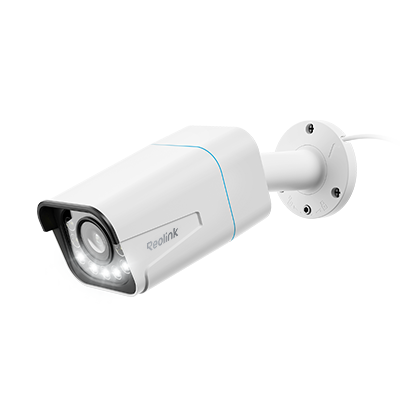
Note: Grainy, gapped, or poorly timestamped footage makes every problem in this section harder to overcome. A security camera such as Reolink's RLC-811A is built for continuous, high resolution recording with a dependable timestamp gives you a stronger starting point long before any of this reaches a courtroom.
Reolink RLC-811A4K Smart PoE Camera with 5 Spotlights
4K 8MP Ultra HD Day & Night, Person/Vehicle Alerts, 5X Optical Zoom, Two-Way Audio, Built-in Siren, Color Night Vision, Live View Anywhere.
Does the Type of Court Change the Rules?

The underlying admissibility tests stay the same everywhere. But, the paperwork, consent rules, and deadlines shift depending on which court you're standing in.
Family Court
Doorbell and home security footage shows up often in custody and divorce cases, usually to document a custody exchange, a support handoff, or an altercation caught on camera, but courts apply extra scrutiny here because of privacy. Silent video generally faces fewer legal hurdles than footage with audio, and recordings from private spaces like bedrooms or bathrooms are especially likely to backfire legally, regardless of what they show.
Note: To find out more on recording footages in bathrooms, see our article on whether a camera in a private space like a bathroom is even legal.
Anyone considering using home footage in a custody or divorce matter should talk to a family law attorney before relying on it. Improperly collected footage can create separate legal problems even when the content itself would help their case.
Small Claims Court
Small claims court is built to be simpler and less formal, often with the judge reviewing evidence directly, but the technical rules don't disappear. The California example above, .mp4 only, a strict size cap, no CDs, is proof that informal court still means following the format rules. Again, confirm the exact requirements with your own courthouse before the hearing.
Traffic Court
Dashcam footage is common in traffic court. It gets treated like any other video evidence, judged for relevance, authentication, and preservation the same way. Usually the recording driver simply testifies the footage is accurate, which satisfies the authentication step covered earlier.
Immigration Court
Immigration court is the one genuine exception worth calling out. These are administrative proceedings, not bound by the Federal Rules of Evidence the way criminal and civil courts are. The actual standard is that evidence needs to be probative and its admission fundamentally fair, from a legal practice advisory on immigration court evidence rules citing Matter of Y-S-L-C-, 26 I&N Dec. 688, 690 (BIA 2015). That's a notably more flexible bar than the three-test framework covered earlier. Flexible doesn't mean automatic though. Properly authenticating footage is still the safest move, since it removes an easy objection regardless of the lower bar.
Cell Phone Video vs. Security Camera Footage
As mentioned, where the footage came from doesn't change the legal tests covered above. But, it does change how easily those tests get satisfied.
A phone recording and a dedicated security camera recording go through the exact same relevance, authentication, and best evidence analysis. Courts don't have a separate rulebook for phone video.
This is when a fixed, installed camera system has a practical edge. Continuous recording, a consistent embedded timestamp, and one documented device make it easier to satisfy the silent witness reliability showing described earlier. That's compared to a phone clip that may have passed through several apps before it reached the courtroom.
Phone footage runs into a different kind of friction. Social media re-uploads, compression, and filters actively work against admissibility, according to Axon's research on cellphone video admissibility. A social media post alone typically faces much heavier scrutiny, so the original file usually has to be recovered separately.
Although security camera footage is often stored, viewed, or exported through a phone app, it's still treated as the original recording as long as the unedited export is preserved. What matters is the edit history and how many times a file has been re-shared, not whether it comes from a phone or camera. The same habit applies either way. Export the original file straight from the camera's own app or NVR, rather than a copy that's been screen recorded, texted, or re-uploaded.
FAQs
Can video evidence be used in court?
Yes. Video evidence is broadly admissible in U.S. courts as long as it's relevant, properly authenticated, and hasn't been improperly altered. Courts apply this same standard whether the footage comes from a phone, a dashcam, or a security camera.
Is video evidence stronger than witness testimony?
Video evidence is often highly persuasive because it offers a fixed, direct record instead of a fallible memory, but it isn't automatically weighted above testimony. Judges and juries still evaluate a video's clarity, completeness, and context the same way they'd weigh any other evidence.
Can I use a video I recorded without the other person knowing?
It depends on your state's consent law and whether the recording includes audio. Some states only require one party to consent to a recorded conversation, while others require every party's consent, according to this state-by-state breakdown of U.S. recording consent laws. Video only recordings made in plain view generally face fewer legal restrictions than recordings that capture audio of a private conversation. Confirm your specific state's law before relying on this kind of footage.
What happens if the other side claims my video was edited?
The judge holds a preliminary authenticity check before the footage is shown to the jury, and the burden is on the person offering the video to show it's accurate and unaltered. That burden is usually met through testimony from the person who recorded it, or an expert witness if enhancement or editing genuinely occurred. This is exactly why keeping the original, unedited file matters from the start.
Conclusion
Whether a clip gets admitted rarely comes down to the legal test itself. Relevance, authentication, and preservation are a low bar once you know what to prove. What actually sinks most cases is the boring part (but worth ensuring): whether the original file survived intact, and whether someone followed that specific courthouse's rules for handing it over.
That's the one habit worth carrying out of this guide. Keep the unedited original, and call the clerk before the hearing date, not after.
On the equipment side, clear, continuously recorded footage with a correctly set up timestamp from a camera that's actually working when it matters clears the authentication bar far more easily than a shaky, re-shared phone clip. Continuous recording security cameras are worth a look if that's a gap in your current setup.
This article is general information, not legal advice. Court rules vary by state and by courthouse, so anyone with an actual upcoming case should confirm specifics with their own attorney or clerk's office.
Search
Subscribe for the Latest Updates
Security insights & offers right into your inbox