
Top 10 Scenic USA Road Trips 2026 & Tips to Stay Safe

The best scenic road trips in USA travelers can take in 2026 are the ones that balance unforgettable landscapes with realistic planning. Routes like Pacific Coast Highway, Going-to-the-Sun Road, and US-50 deliver incredible views, but they also take you through places where fuel stations are sparse, weather changes quickly, and cellular coverage disappears for hours at a time.
That reality gets overlooked in most travel guides. The most memorable US travel destinations are often the least connected. A road trip through the states regularly means mountain passes, desert highways, national parks, and coastal stretches where Google Maps stops loading long before the scenery stops impressing.
The routes below were chosen not just because they're beautiful, but because they're genuinely drivable, realistic to plan around, and worth dedicating vacation time to in 2026. Alongside the destinations, you'll find practical road trip safety tips that help keep your vehicle, gear, and travel plans secure when you're hundreds of miles from home.
What Makes a Road Trip "Scenic" (and Why These 10 Made the Cut)
The best scenic road trips in the USA combine extraordinary landscapes with realistic travel logistics. Social media lists often prioritize dramatic photos while ignoring road conditions, seasonal closures, or basic trip planning realities.
- Every route on this list meets four criteria:
- Protected or roadless terrain along at least one side of the route
- Paved roads generally maintained in good condition
- Fuel and food access within roughly 60 miles
- A predictable seasonal window when most travelers can actually complete the drive
That last point eliminated several otherwise famous candidates. Tioga Pass in Yosemite National Park, for example, delivers spectacular alpine scenery but experiences unpredictable opening and closing dates depending on snowpack. Planning a multi-state vacation around a route that may or may not be open makes it difficult to recommend confidently.
The goal here isn't simply beautiful roads. It's road trip destinations that offer exceptional scenery while remaining practical enough for real travelers planning vacations in 2026.
Plan Around the Season, Not Just the Destination
The best road trip ideas start with a calendar, not a map. Weather determines accessibility more than almost any other factor on America's most scenic routes.
Going-to-the-Sun Road typically operates from late June through mid-October, while Beartooth Highway generally runs from Memorial Day through mid-October. Both roads can experience closures outside those windows regardless of travel plans.
Blue Ridge Parkway presents a different challenge. Portions remain accessible year-round, but high-elevation sections around Mount Mitchell and Grandfather Mountain can close due to ice beginning in November.
For most travelers, May, September, and early October offer the strongest balance between weather, crowds, and accessibility. National parks remain active, temperatures stay manageable, and lodging prices often soften outside peak summer demand.
Southern routes require different planning. Utah's Mighty 5 loop regularly sees temperatures exceeding 100°F across large sections of southern Utah during summer. The Florida Keys face hurricane season between June and November, which can disrupt travel unexpectedly.
Pro Tip: Before committing to any route, review both the NHTSA summer driving tips and NHTSA Winter driving tips. Road conditions change faster than vacation itineraries.
The 10 Best Scenic Road Trips in the USA
These 10 routes represent the strongest combination of scenery, accessibility, variety, and travel experience available across the United States in 2026.
Pacific Coast Highway (CA-1)

"Pacific Coast Highway" by Mike McBey is licensed under CC BY 2.0 / Resized from original.
Route: San Francisco → San Diego
Distance: ~655 miles
Time: 5–7 days
Best season: April–October
Best for: First-time scenic drivers
Pacific Coast Highway remains the most iconic scenic road trip in the USA because few roads match the concentration of coastal views packed into a single route. The stretch between Monterey and San Simeon delivers the highlights, including Bixby Bridge, the cliffs of Big Sur, and the Elephant Seal Rookery at Piedras Blancas.
Pro Tip: Winter landslides frequently affect sections south of Big Sur. Check the Caltrans QuickMap before departure. Vehicle break-ins have also been documented at popular trailhead parking areas near Pfeiffer Falls and McWay Falls, so keep electronics and luggage completely out of sight.
Route 66

Amboy (California, USA), Hist. Route 66" by Dietmar Rabich is licensed under CC BY-SA 4.0 / Resized from original.
Route: Chicago → Santa Monica
Distance: ~2,448 miles
Time: 14 days
Best season: April–November
Best for: Anyone anticipating to drive through the iconic Route 66 path
Route 66 remains the ultimate American road trip because it crosses the country through eight states while preserving a remarkable amount of roadside history. Although officially decommissioned in 1985, roughly 85% of the original alignment remains drivable.
Cadillac Ranch near Amarillo, the Wigwam Motel in Holbrook, and the Painted Desert east of Flagstaff represent some of the route's most recognizable stops.
Pro Tip: Cellular coverage becomes inconsistent across parts of the Texas Panhandle and eastern New Mexico. Service gaps exceeding 60 miles are common. Download offline maps and avoid letting your fuel tank drop below one-quarter west of Tulsa.
Blue Ridge Parkway

"Blue Ridge parkway view" by Kimson Doan is licensed under CC BY-SA 4.0 / Resized from original.
Route: Waynesboro, VA → Cherokee, NC
Distance: 469 miles
Time: 4–5 days
Best season: Late September–early November
Best for: Fall foliage
Blue Ridge Parkway offers the strongest fall-color road trip in the country. The route contains no commercial truck traffic and no stoplights for its entire 469-mile length. Highlights include Mabry Mill, Linn Cove Viaduct, and the Folk Art Center outside Asheville.
Pro Tip: Peak foliage weekends dramatically increase traffic. High-elevation sections can close because of ice as early as November. Monitor the official Blue Ridge Parkway closure map before departure.
Going-to-the-Sun Road
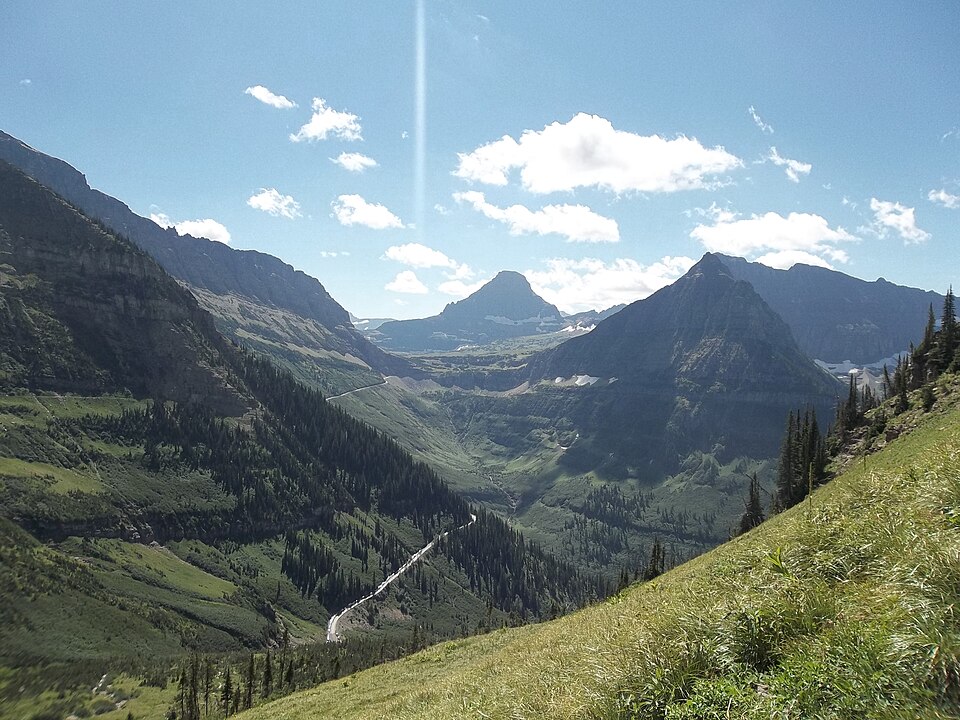
"Glacier National Park, Going-to-the-Sun Road" by Sanyam Bahga is licensed under CC BY-SA 3.0 / Resized from original.
Route: West Glacier → St. Mary, MT
Distance: 50 miles
Time: 1–2 days
Best season: July–mid-September
Best for: Anyone who cannot get enough of epic sceneries
Going-to-the-Sun Road packs more scenery into 50 miles than almost any paved road in America. Logan Pass at 6,646 feet, the Weeping Wall, Wild Goose Island Lookout, and the Highline Trail trailhead create a concentrated experience that feels larger than its mileage suggests.
Pro Tip: Glacier has changed its access system for 2026. Vehicle reservations are no longer required, but Logan Pass operates a three-hour timed parking system during peak season to manage congestion, and a ticketed Logan Pass Shuttle (book in advance on Recreation.gov) runs day hikers directly to the trailheads. Check the Glacier 2026 access and Logan Pass planning page before traveling.
Utah's Mighty 5 National Parks Loop

Route: Moab → Springdale
Distance: ~600 miles
Time: 7–10 days
Best season: April–May, September–October
Best for: Red-rock concentration
No other road trip destinations pack five national parks into a single route. Arches, Canyonlands, Capitol Reef, Bryce Canyon, and Zion create one of the highest scenery-per-mile ratios in North America.
Highway 12 through Grand Staircase-Escalante deserves special mention because many travelers consider it one of the finest scenic drives in the country.
Pro Tip: Temperatures above 100°F are common during summer. Cellular service disappears across large portions of Highway 12. Zion trailhead parking frequently fills before 6 a.m. during peak months.
Overseas Highway (US-1)

Route: Miami → Key West, FL
Distance: 113 miles
Time: 2–3 days
Best season: November–April
Best for: Ocean driving
Overseas Highway offers something no other American road trip can match: 113 miles of driving across open water. The route follows portions of Henry Flagler's historic railroad while crossing 42 bridges, including the famous Seven Mile Bridge. Key Largo, Islamorada, Marathon, and Key West each provide distinct stops worth spending time in.
Pro Tip: Hurricane season runs from June through November. Traffic backups can become severe because many bridge sections offer no alternate routes.
Olympic Peninsula Loop (US-101)

Route: Seattle → Seattle (loop)
Distance: ~330 miles
Time: 4–5 days
Best season: June–September
Best for: Anyone craving for variety
Olympic Peninsula Loop may be the most diverse route on this list. Few American road trips allow travelers to visit a temperate rainforest, glacier-fed beaches, and alpine mountain environments within the same day. Hurricane Ridge, Hoh Rain Forest, Rialto Beach, and Lake Crescent anchor the experience.
Pro Tip: Avoid going to Hoh Rain Forest if you are not a fan of the wet. The forest receives 12–14 feet of annual rainfall. Even midsummer mornings can feel surprisingly cold and wet.
Great River Road

Route: Itasca, MN → Venice, LA
Distance: ~3,000 miles
Time: 14–21 days
Best season: September–October
Best for: Long-haul travel
Great River Road follows the Mississippi River through ten states and remains one of the most overlooked best US road trip destinations.
Lake Pepin, the Quad Cities, Memphis, Vicksburg, and the Louisiana delta showcase how dramatically the Mississippi changes across its journey south.
Pro Tip: Most travelers enjoy the route more by focusing on a three-to-five-day segment rather than attempting the entire distance at once.
Beartooth Highway (US-212)

Route: Red Lodge, MT → Cooke City, MT
Distance: 68 miles
Time: 1–2 days
Best season: Late May–mid-October
Best for: Anyone seeking white-knuckle thrills
Charles Kuralt famously called Beartooth Highway "the most beautiful drive in America," and the route still makes a compelling case for the title. The road climbs through more than 20 switchbacks and reaches 10,947 feet at Beartooth Pass while providing continuous views into the Absaroka-Beartooth Wilderness.
Pro Tip: This route has one of the shortest operating seasons on the list. Snow closures can occur with little notice, even in early autumn.
The Loneliest Road in America (US-50)

Route: Ely → Fernley, NV
Distance: 287 miles
Time: 2–3 days
Best season: April–October
Best for: A solitude drive
US-50 earns its nickname honestly. The route crosses 17 mountain passes while connecting isolated Nevada communities through immense desert landscapes. Eureka, Austin, and Middlegate serve as the primary population centers along the route.
Pro Tip: Distances between towns regularly reach 60–90 miles. Gas stations may close by 8 p.m. Cellular service disappears for extended periods. Carry extra water and top off your fuel tank whenever possible.
Road Trip Safety Tips Most Travelers Skip
Most road trip problems come from routine issues, not dramatic emergencies. Vehicle neglect, unattended gear, and fatigue cause far more disruptions than the scenarios most travelers worry about.
Before departure: Check all four tires plus the spare before leaving. Verify coolant levels, engine oil, washer fluid, and battery condition. A surprising number of roadside assistance calls happen because travelers skip basic maintenance checks. Keep a printed road atlas in the vehicle as a backup because even the best navigation apps become useless when cellular coverage disappears. The official NHTSA vehicle preparation checklist is a good pre-departure reference.
At trailheads and overlooks: Vehicle break-ins at scenic parking lots are a documented problem across many National Park Service locations. Store valuables out of sight before arriving. Do not move backpacks, cameras, or electronics into the trunk after parking because thieves often watch for exactly that behavior. If you're stopping over in remote areas with limited infrastructure, a cellular security camera is worth considering. A battery powered security camera with 4G connectivity can monitor a parked vehicle, RV, or campsite even when local Wi-Fi doesn't exist.
Drowsy and night driving: The NHTSA attributes more than 90,000 crashes annually to drowsy driving. Daily stages of six hours or less behind the wheel usually produce a safer and more enjoyable trip. A 2 a.m. motel arrival is often a sign that the itinerary needs another overnight stop rather than more caffeine.
The Best Portable Security Cameras for a Road Trip
The right security camera depends entirely on where you're sleeping and where your vehicle stays while you're away. Some travelers need coverage at remote campsites with no internet. Others simply want to monitor an Airbnb, RV site, or parked car while exploring nearby attractions.
Reolink Go PT Ultra - Best for Off-Grid and Remote-Parking Road Trips

The Reolink Go PT Ultra is the strongest cellular security camera for travelers spending time far beyond Wi-Fi coverage. Its 4K 8MP resolution and 4G LTE connectivity allow monitoring from locations where traditional cameras simply cannot operate.
The included Reolink SIM works on AT&T and T-Mobile networks across the lower 48 states, making the Go PT Ultra particularly useful at remote campsites, Zion trailheads, US-50 motels, and dispersed camping areas. The 355° pan and 140° tilt coverage provides near-360° visibility from a single mounting position.
Smart detection distinguishes people, vehicles, and animals while reducing false alerts from wind or moving vegetation. USB-C charging and the optional 6W solar panel support extended deployments without constant maintenance. For travelers needing a 4G LTE security camera to monitor a parked vehicle, RV, tent setup, or gear cache while away hiking, this is the most versatile option in the lineup.
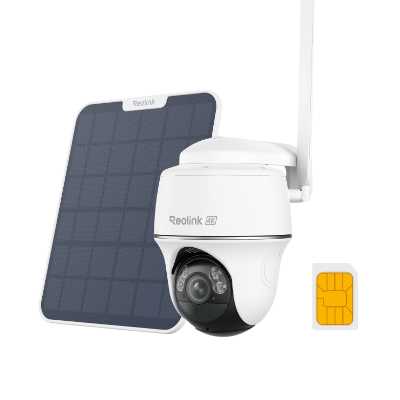
🎉 Cellular Portable Pick: 4K 8MP Wire-Free 4G LTE PT Solar Security Camera
- 4K 8MP resolution; 355° pan & 140° tilt
- 4G LTE connectivity — works anywhere without WiFi
Reolink Argus MagiCam - Best for Budget Travelers and Quick-Mount Setups

The Reolink Argus MagiCam is the easiest portable security camera to deploy when speed and flexibility matter most.
Its magnetic mounting pad attaches to metal surfaces without screws, tools, or permanent installation. That makes it easy to position on a motel doorframe, RV ceiling, metal storage cabinet, or rental-property fixture in seconds. The palm-sized design also takes up almost no luggage space.
Two AA lithium batteries provide up to nine months of standby time, while dual-band 2.4GHz and 5GHz Wi-Fi support and IP67 weather resistance allow use in a wide range of environments.
The trade-off is image quality. The Argus MagiCam uses 2MP resolution, which is perfectly adequate for motion alerts, deterrence, and basic monitoring but less suitable for forensic-quality evidence such as license-plate-readable footage. Travelers who prioritize image detail should step up to the Argus 4 Pro. Travelers who prioritize convenience, portability, and battery life will appreciate the MagiCam's simplicity.

2MP Wireless Power-Efficient Camera
Magnetic Mounting for Easy Installation, Max. 9-Month Battery Life, Dual-Band 2.4/5GHz Wi-Fi, No Monthly Fees.
FAQs
Is it safe to road trip solo in the USA in 2026?
Yes, solo road trips remain safe for most travelers who follow basic planning and safety practices. Share your itinerary with someone at home, avoid pushing through extreme fatigue, keep your fuel tank above one-quarter in remote areas, and book accommodations before arriving in isolated regions.
What's the most scenic road trip in the USA for someone with only one week?
Utah's Mighty 5 loop offers the highest scenery-per-day ratio on this list. Few road trip destinations in the USA combine five national parks, Highway 12, red-rock canyons, and world-class hiking opportunities within a seven-day itinerary.
Do I need a 4G LTE security camera for a road trip?
A 4G LTE security camera becomes valuable whenever you're parking in locations without dependable Wi-Fi. The Reolink Go PT Ultra is particularly useful for monitoring a parked vehicle, RV, tent, or campsite while you're away exploring remote areas.
When is the best time of year for a US road trip?
May, September, and early October provide the best balance between weather, crowds, and accessibility across most scenic road trips USA travelers choose. The main exceptions are Going-to-the-Sun Road and Beartooth Highway, which require summer access windows, while the Florida Keys and southern Utah generally perform best from October through April.
Conclusion
There you have it. We hope you’re feeling more inspired with the routes we’ve shortlisted. It’s now time to pick the route that fits your season. Everything else (vehicle prep, lodging, security camera, what to pack) follows from the terrain you're committing to. The best American road trips leave you with incredible memories, not preventable problems, and a little preparation goes a long way toward making sure both your vehicle and your gear arrive home safely.
Search
Subscribe for the Latest Updates
Security insights & offers right into your inbox