
Self-Hosted Security Camera: The Ultimate Guide to Cloud-Free Surveillance
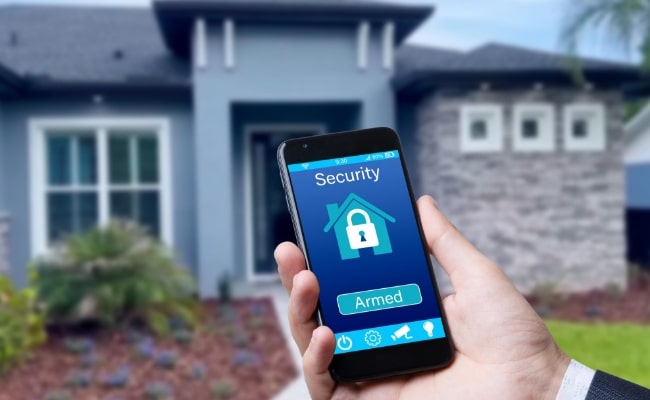
In modern times, security and privacy have become an essential element for everyone. Numerous residential and commercial property owners want surveillance devices instead of cloud-based systems to retain system-level control. Users who opt for self-hosted security camera solutions gain control over storage through local footage retention; thus, they achieve enhanced privacy and system reliability.
This guide provides details about installing self-hosted security cameras and their advantages while suggesting top recommendations for selection among essential factors to consider when choosing such systems.
Overview of Self-Hosted Security Camera
A security camera system maintained by users depends on their local devices rather than cloud storage solutions for its operation. This system design grants users total data ownership and reduced dependence upon outside service providers. A self-hosted security camera system is a standalone video recording device that retains data within specific local devices.
What is a Self-Hosted Security Camera?
A security camera operated by a user through their personal server records and saves video data at local storage locations instead of cloud providers. Such systems securely store recorded videos using NVRs, local hard drives or SD cards, and network-attached storage (NAS) devices.
Components of a Self-Hosted Security System
The operation of reliable video surveillance depends on multiple necessary self-hosted security system components that function together.
- A specified IP camera functions by transforming video footage with high-resolution quality.
- The NVR or software-based record and playback system functions to control video storage operations.
- Three storage solutions exist for safe local video recordings, including SD cards, hard drives, and network-attached storage devices.
- A stable local network establishes the complete data flow between surveillance equipment and storage facilities.
Why Choose a Self-Hosted Home Security Camera?
Self-hosted security cameras provide various benefits that establish them as an ideal solution for residential and commercial users.
- Users keep total control over their data storage as they do not depend on third-party cloud-based systems.
- Users avoid subscription payments because the system operates on a one-time fee basis.
- Continuous recording remains possible through local storage systems even without internet connection.
- Security features that have been enhanced minimize the chances of hacking attempts and unauthorized access.
- Users can adjust their surveillance systems based on their surveillance requirements.
Best Self Hosted Security Camera & System
Properly selecting self-hosted security camera systems is essential in designing effective surveillance solutions. Numerous recommendations from Reolink can be found below.
Reolink Trackflex Floodlight WiFi
The Trackflex Floodlight WiFi by Reolink delivers high-quality self-hosted security camera features, incorporating two lenses to provide 360° wide-angle panorama coverage. This security device operates at 4K resolution while its smart motion tracking system identifies between human targets, vehicle traffic, and moving animal. Users can save recorded footage on NVR devices, SD cards, and other third-party platforms.
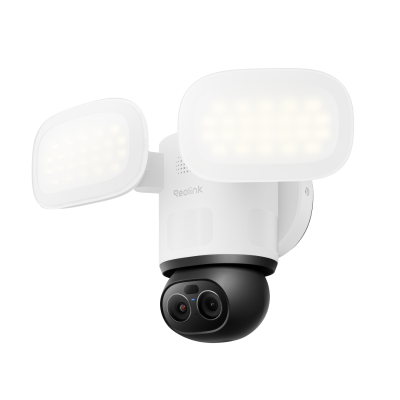
Smart 4K 360° Coverage Wi-Fi Floodlight Security Camera
Local AI Video Search, 4K 8MP Ultra HD, 360° Coverage View, 6X Hybrid Zoom, Dual-Color Floodlight.
Reolink Argus PT Ultra
Users can achieve full area coverage through the pan-tilt functionality offered by the Reolink Argus PT Ultra. The device operates in 4K Ultra HD mode, which provides clear video quality at night. The solar-powered camera is an eco-friendly system that allows continuous outdoor monitoring without frequent battery charging.
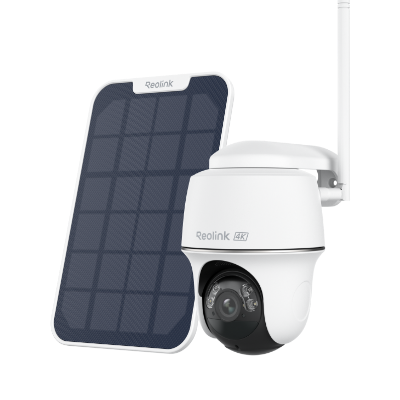
4K 100% Wire-Free PT Camera
4K 8MP Ultra HD; 5GHz/2.4GHz WiFi; Rechargeable Battery & Solar Powered; 355° Pan & 140° Tilt; IP65 Certified Weatherproof; Clear Night Vision; 2-Way Audio; 122° Wide Viewing Angle.
Reolink Argus 4 Pro Kit
The Reolink Argus 4 Pro Kit enables users to record high-definition video and leverage AI capabilities, improving their security system's performance. The camera system provides users with storage flexibility by allowing them to record their footage on an SD card or by connecting to the Reolink Home Hub for upgraded recording features with 4K 180-degree coverage.
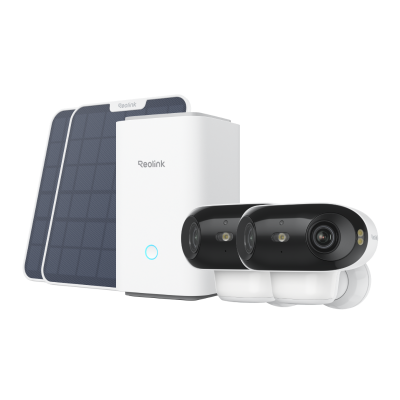
4K UHD Wi-Fi 6 Security System with 180° Blindspot-Free View
ColorX Night Vision, 1 Year of Local Storage, Exclusive Anti-Theft Algorithms, 180° Blindspot-Free Coverage, Expandable System Up to 8 Reolink Cams.
What to Consider When Choosing Self-Hosted Security Cameras and Systems?
Security systems operated by users require assessment of essential parameters to guarantee their maximum performance and protection.
1. ONVIF & RTSP Support
The camera system needs ONVIF and RTSP protocol compatibility for easy connection with external software and NVR systems. These standards ensure better flexibility because they enable users to unite various camera brands while maintaining their current monitoring system.
2. Camera Quality and Features
A quality security camera demands high-resolution video output that should be 1080p or 4K to achieve sharp video details. Security cameras require nighttime vision capabilities to record footage in dim lighting conditions.
The storage capacity decreases thanks to motion detection since it records footage only during movement. Security systems backed by AI technology identify different objects through safety alerts by detecting human beings while separating them from vehicles and other entities.
3. Local Storage Options
The storage selection determines the long-term reliability and future expansion potential of a security system operated by the same organization. Network Video Recorders are centralized management tools capable of operating with numerous surveillance cameras.
Affordable storage runs through microSD cards when you operate with one security camera yet limits your file storage space. NAS devices provide flexible storage capabilities and remote features, making them suitable for bigger security control networks. External hard drives deliver flexible storage solutions that function effectively through connections to recording systems at cost-friendly prices.
4. Network Connectivity
A steady connection between network components enables clean video transfer while the system operates. The Ethernet cable delivers stable network functionality that stays consistent without major interruptions.
Wireless arrangements provide adaptable installation, yet their performance will vary due to radio wave disturbances. The system operates efficiently when dedicated bandwidth guarantees multiple video transmissions while separate networks support security equipment.
5. Security and Privacy
Security procedures serve to defend recorded footage from illegal access attempts. An encrypted video transmission system serves as a protection strategy against data breaches. Expected storage devices and camera systems work with secured passwords to keep out unauthorized users.
Network segmentation and firewalls establish independent security zones to protect security devices from cyber-attacks. Security improves significantly through scheduled firmware upgrades, which disable all remote access features that are not required.
6.Cost
A self-hosted security system produces its total price from acquiring cameras, storage components, and networking technology. Small businesses find MicroSD cards suitable because they offer cost-effective storage, but NVRs or NAS devices come at a higher investment level.
High-definition cameras that use artificial intelligence functions tend to cost more while still supplying enhanced monitoring possibilities. A security system should align its functionality with budget constraints to deliver suitable security solutions.
How to Set Up a Self-Hosting Security Camera System?
Establishing an effective self-hosted security system implementation requires multiple sequential procedures for monitoring and data storage operations.
- A self-hosting compatible IP camera with local storage capability should be your selection.
- Install a reliable local network system using enough bandwidth to support video streaming functions.
- Placing security cameras at locations that face high-risk threats is essential.
- The connection of cameras requires an NVR SD card or NAS device for video storage capabilities.
- You need to adjust their cameras by deciding what type of motions to detect and scheduling when recordings should occur.
- After everything is set up, you just need to perform a thorough test of everything working, and you are good to go.
FAQs
What is the best home security camera system DIY?
The optimum self-installable home security camera setup depends on personal requirements. Users can access versatile self-hosted camera systems from Reolink, which includes the Duo 3 WiFi alongside the Argus PT Ultra Kit, which combines high-definition video and security capabilities.
Does a self-hosted security camera require WiFi?
A security camera set up by the user does not need to operate through WiFi connections. These cameras provide flexibility through WiFi, but wired options deliver uninterrupted recording because of their secure network connection.
Conclusion
People and businesses interested in managing their security apparatus without surrendering privacy or wanting to reduce expenses should consider self-hosted security cameras as an exceptional solution. The systems that do not use cloud storage provide users with better security protection and system reliability.
All users can achieve complete surveillance security by choosing between Reolink Duo 3 WiFi, Argus PT Ultra Kit, or Argus 4 Pro Kit systems that operate independently of third-party control. A Share of your opinions about surveillance systems appears in the comments section.
Search
Subscribe for the Latest Updates
Security insights & offers right into your inbox