
Top 10 Safest Neighborhoods in San Francisco for 2026
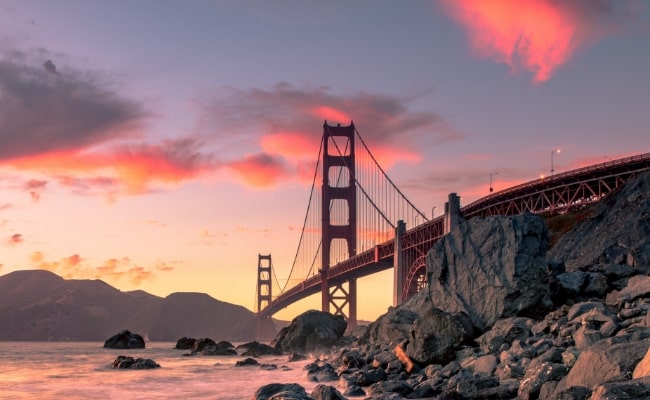
San Francisco ended 2025 with 28 homicides. This figure is the lowest count since 1954 and a 25% drop in overall crime year-on-year, according to the San Francisco Police Department. Violent crime is down to lows not seen since the 1950s, car break-ins sit at a 22-year low, and property crime has fallen 27% from the prior year.
Yet the city's crime picture is not uniform. San Francisco has 41 reporting districts, and safety conditions shift steeply between them. The dense commercial corridors of SoMa, the Tenderloin, and the Mission still account for a disproportionate share of reported incidents.
Meanwhile, the residential fog-belt and hillside neighborhoods to the west and north consistently record some of the lowest crime rates per capita in the city.
For anyone relocating to San Francisco, or securing a home already there, neighborhood selection still matters. We've shortlisted ten safest neighborhoods in this article and they are ranked among the city's safest based on 2025 SFPD data. We'll also be looking at violent crime rates, property crime context, and what makes each area distinctly liveable.
Is San Francisco a Safe City to Walk Around?
By the standards of a major US city, violent crime is low. The citywide homicide rate in 2025 was the lowest since 1954, and the majority of San Francisco's 41 neighborhoods recorded fewer than 10 violent incidents per 1,000 residents last year, according to SFPD data.
The main caution for residents and visitors is property crime. Vehicle break-ins, petty theft, and larceny remain the city's most common reported offences though these are at multi-decade lows. Leaving valuables visible in a parked car is the single most preventable mistake in San Francisco, in any neighborhood.
Daytime walking throughout most of the city is safe and pleasant. The Tenderloin and parts of SoMa merit extra awareness, particularly at night. But these are concentrated areas, not representative of the broader city.
Top 10 Safest Neighborhoods in San Francisco
The western and northern residential districts of San Francisco consistently record the lowest crime rates per capita. These neighborhoods share common traits: lower population density, strong community ties, quieter commercial footprints, and in several cases, natural geography that limits through-traffic.
1. Outer Richmond
The Outer Richmond occupies the northwest corner of the city, stretching from Arguello Boulevard out to the Great Highway along Ocean Beach. It is one of San Francisco's most ethnically diverse neighborhoods, with a strong Chinese-American community centred on Clement Street, and a notably unhurried pace compared to the denser east side of the city.
The Outer Richmond and Sunset/Parkside areas are among the lowest property crime rates per capita citywide. Violent crime is well below the citywide average. The neighborhood is served by the 1 California, 38 Geary, and 2 Clement Muni lines, and Golden Gate Park forms its southern boundary.
Best for: Families, those seeking a quieter pace, Golden Gate Park proximity.
2. Presidio Heights
Presidio Heights sits between the Presidio National Park and Pacific Heights, defined by tree-lined Sacramento and Washington Streets and some of the city's finest Victorian and Edwardian residential architecture. The neighborhood is small and predominantly residential, with very low pedestrian through-traffic.
Glen Park, Presidio Heights, and West of Twin Peaks hold Grade A ratings on citywide crime mapping analyses, with Presidio Heights among the city's lowest overall crime scores. Violent incidents are rare; where crime does occur, it is primarily vehicle break-ins concentrated near the few commercial blocks.
Best for: Affluent families, those who want park-adjacent living with urban access.
Pro Tip: San Francisco’s housing stock often has a single narrow frontage that requires wide-angle coverage. The Reolink OMVI 3i PoE is built for exactly this scenario. Its triple-lens system delivers a 180° panoramic view from the upper dual lens (10MP) and the 4K tracking lens covers the full entryway driveway or front gate from a single wall or ceiling mount.
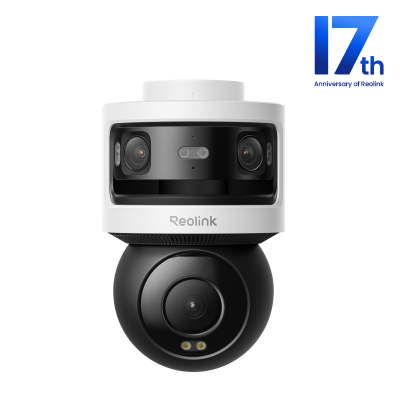
🎉 17th Anniversary NEW Release: 10MP+8MP Triple-Lens 360° Panoramic Pan-Tilt Camera
- 10MP Dual-Lens 180° View & 4K 360° Full Coverage
- PoE Connectivity & Local Storage
3. Sea Cliff
Sea Cliff is one of San Francisco's smallest and most exclusive neighborhoods, perched on the coastal bluffs above China Beach and Baker Beach. With only a few hundred households, it functions almost as a gated enclave with low foot traffic, dead-end streets. Its attentive neighborhood culture makes it naturally resistant to opportunistic crime.
The SF Chronicle's analysis of 2025 SFPD data names Sea Cliff among the five neighborhoods with the lowest violent crime rates in the city. Mission Local's neighborhood data explorer, drawing on SFPD figures, lists Sea Cliff and the Sunset as among the lowest-crime areas in the city.
Best for: Those seeking maximum quiet, coastal setting, and privacy.
4. Noe Valley
Noe Valley occupies a sun-soaked pocket south of Twin Peaks, sheltered from the city's coastal fog. The 24th Street commercial strip which feature bookshops, cafés, independent boutiques, stroller-friendly pavement, defines the neighborhood's community-oriented character and consistently one of the most sought-after addresses in the city.
The 24th Street corridor sees moderate foot traffic, which means vehicle break-ins require more effort than in quieter residential pockets and the neighborhood watch culture is well-established.
Best for: Young families, professionals, those who want walkable amenities within a safe residential setting.
5. West Portal
West Portal occupies the south slope of Twin Peaks, framing a village-like commercial street that ends at the tunnel mouth of the Muni Metro. It has a distinctly small-town character unusual in a city of San Francisco's density. Residents tend to be familiar with each other, community boards are active, and the pace of life is noticeably slower than the Mission or Castro a few minutes away.
Crime rates are also consistently low. The main property crime risk is vehicle break-ins near the commercial blocks and the Muni tunnel entrance.
Best for: Families with school-age children, those wanting a neighborhood with a true community feel.
6. Sunset District
The Sunset is San Francisco's largest neighborhood by area, running the full length of the western city from Golden Gate Park south to Lake Merced. It is overwhelmingly residential, with a dense grid of single-family and two-unit homes.
SFPD 2025 data shows the Sunset/Parkside area among the lowest property crime rates per capita citywide, alongside the Outer Richmond and the Excelsior. The sheer size of the Sunset means aggregate incident numbers can appear elevated but on a per-resident basis, it is one of the city's safer choices. The N Judah and L Taraval Muni lines connect it to downtown.
Best for: Families, surfers, those who want space and quiet without sacrificing transit access.
7. Twin Peaks
Twin Peaks is as much a geographic landmark as a neighborhood. The two hills that crown the geographic centre of San Francisco, offering 360-degree views of the bay and the city below. Residential streets wind steeply upward, with single-family homes and very limited commercial activity. The hilltop location limits through-traffic almost entirely, and the population is small.
The elevation and limited road access in the neighborhood creates a natural barrier to opportunistic crime.
Best for: Those prioritising peace and views; less suited to those needing frequent transit access.
8. Forest Hill
Forest Hill adjoins Twin Peaks to the southwest, sharing its residential character but with wider lots and a neighborhood association that is one of the oldest and most active in the city. Streets are relatively quiet and the presence of Forest Hill Muni station gives residents direct downtown access without the trade-off of commercial footfall on the doorstep.
Crime rates here are among the lowest in the city due to low foot traffic and strong community organisation.
Best for: Established families, those seeking large lots and tree-lined streets.
9. Marina District
The Marina stretches along the northern waterfront from Fort Mason to the Presidio and is home to one of the city's most energetic restaurant and bar strips on Chestnut and Union Streets. It attracts young professionals and remains one of the most walkable neighborhoods in the city.
Crime is low for an urban neighborhood with this level of foot traffic. The main property crime concern is vehicle break-ins in parking areas adjacent to the commercial strips and the Palace of Fine Arts. Rental cars and tourist-visible luggage in parked vehicles are the primary targets.
Best for: Young professionals, those wanting urban energy within a safe residential setting, proximity to the Presidio.
10. Glen Park
Glen Park sits in a quiet canyon at the intersection of Diamond Heights and the Excelsior, anchored by a small village commercial strip on Diamond Street and one of the city's most beloved neighborhood parks: Glen Canyon. BART's Glen Park station makes it an easy commute option despite its tucked-away character.
Crime is low across both violent and property categories. The canyon geography and predominantly residential streets limit the opportunistic traffic, which is more common in denser neighborhoods.
Best for: Nature-lovers, families, BART commuters, those wanting a village feel with good transit.
How We Determine the Safest San Francisco Neighborhoods
Defining "safest" requires more than a single metric. The neighbourhoods above were assessed across several factors:
- Violent Crime Rates: Homicide, rape, robbery, and aggravated assault, as defined by the FBI's Uniform Crime Reporting (UCR) programme and tracked through the SFPD Crime Dashboard.
- Property Crime Rates: Burglary, theft, auto theft, and arson.
- Community Engagement: Active neighborhood associations and watch groups correlate consistently with lower crime rates in SFPD analysis.
- Security Patrols: Merchant- or resident-funded patrols in several of these neighbourhoods supplement SFPD coverage.
- Urban Layout: Cul-de-sacs, hillside topography, and limited through-routes reduce the opportunity for opportunistic crime.
- Population Density: Lower-density residential areas consistently record lower per-capita crime than dense commercial corridors.
How to Find Safest Neighborhoods to Stay in San Francisco
Selecting a neighborhood involves more than crime data. Here are the most useful resources for prospective residents:
- SFPD Crime Dashboard: The most authoritative source for SF crime and incident data.
- DataSF Open Data Portal: Raw SFPD incident data, downloadable and mappable for your own analysis.
- Walk the area, day and night: Pay attention to street lighting, pedestrian activity, and the character of commercial blocks on evenings and weekends.
- Check Muni and BART access: San Francisco's safe western neighborhoods are mostly well-served, but transit frequency varies. The Muni trip planner is reliable.
- Talk to residents: Nextdoor and neighborhood-specific Reddit communities (r/sanfrancisco, r/AskSF) give a candid read on day-to-day conditions that crime statistics don't capture.
Essential Safety Tips for Living in San Francisco
San Francisco's violent crime is at historically low levels, but property crime, particularly vehicle break-ins, remains the most common day-to-day risk. These are the habits that matter.
- Never leave anything in your vehicle, even for a moment. Not a bag on the seat, not a jacket in the footwell. This applies equally in quiet residential streets in the Richmond and the Sunset as it does downtown. Rental cars with visible luggage are the most frequently targeted.
- Install motion-activated exterior lighting on your home's entrance and driveway. Motion sensor lights are among the most cost-effective deterrents for opportunistic intruders.
- Ensure your home security system has backup battery and cellular connectivity, so it continues to function during power failures, including the Muni-related outages that occasionally affect the Sunset and Richmond neighborhoods.
- Record serial numbers and photograph valuables for insurance purposes. Recovery rates for stolen electronics are low; documentation makes claims significantly easier.
Note: The Bay Area is hosting six FIFA World Cup matches at Levi's Stadium. Large-scale events like this tend to increase opportunistic property crime. It's a good moment to make sure your home security is in order before the tournament kicks off. A wide-angle outdoor camera with real-time motion alerts, like the Argus 4 Pro, means you stay informed whether you are at the stadium or at home.

4k 180° Wire-free Color Night Vision Camera
4K UHD 180° Blindspot-free View; Color Vision Day and Night; 30% More Battery Life; Dual-band Wi-Fi 6; Smart detection.
FAQs
What is the safest part of San Francisco?
The data shows that Sea Cliff will become the #1 safest neighborhood in San Francisco by 2026. The Gold Coast elite neighborhood experiences virtually no violent criminal activity.
What is the nicest part of San Francisco to live?
People commonly choose between traditional family-oriented neighborhoods such as Noe Valley and West Portal and the trendy areas of the Mission District and Marina, which appeal to younger professionals.
What is the #1 safest city in California?
The FBI crime report identifies Outer Richmond as the safest city in California. The master-planned community maintains very low violent and property crime rates because it serves residents with high income and an active citizenry.
Which San Francisco neighborhoods have the lowest crime rates?
According to 2025 SFPD data, the Inner Sunset, Noe Valley, Twin Peaks, the Presidio, and Sea Cliff recorded the lowest violent crime rates citywide, with the Presidio logging the city's lowest property crime rate at approximately 6 incidents per 1,000 residents.
Conclusion
San Francisco contains neighborhoods that demonstrate superior crime prevention despite other areas lacking complete safety. The city's future safest neighborhoods rank among the top ten due to their active communities alongside natural crime barriers and population characteristics that minimize criminal activity.
People who choose one of these secure San Francisco neighborhoods can experience the city's lively aspects without worrying about safety. Which San Francisco neighborhood do you believe will become the safest during the upcoming years? Let us know!
Search
Subscribe for the Latest Updates
Security insights & offers right into your inbox