
Parts of a Door Lock: A Complete Guide to Lock Components
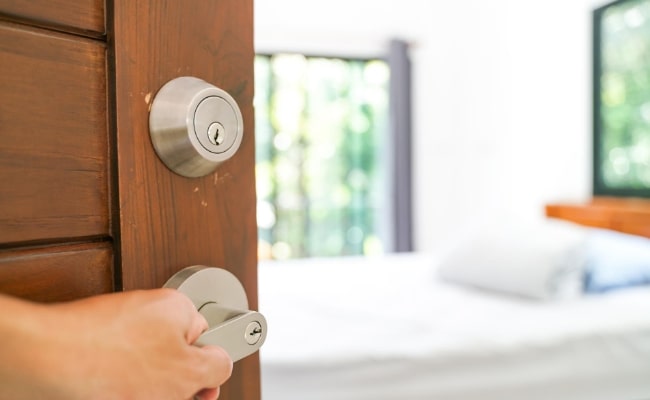
A door lock serves as an essential security system that enables users to keep their doors sealed whenever needed. The lock system contains multiple components that unite to secure doors.
Learning about the different parts of a door lock enables people to understand lock operation and fix problems while maintaining locks effectively. The following article details door lock parts contained within door locks.
Types of Door Locks and Parts
There are several door lock types which are common to each other but have slight differences in components:
- Cylindrical Locks - It is a commonly used lock placed on the majority of home doors. It contains a cylinder, turn knob, latch bolt, strike plate, and certain inner parts.
- Mortise Locks - They are most commonly found on commercial doors. They are locks featuring a rectangular case that is recessed or mortised into the door.
- Tubular Lever Locks - These are light locks that are easy to install. They consist of a tubular latch system.
- Deadbolt Locks - Deadbolt locks extend their bolt deeper into the door frame to provide increased security. Such locks contain five essential components which include a bolt and cylinder as well as a turn knob and strike plate and housing.
Parts of a Door Lock
There are a number of important internal and external parts of a lock that make up a fully functioning door lock. A basic door lock contains a cylinder mechanism, bolt, strike plate, and turn knob to control the latching function. However, there are also additional labeled parts of a door lock that allow the lock to secure and release properly.
Cylinder
The cylinder is the part that allows a key to operate the lock. It contains a central plug that can be rotated by the key, which then operates additional internal components. A set of pin tumblers inside the cylinder plug must be correctly aligned by the cuts on the key for the cylinder to turn. The cylinder is inserted into the door's edge or exterior to create the keyhole.
Bolt (or Latch)
The bolt, also sometimes referred to as the latch, is the component of the lock that protrudes out to secure the door into the door frame. It is usually composed of heavy metal and inserts into a recess in the strike plate to lock the door closed. The mechanism that extends or retracts the latch bolt is controlled by lock cylinders when locking and unlocking.
Strike Plate
The strike plate is a metal plate with an opening that's secured to the door frame. It contains a cavity that the bolt fits into to latch the door. Strike plates help guide the bolt into place and provide added security.
Keyhole
The keyhole is the slot into which a key is placed to open the cylinder mechanism. This enables the cylinder plug to be turned by the key, which withdraws the latch bolt so the door can be opened. Furthermore, keyholes are located on the outside side of most locks.
Additional Parts of Door Locks
Besides the above-mentioned primary components, locks also feature several additional parts that support the latching, locking, and controlling processes.
Handle or Doorknob
The handle and doorknob serve as a grip surface to operate the lock mechanism. While the cylinder is operated by a key, the handle and knob are ergonomic levers that allow manual retraction of the bolt to open the door from the inside. Handles engage an interior mechanism connected to the cylinder.
Spindle
The spindle is the shaft that connects the interior handle to the locking cylinder and bolt retraction mechanism on the inside edge of the door. It allows the handle's rotation to transfer to the internal components controlling the latch bolt.
Faceplate
Decorative faceplates cover the crossbore hole on interior doors where the lock body is recessed. Faceplates provide an aesthetic cover surface around the cylinder hole once the lock is installed.
Escutcheon
Escutcheons are protective plates that surround the cylinder hole and handle on exterior doors. They cover exposed surface cuts made to recess these components to provide a decorative appearance.
Thumbturn
A thumbturn is a rotating lever instead of a full knob to operate the lock from inside the room without a key. Thumbturns manually control retraction of the bolt for privacy locking of certain doors like bathrooms.
Deadbolt
Deadbolts feature a concealed bolt system that cannot be activated from outside by means of a lever. A deadbolt provides extra security through its operation which requires a key to move the bolt either forward or backward. It functions autonomously with its own cylinder and operates separately from the main latch bolt.
How to Check Parts of a Door Handle and Lock?
It's useful to understand how to inspect your door locks, handles, and components periodically to check for issues. Here are some tips to check parts of a door lock and handle:
- Remove handle or knob - The interior handles or knobs can be removed to access components like the spindle and cylinder's retraction mechanism for inspection.
- Check alignment - Ensure the latch bolt aligns properly with the strike plate without resistance.
- Test key and thumbturn operation - Verify smooth operation of the key cylinder, thumbturn, and deadbolt if equipped.
- Inspect visible components - Examine all accessible plates, levers, cylinders, and mounting hardware for wear, damage, or looseness.
- Assess locking functionality - Test that the latching, deadbolting, and handle retraction functions engage and release properly on both interior and exterior sides.
How to Maintain and Replace Door Lock Parts?
Maintenance and door lock repair of the components are essential in ensuring your locks last for many years of service. Below are useful tips:
- Lubricate internal mechanisms - Use powdered graphite or spray lubricants that are specifically formulated for door locks to make internal parts run smoothly.
- Tighten loose mounting screws - Check for any lock interior or exterior pieces with loose screws that need tightening to prevent pieces from falling out.
- Replace damaged small components - Cylinder mechanisms hold numerous small springs, pins, and pieces that might need to be replaced if damaged or severely worn. Replace new lock repair kits or entire replacement cylinders if necessary.
- Upgrade home security - Replace low-security older cylinders with keyed-alike or keyless access higher security locks for enhanced home security. Install stronger strike plates, longer bolts, and heavy-duty keyed deadbolts.
- Replace entire locks - When locks are severely damaged or so difficult to fix, it might be wisest to replace the entire lockset and rekey to match all other locks on the home.
You can also replace your old door locks with video doorbells or front door cameras. Check out Reolink's options and find out more!
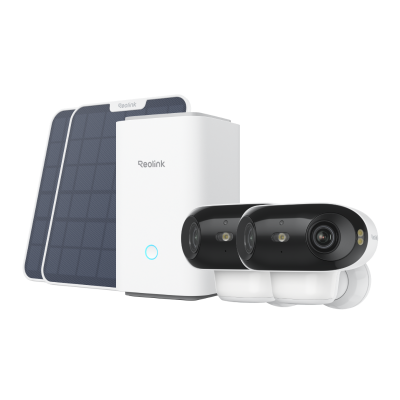
4K UHD Wi-Fi 6 Security System with 180° Blindspot-Free View
ColorX Night Vision, 1 Year of Local Storage, Exclusive Anti-Theft Algorithms, 180° Blindspot-Free Coverage, Expandable System Up to 8 Reolink Cams.
FAQs
What are the parts of a door lock called?
The core components are the cylinder, latch bolt, strike plate, handle/knob, and keyhole. Some additional components are the spindle, thumbturn, faceplate, escutcheon, and deadbolt.
What is the thing called that the door latch goes into?
That thing is referred to as a strike plate. It's a metal plate fastened to the door frame with a hole that catches and aligns with the latch bolt.
Which part of a door lock catches and holds the door frame?
The latch bolt, or simply the bolt, is the component that actually protrudes out and secures into the strike plate to lock the door.
Conclusion
The analysis of door lock parts enables owners to execute proper maintenance work and security evaluations and perform necessary repairs. Basic lock operation depends on the cylinder, bolt, strike plate, and handles but multiple internal components help manage the lock mechanism extension, retraction, and control functions.
Search
Subscribe for the Latest Updates
Security insights & offers right into your inbox