
NVR Camera System: Buyer's Guide
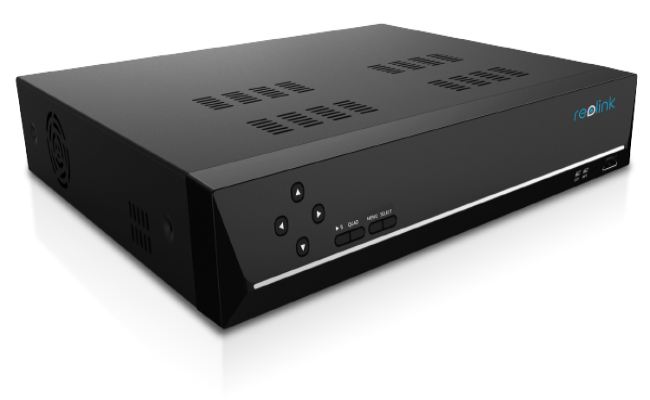
The best NVR camera system should match your recording needs, camera count, storage requirements, and installation environment. For example, a system built for 24/7 outdoor monitoring may prioritize stable PoE connections and large local storage, while a larger property may need more channels and support for different camera types.
In this guide, we'll compare the best NVR security camera systems for different scenarios and explain the key factors to consider before choosing one.
Key Takeaways:
- NVR camera systems bring multiple cameras into one system for centralized recording, local storage, live viewing, and video playback.
- PoE, Wi-Fi, and battery-powered cameras can work with compatible NVRs, giving users more flexibility for different installation locations.
- PoE NVR systems are well suited for 24/7 recording, while compatible Wi-Fi and battery cameras can help cover areas where Ethernet cabling is difficult.
- When choosing an NVR system, focus on channel capacity, storage, supported camera types, recording needs, and maximum camera resolution.
- For different needs, a 4K NVR system is useful when image detail matters, while a higher-channel system is a better fit for large homes and multi-area coverage.
What is NVR Camera System?
An NVR security camera system is a security system that connects compatible cameras to a network video recorder (NVR) for centralized recording, storage, and management. Depending on the NVR model, it can work with PoE, Wi-Fi, and battery-powered cameras.
PoE cameras transmit power and video through a single Ethernet cable, making them suitable for stable 24/7 recording. Wi-Fi cameras offer more flexible installation, while battery-powered cameras are useful in locations where power or Ethernet wiring is difficult. Compatible cameras can be managed together through the NVR system.
How Does NVR Camera System Work?
An NVR system works by sending video captured by security cameras to the NVR for recording, storage, and playback. How the footage reaches the NVR depends on the type of camera and connection used.
-
PoE Cameras: Connect directly to the NVR's PoE ports through Cat5e or Cat6 Ethernet cables. The same cable carries both power and video data, providing a stable connection suitable for continuous recording.
-
Wi-Fi Cameras: Connect wirelessly to the local network and transmit video to a compatible NVR over the network. Unlike PoE cameras, they require a separate power source but do not need an Ethernet cable running directly to the NVR.
-
Battery-Powered Cameras: Connect wirelessly to a compatible NVR and operate on rechargeable batteries. They are useful in locations where running power or Ethernet cables is difficult. Recording modes and NVR features may vary depending on the camera model.
-
Network Video Recorder (NVR): The NVR receives video streams from all connected cameras and records the footage to its storage, typically an internal hard drive. Recording can be continuous, scheduled, or event-based depending on the camera and system settings.
Once the cameras are connected, the NVR brings their feeds together in one place. Users can watch multiple cameras live, search and play back recordings, and manage the system through a connected monitor or supported mobile and desktop software. When the NVR is connected to the Internet, users can also access supported features remotely.
How to Choose an NVR Camera System?
The right NVR system depends on how many cameras you need, where they will be installed, and how long you want to keep the recordings. Here are the key factors to consider based on real-world use.
-
For 24/7 Recording: For driveways, storefronts, warehouses, or other areas that need continuous monitoring, choose an NVR that supports 24/7 recording and a large-capacity HDD. A PoE system is particularly suitable for this use because cameras receive both power and data through Ethernet, providing a stable connection for continuous video transmission.
-
For Multi-Camera Coverage: If you need to monitor several entrances, driveways, parking areas, or different parts of a business, check the NVR's channel capacity. An 8-channel NVR can manage up to 8 compatible cameras, while a 16-channel model is better suited to installations that require more camera feeds in one system.
-
For a Mix of Indoor, Outdoor, and Hard-to-Wire Areas: Look for an NVR that supports PoE, plug-in Wi-Fi, and battery-powered Wi-Fi cameras. For example, PoE cameras can provide continuous coverage around a building, plug-in Wi-Fi cameras can be placed where Ethernet cabling is inconvenient, and battery cameras can cover gates, sheds, or other locations without nearby power outlets.
-
For Longer Video Retention: Check the NVR's pre-installed HDD capacity and maximum supported storage. For example, an NVR with storage expandable up to 16TB is more suitable for keeping footage from multiple cameras over longer periods. Keep in mind that 4K or higher-resolution video and 24/7 recording will consume storage faster than motion-triggered recording.
-
For Capturing More Detail: Make sure the NVR supports the resolution of the cameras you plan to use. An NVR that supports cameras up to 16MP, for example, gives you more flexibility to use high-resolution cameras in areas such as entrances, checkout counters, and parking areas where clearer facial, clothing, or vehicle details may be useful.
Best NVR Camera Systems: 2 Top Picks
When selecting a complete NVR system, you want an NVR that can record sharp, detailed footage and effectively manage all the connected cameras. Here are two top-rated systems:
1. Best 4K NVR Camera System for Driveways and Outdoor Areas
One of the top-rated complete 4K NVR camera systems is the Reolink RLK8-800B4 kit. Key highlights of this robust 4K NVR security camera system include:
- Records ultra-sharp 8MP 4K footage with exquisite clarity and detail
- Smart person and vehicle detection features use AI to reduce false alerts
- 8 weatherproof PoE NVR camera system provide wide 87° coverage with 100ft night vision
- Pre-installed 2TB HDD for ample onboard storage with an expansion bay
- Reliable continuous video recording with flexible scheduling options
- Intuitive mobile and desktop access for full remote system controls
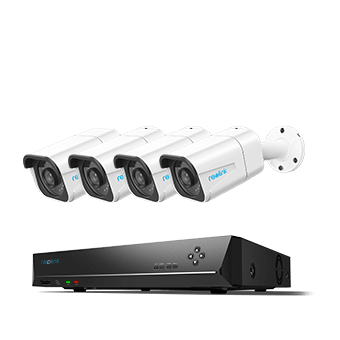
4K 8-Channel PoE Security System
4 pcs 4K Ultra HD Security Cameras; 2TB HDD 8-Channel NVR for 24/7 Recording; Person/Vehicle Detection; Plug & Play; 2 Network Solutions.
With leading-edge 4K cameras powered by intelligent detection, substantial included storage, and user-friendly management tools – the Reolink RLK8-800B4 checks all the boxes for an exceptional modern 4K best NVR camera system. Crystal-clear H.265 encoded 4K surveillance and robust AI alert technology combine in a professional-quality package that simplifies securing your premises.
2. Best NVR Camera System for Large Homes and Multi-Area Coverage
For homeowners who want reliable 24/7 surveillance, the Reolink RLK16-1200D8-A (New Version) is a powerful NVR Kit designed for comprehensive property protection.
Featuring an advanced 16-channel PoE NVR and eight high-resolution security cameras, this system delivers sharp video quality, continuous recording, and centralized management from a single platform. Unlike wireless systems that depend on signal strength, the PoE design provides stable video transmission and power through a single Ethernet cable, making it an excellent choice for large homes and multi-camera installations.
The RLK16-1200D8-A (New Version) combines professional-grade performance with easy remote access, intelligent detection features, and expandable storage, making it one of the best NVR camera systems for homeowners who prioritize reliability and image quality.
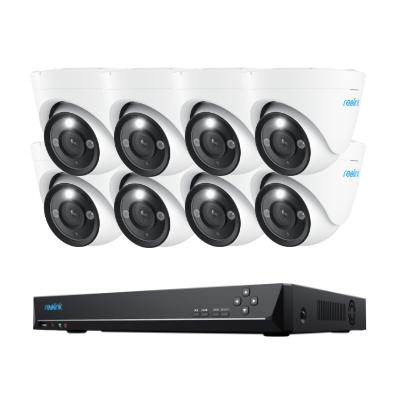
12MP UHD PoE Security System with Advanced Perimeter Protection
- 12MP UHD resolution with vivid color night vision
- Perimeter protection for smarter intrusion alerts
Notable benefits of this NVR system include:
-
16-channel NVR supports future camera expansion
-
Stable PoE connection for reliable power and data transmission
-
High-resolution video for clear identification of people and vehicles
-
Smart detection reduces false alerts from non-important motion
-
Continuous 24/7 recording for complete property coverage
-
Centralized management of multiple cameras from one system
-
Remote live view, playback, and alerts through the Reolink app
-
IP67 weatherproof cameras for year-round outdoor use
For homeowners looking to secure multiple entry points, driveways, yards, and indoor spaces, the RLK16-1200D8-A (New Version) provides a scalable and dependable surveillance solution without monthly subscription fees.
Bonus Tips: How to Install and Set Up NVR Camera System
Installing an NVR security system takes planning but is worthwhile for keeping your property monitored. Here are some top tips:
- Map out camera placement - Determine the key areas you want to cover and sketch a layout identifying camera fields of view. Consider lighting, power sources, and sheltered spots.
- Connect NVR hub - Place your recorder in a clean, ventilated area with room to connect monitors/mice. Hook up to your router via Ethernet to join the camera network, otherwise your IP camera not detected by NVR.
- Run Ethernet cables – Run cables from your NVR location to each camera mount area. Leave slack, and use cable raceways to keep organized and protected. Terminate with PoE Injector if needed.
- Mount cameras – For each camera, attach and aim to view intended coverage zones. Many camera stands allow adjustable multi-axis positioning. Make small adjustments to refine the angle.
- Activate NVR - Add cameras to the NVR system using the desktop client or mobile app. Tweak settings like resolution and frame rate. Set recording schedule retention policy.
With some handy DIY skills, you can set up a professional-looking multi-camera NVR system customized exactly for monitoring your property.
FAQs
Do WiFi cameras work with NVR?
Yes, WiFi cameras are able to connect with an NVR. However, the NVR would need WiFi capability or a PoE to WiFi converter. Wired PoE cameras have faster speeds and more reliable connections. But WiFi cameras allow flexible wireless placement. Many NVR systems support a mix of PoE and WiFi cameras.
What are some components of NVR systems?
Typical components of the NVR camera system include the IP cameras, NVR recorder, Ethernet cables, Power adapters, Viewing monitors and Mounts.
Can I connect any camera to NVR?
Generally, no, the camera needs to be compatible with the NVR model and specs. Key factors you should know include IP Network Camera, NVR Hardware Ports, Video Format, Resolution/FPS, and Brand Interoperability.
So, the camera must have the right data transmission format, specs, and ports that are compatible with the target NVR system. Match brands when possible.
Conclusion
NVR security systems offer reliable video surveillance by connecting multiple IP cameras with a central NVR recorder. Choosing POE cameras provides simplicity while supporting WiFi adds flexibility. With some planning for your coverage zones and connectivity needs, installing an NVR system is a worthwhile DIY project that will result in the robust monitoring of your property.
Do you prefer NVR security camera systems? Tell us your thoughts in the comment section below! Let's discuss them together!
Search
Subscribe for the Latest Updates
Security insights & offers right into your inbox