
Night Vision vs. Infrared: What You Need to Know
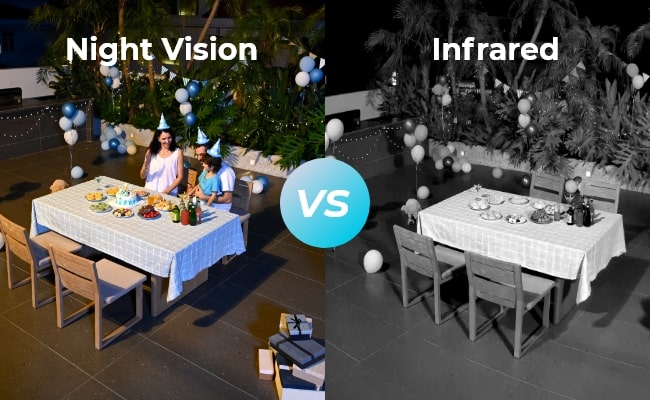
In the world of visual technology, night vision and infrared get used interchangeably, but they're not the same technology. They work in fundamentally different ways, and that difference decides which one actually helps for a security camera. To add to the confusion, "infrared" itself covers two different things: the invisible light a security camera shines to see in the dark, and the heat that thermal cameras detect.
In this article, we will look into the fundamental differences between infrared vs night vision, exploring their working principles, image quality, and applications.
- Infrared vs. Night Vision: Understanding the Basics
- Night Vision vs. Infrared: Key Differences
- Night Vision vs. Thermal vs Infrared: Comparison Table
- Infrared Binoculars vs. Night Vision: Pros and Cons
- Color Night Vision vs. Infrared: Which is Better for Security Cameras?
- Best Security Camera with Night Vision Recommendation
- FAQs
- Conclusion
Infrared vs. Night Vision: Understanding the Basics
First, let’s understand what is the basic definition of infrared and night vision:
What is Night Vision?
Night vision refers to the ability to see in low light or near-total darkness. Traditional night vision devices, such as goggles, work by amplifying the available light, including near-infrared light that the human eye cannot see. Digital night vision, as in many cameras, uses light-sensitive sensors, wide apertures, and image processing to brighten a dim scene. Both approaches work from light that already reaches the sensor, so they need at least a little light in the scene.
What is Infrared?
Infrared (IR) is a type of electromagnetic radiation with a longer wavelength than visible light, so the human eye cannot see it. In imaging, it is used in two different ways. With active infrared, a camera has IR LEDs that light the scene with invisible near-infrared light, and its sensor captures the light that bounces back. This is how most infrared security cameras see in the dark, and the footage is black and white. With thermal imaging, a passive sensor detects the heat that objects give off and builds an image from temperature differences, so it needs no light at all and can spot warm objects such as people or animals in total darkness.
Night Vision vs. Infrared: Key Differences
The most significant difference is where the image comes from. Night vision amplifies light that is already in the scene. Active infrared adds its own invisible light and captures the reflection. Thermal imaging detects the heat that objects give off.
Source of Image
Night vision devices rely on amplifying available light, including visible and near-infrared light, to create an enhanced image. They essentially "see" the same thing that the human eye would see, just with a higher level of sensitivity.
Infrared works differently, and it depends on the type. Active infrared cameras produce their own near-infrared light and capture what bounces back, so they do not need any ambient light. Thermal cameras do not need light either. They measure the heat that objects emit.
Working Principle
Night vision technology works by using a photocathode to convert the available light, including near-infrared, into an electrical signal. The signal is then amplified by the device and converted back into a visible image. Digital night vision cameras achieve a similar result with sensitive image sensors and image processing.
In contrast, active infrared lights the scene with IR LEDs and captures the reflected light with an image sensor. In low light, the camera removes its infrared-cut filter so the sensor can use that light, which produces a black-and-white image. Thermal imaging works differently again. Its specialized sensors detect the infrared radiation that objects emit as heat.
Image Quality
Image quality depends on the technology. Traditional image intensifier devices produce a monochrome image, usually green. Digital color night vision, as used in some security cameras, can keep natural color in low light with spotlights or a wide-aperture lens, but it still needs some light to work with.
Active infrared footage is black and white. It can be sharp, since it uses the camera's regular image sensor, but it only reaches as far as the infrared LEDs do. Thermal images are often presented in grayscale or false color at lower resolution, because they show heat rather than visible detail. Atmospheric conditions and the sensitivity of the sensor can also affect image quality.
Technology
Night vision technology relies on image intensifier tubes or electronic image sensors to amplify and convert the available light into a visible image.
Active infrared uses IR LEDs and a standard image sensor with a switchable infrared-cut filter. Thermal imaging uses specialized thermal sensors, such as microbolometers, to detect and measure the infrared radiation that objects emit.
Types
Night vision devices can be categorized into different generations, with each generation offering improved performance and capabilities.
Infrared technology can be further divided into two main types: thermal imaging and active infrared. Thermal imaging uses passive infrared sensors to detect heat signatures, while active infrared uses a source of infrared light to illuminate the scene. Most security cameras use active infrared.
Night Vision vs. Thermal vs Infrared: Comparison Table
To further illustrate the differences between night vision vs infrared vs thermal, we will compare them in a table. Let’s take a look at the comparison between infrared vs thermal vs night vision:
Infrared Binoculars vs. Night Vision: Pros and Cons
Here, we also indicate the pros and cons of each technology. Infrared is split into active infrared, which most security cameras use, and thermal imaging, which detects heat.
Infrared: Advantages and Downsides
The following are the advantages and downsides of infrared, starting with active infrared:
Active infrared advantages:
- Works in complete darkness, with no ambient light needed
- High-resolution footage from the camera's regular image sensor
- Built into most security cameras at a low cost
Active infrared downsides:
- Black-and-white footage
- Range is limited by the strength of the IR LEDs
- Rain, fog, dust, and insects can reflect the light back and reduce clarity
- Nearby walls or window glass can cause glare
Thermal imaging advantages:
- Detects heat signatures in complete darkness
- Can see through smoke, fog, and other atmospheric conditions
- Can spot warm targets, such as people or animals, from a distance
Thermal imaging downsides:
- Lower image quality compared to night vision and active infrared
- Grayscale or false-color image representation
- Shows heat rather than fine details such as faces or license plates
- Potential interference from environmental factors like ambient heat sources
- Generally more expensive than active infrared cameras
Night Vision: Benefits and Disadvantages
The following are the advantages and downsides of night vision:
Benefits:
- Detailed images in low light, with color possible on digital color night vision cameras
- Excellent visibility in low-light conditions
- Versatile applications in military, law enforcement, and outdoor activities
Disadvantages:
- Dependence on available light sources
- Limited ability to see through smoke, fog, or haze
- Dedicated image intensifier devices generally cost more than active infrared cameras
Color Night Vision vs. Infrared: Which is Better for Security Cameras?
When it comes to security cameras, the real choice is usually between infrared night vision and color night vision, not thermal imaging. Infrared night vision uses the camera's IR LEDs to light the scene with invisible light, so it works in complete darkness out to the camera's rated range, but the footage is black and white. Color night vision uses spotlights or a wide-aperture lens with a sensitive sensor to keep color, which makes it easier to recognize clothing, vehicles, and other details. It needs some light, though, and usually covers a shorter distance than infrared.
For security purposes, the choice often comes down to what you need to see at night. Some best night vision security cameras now have both infrared and color night vision. The Reolink OMVI X16 PoE, for example, offers infrared night vision up to 246ft (75m) plus color night vision from nine spotlights in manual or timer spotlight mode.
In scenarios where clear identification is crucial, such as a retail entrance or a porch, color night vision may be the better option. For large outdoor areas, such as long driveways, yards, or perimeters, the longer reach of infrared is often the better choice. Seeing heat signatures through smoke, or at long distance in total darkness, is the job of a thermal camera, which is a separate and usually more expensive category.
Best Security Camera with Night Vision Recommendation
Reolink Solar Floodlight Cam - Wireless Floodlight Camera with Color Night Vision
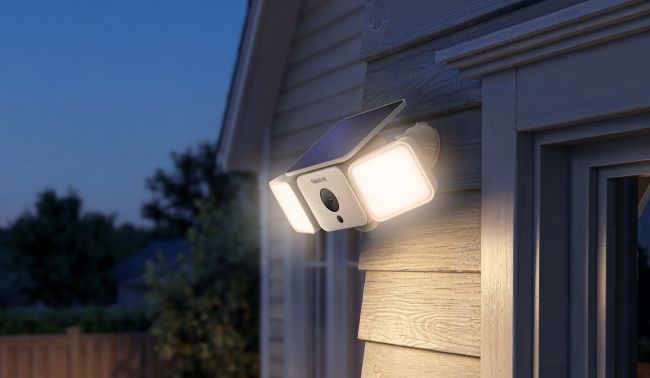
Certain camera models feature floodlights to brighten nighttime recordings. The Reolink Solar Floodlight Cam is a wireless camera that runs on battery or solar power. It provides up to 1,000 lumens with adjustable color temperature for clear, vibrant color footage at night.
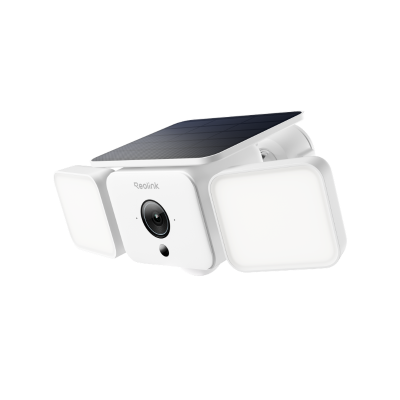
Smart 2K Solar Floodlight Security Camera
150° Ultra-Wide View, 2K 4MP HD Resolution, AI-Based Adaptive Floodlight, Endless Power with Reolink SolarEase™.
Did You Know?: SafeWise picked the Solar Floodlight Cam as "Best for Bright Lighting Without Charging" after testing it, noting "there's a lot to love about this truly wireless floodlight camera." Read the full review by SafeWise to find out more.
Reolink Argus 4 Pro - Color Night Vision Security Camera
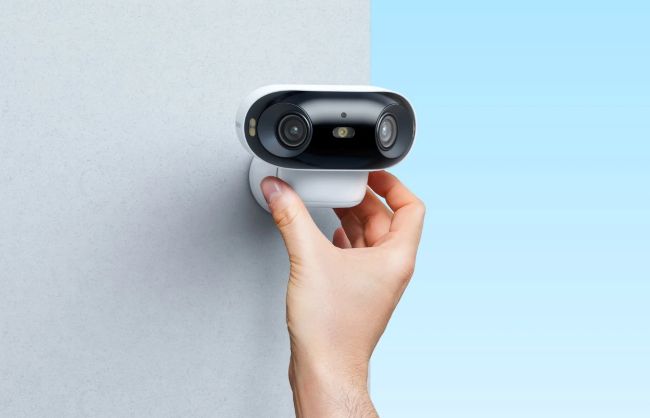
Reolink Argus 4 Pro is a 4K wireless color night vision security camera. The Argus 4 Pro uses Reolink's ColorX technology, an F/1.0 super aperture lens, and a 1/1.8 sensor. Together, they capture 4x more light in Reolink's own testing and the result is vivid, true-to-life detail even in low light.
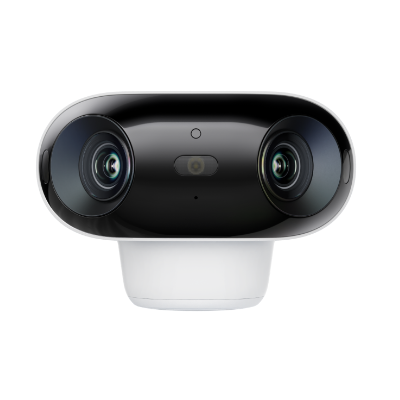
4k 180° Wire-free Color Night Vision Camera
4K UHD 180° Blindspot-free View; Color Vision Day and Night; 30% More Battery Life; Dual-band Wi-Fi 6; Smart detection.
Did You Know?: TIME named the Argus 4 Pro to its 200 Best Inventions of 2024 list, describing it as a camera that "merges images from two built-in lenses for a 180-degree, blindspot-free view in 4K resolution." See the feature on TIME.com.
For users requiring full-color night vision without apparent spotlights, the Reolink Argus 4 Pro is the best option. Alternatively, if you desire an affordable choice that still delivers effective performance, the Argus 4 standard version is worth considering.
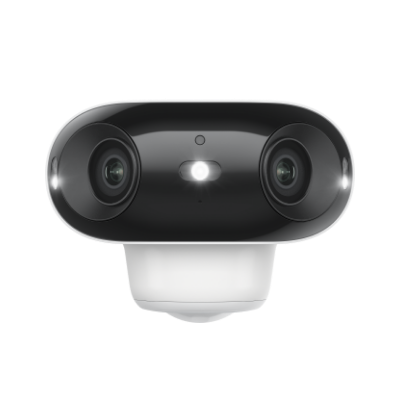
4k 180° Blindspot-free Wi-Fi 6 Camera
4K UHD 180° Blindspot-free View; Dual-band Wi-Fi 6; Smart detection; Easy Installation Anywhere
Note: For a deeper comparison, find out more in our Reolink Argus 4 Pro vs. Argus 4: Worth The Upgrade? guide.
Reolink Go PT Ultra - Security Camera with Color and Infrared Night Vision
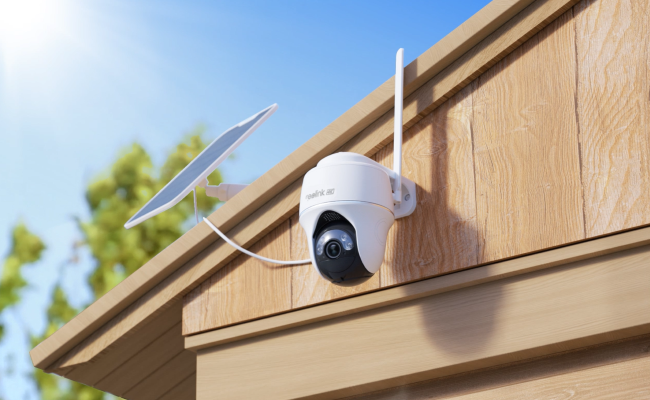
The Reolink Go PT Ultra is an excellent security camera that combines color night vision and infrared technology for enhanced visibility and performance. This 4K 8MP wireless camera is powered by a rechargeable battery or solar panel, making it a versatile and flexible option for a wide range of security applications.
The color night vision feature helps images captured in low-light conditions stay clear, with more natural-looking colors. This is especially useful for identifying individuals and objects. Additionally, the camera's infrared night vision reaches up to 10 meters (33ft) in complete darkness, in black and white. It's plenty for a porch or a small backyard, but a long driveway needs more range.
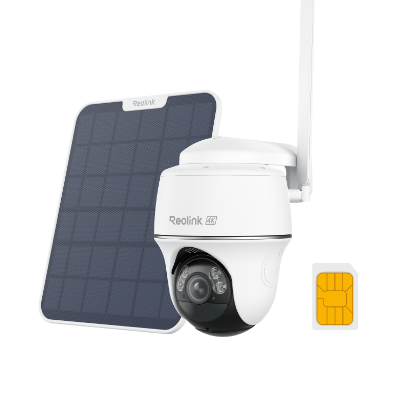
4K 8MP Wire-Free 4G LTE PT Battery Camera
4K 8MP; Smart Detection; 355° Pan & 140° Tilt; Battery/Solar Powered; Color Night Vision; Smart Real-Time Alert.
Reolink OMVI X16 PoE - Long-Range Infrared and Color Night Vision Security Camera
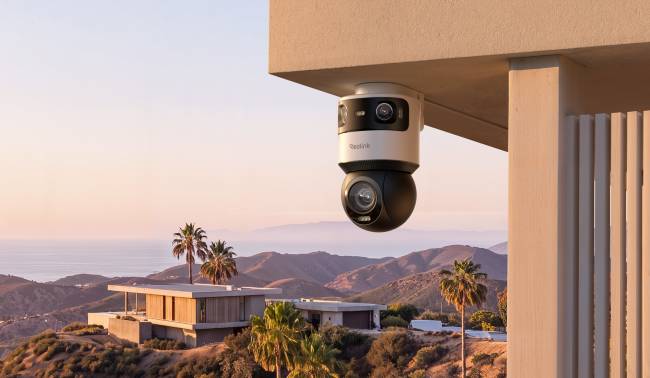
The Reolink OMVI X16 PoE is built for places where night vision range matters, such as long driveways, large yards, and parking lots. Its infrared night vision reaches up to 246ft (75m), far beyond the 10m (33ft) of the Go PT Ultra, so it can cover distant parts of a property in complete darkness, in black and white.
For color footage, nine 6W spotlights provide color night vision in manual or timer spotlight mode. In Smart Night Vision mode, the image stays black and white when the spotlight triggers. The camera pairs a 16MP dual-lens panoramic camera with a 4K 8MP PTZ camera, so you see the whole scene at once. With SyncTrack, the PTZ lens follows a person, vehicle, or animal detected by the panoramic lenses and zooms in up to 16X optically, even after the target leaves the wide view.
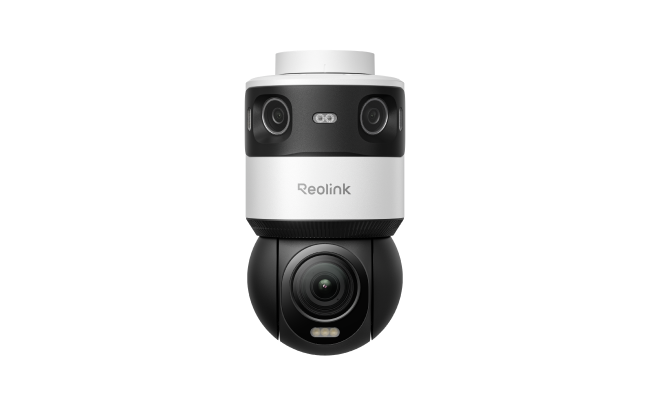
Revolutionary 16X Optical Zoom PTZ Camera with a 180° Panoramic View
- 16MP Dual-Lens with 180° Panoramic view
- 4K 8MP PTZ with Endless 360° Rotation
- SyncTrack with 16X Optical Zoom
- Pinpoint with One Tap
- Auto Patrol
FAQs
Which is better infrared or night vision?
It depends on the application. For security cameras, infrared night vision is the standard way to see in complete darkness, and color night vision is the option to choose when you want color detail. Dedicated night vision devices, such as goggles, amplify existing light and need some light to work. Thermal imaging, which detects heat, is a separate option for seeing through smoke or spotting warm targets in total darkness, usually at a higher cost.
Do all night vision cameras use infrared?
No, not all night vision cameras use infrared technology. While many night vision devices do incorporate infrared illumination to enhance visibility in low-light conditions, there are also night vision cameras that rely solely on amplifying available visible light to create the image.
Does the military use night vision or infrared?
Both night vision and infrared technology are widely used by military forces for various applications. Night vision is commonly used for tasks such as covert operations, navigation, and target identification, where the ability to see clearly in low-light conditions is crucial. Infrared technology, on the other hand, is often employed for thermal imaging, target acquisition, and surveillance, where the detection of heat signatures is of importance.
Do night vision cameras work in complete darkness?
It depends on the type. Night vision that works by amplifying visible light needs at least a little light already in the scene. With none at all, there's nothing for it to amplify, and the image goes dark. Most night vision security cameras solve that problem with their own infrared illuminator. It's a light source the camera can see even though the human eye can't. An ordinary night vision camera keeps working in total darkness because of that illuminator, not because of anything the lens itself does. True thermal infrared works in complete darkness too, but for a different reason. It reads heat rather than light, so the absence of light doesn't affect it at all.
Do night vision cameras have red lights?
Some do, and it's normal. It comes down to the wavelength of the infrared illuminator built into the camera. 850-nanometer illuminators give off a faint red glow that's visible when viewed directly, while 940-nanometer illuminators are virtually invisible to the human eye. The trade-off is range. 940nm typically sees less far and needs a more sensitive camera sensor to pick up its light. So a slight red glow from a camera's IR illuminator at night is expected for many models. It usually means the camera uses the more common, longer-range 850nm option, not that anything's wrong.
How far can infrared night vision see on a security camera?
It depends on the camera. Most security cameras use active infrared, where built-in IR LEDs light the scene with invisible light, so the range depends on how many LEDs there are, how powerful they are, and how well the lens and sensor use that light. (Thermal imaging, which detects heat, is rated differently.) Rated infrared ranges vary widely. In this article, the Reolink Solar Floodlight Cam and Go PT Ultra reach up to 10m (33ft), while the Reolink OMVI X16 PoE reaches up to 246ft (75m). Rain, fog, dust, and reflective surfaces such as nearby walls or window glass can reduce the usable range, and spotting movement at the edge of the range is easier than identifying a face. Match the range to the distance you need to cover, such as a small porch versus a long driveway.
Conclusion
The differences between night vision and infrared are significant and important to understand. Night vision amplifies the light already in a scene, active infrared adds its own invisible light, and thermal imaging reads heat. For most security cameras, the practical choice comes down to infrared night vision for total darkness and long range, or color night vision for detail.
We encourage you to share your thoughts and experiences with night vision and infrared technology in the comments below. Your insights and perspectives can help further the discussion and understanding of these fascinating visual technologies.
Search
Subscribe for the Latest Updates
Security insights & offers right into your inbox