
Top 10 Most Dangerous Cities in North Carolina
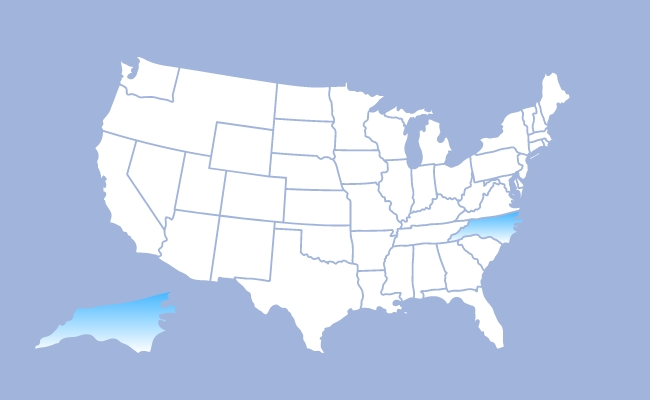
The statistics of North Carolina present a combination of favorable and unfavorable reports because the state features both its picturesque natural beauty and its developing urban centers. Several cities across North Carolina maintain persistent rankings among dangerous locations throughout the nation, even though many towns and suburbs maintain quietness.
In this article, we will look at the most dangerous cities in NC, along with the crime rates and tips to stay safe in the worst cities in North Carolina.
Is North Carolina Dangerous?
North Carolina is generally considered a safe state to reside in, maintaining an overall crime rate that is lower than many other regions in the United States. However, safety levels can vary significantly depending on the municipality, with higher-crime pockets typically concentrated in larger urban centers.
Key Crime Statistics
- Overall Crime Rate: 24.69 incidents per 1,000 residents.
- Victimization Risk: Approximately 2.5% (roughly 25 out of every 1,000 individuals may experience a property or violent crime).
Safety Insights
- Statewide Outlook: The state remains a comparatively secure environment for residents and visitors.
- Geographic Variation: While the state average is low, localized risks are higher in specific high-density or metropolitan areas.
- Importance of Awareness: Staying informed about neighborhood-specific data is recommended for those living in or relocating to larger cities.
Top 10 Most Dangerous Cities in North Carolina
Based on the most recent reporting from early 2026 and preliminary state trends from late 2025, North Carolina has seen a slight decline in violent crime statewide, yet specific municipalities continue to struggle with high per-capita incident rates.
1. Wadesboro
Wadesboro currently holds the distinction of having the highest crime rate in the state according to 2026 analytics. With a population of roughly 5,200, the town suffers from a violent crime rate that is significantly higher than the state average, particularly regarding aggravated assault and robbery. While its property crime rate is also high, it is the density of violent offenses that marks it as a primary safety concern for the current year.
2. Pineville
Pineville remains near the top of the list, largely due to its unique position as a major retail hub with a tiny residential population of about 10,000. While its violent crime rate is lower than some peers, its property crime statistics—driven by massive amounts of retail theft and larceny at local shopping centers—reach approximately 124 incidents per 1,000 residents.
This statistical skew often makes Pineville look more "dangerous" to a resident than it may feel in practice, though property risk remains objectively extreme.
3. Lumberton
Lumberton continues to face persistent safety challenges, ranking high in the 2026 data for both violent and property offenses. The city has a long-standing struggle with violent crime, including murder rates that significantly exceed the national median (reported at roughly 52.4 per 100,000 in late 2025 datasets).
Safety concerns among residents remain high, with many reporting a lack of safety during nighttime hours despite visible law enforcement presence.
4. Whiteville
Whiteville maintains a high-risk profile heading into 2026, with a total crime rate that hovers around 109 per 1,000 residents. The town deals with substantial property crime, specifically burglary and theft, but its violent crime statistics—including robbery and assault—keep it in the top tier of the state’s most dangerous areas. Economic factors in the Columbus County region continue to influence these figures.
5. Henderson
Henderson has seen "mixed" trends recently, with calls for service remaining high but actual reported property crimes seeing slight dips in specific neighborhoods. However, it still maintains a high victimization risk; current data suggests a roughly 1 in 13 chance of becoming a victim of a crime here. The city’s struggle is multifaceted, involving both property crimes like larceny and violent incidents like assault.
6. Laurinburg
Laurinburg has climbed in prominence on recent "danger" lists due to a spike in violent crime metrics. As of February 2026, analytics placed its violent crime rate significantly above the state average, with high incidences of assault (recorded at over 1,600 per 100,000 in some annual projections).
Property crimes, particularly burglary, also remain a concern, leading to a "D+" safety grade from prominent data analysts.
7. Williamston
Williamston remains a risky area for its 5,200 inhabitants, with a total crime score that reaches approximately 79 incidents per 1,000 residents.
The town’s primary issue is the concentration of violent crime relative to its size, though property crime rates of roughly 66 per 1,000 also contribute to its ranking. It remains one of the more vulnerable small municipalities in the eastern part of the state.
8. Forest City
Forest City is characterized by a particularly high volume of property crimes, especially theft and residential burglary. While its murder rate remains low compared to larger hubs, the prevalence of larceny—nearly double the national average in recent reports—makes it a troubled area for homeowners. Its total crime statistics reflect about 86.9 incidents per 1,000 people.
9. Asheville
Asheville presents a "complicated" picture in 2026; while overall violent crime saw a 10.9% decrease in early 2025, more recent March 2026 data showed a month-over-month spike in violent cases (rising from 25 to 45).
The city struggles with "quality-of-life" offenses and property crimes, which remain high due to its status as a major tourism destination. Residents and visitors alike are advised to remain vigilant in high-traffic art and mountain districts.
10. Goldsboro
Goldsboro rounds out the list with a total crime rate of approximately 66 per 1,000 residents. Despite its larger population of over 34,000, it faces significant challenges with assault and burglary.
Current polls indicate that only about 8% of residents feel "very safe" in the area, reflecting a community perception that matches the high statistical incidence of property theft and violent offenses.
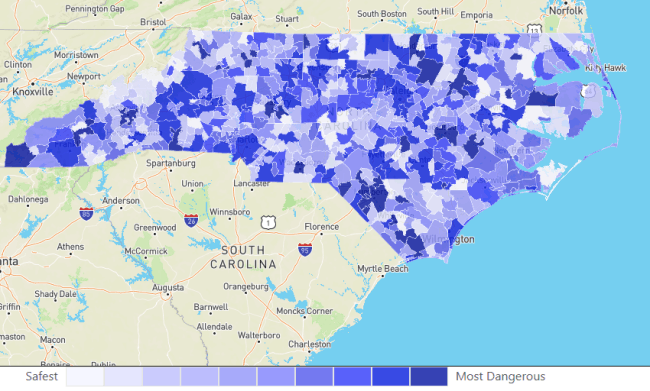
Image Credit: NeighborhoodScout
Table of 10 Most Dangerous Cities in NC
What Makes These Cities So Dangerous in NC? Key Crime Trends
-
Per-capita distortion: Small cities often rank high because a limited number of crimes produces a high rate per resident, even if total crime is not large.
-
Economic hardship: High poverty, job loss, and limited economic mobility are strongly linked to higher property and violent crime levels.
-
Drug-related activity: Opioids and meth drive much of the crime, especially theft, burglary, and disputes tied to trafficking or addiction.
-
Property crime dominance: Most reported crime is non-violent, including theft, vehicle break-ins, and burglary.
-
Geography and highways: Cities near major routes (like I-95) see more transient activity and drug movement.
-
Limited local resources: Smaller police forces and strained public services can make prevention and enforcement harder.
How To Stay Safe in North Carolina's Most Dangerous Cities?
Even in areas with elevated crime rates, personal safety largely depends on proactive habits and basic security measures. The goal is risk reduction, not fear.
1. Strengthen home security
Home protection is the first layer of safety, especially in neighborhoods with higher property crime.
- Install a reliable home security system such as the Reolink Home Hub Kit for real-time alerts and camera monitoring
- Use smart cameras to monitor entry points and outdoor areas
- Ensure doors, windows, and garages are properly reinforced and locked

Industry-leading 4K Continuous Recording Battery Camera
4K UHD Continuous Recording; ColorX Night Vision; Pan & Tilt; Automatic Tracking; All Recordings Stored Locally.
2. Stay informed about local crime activity
Awareness helps you avoid high-risk situations and locations.
- Follow local police department alerts and reports
- Check community safety updates or neighborhood watch groups
- Pay attention to recurring crime patterns in your area
3. Improve outdoor and perimeter lighting
Visibility is a strong deterrent to opportunistic crime.
- Install motion-activated lights around entrances and driveways
- Keep exterior areas well-lit at night
- Eliminate dark or hidden spots near the home
4. Practice personal situational awareness
Daily habits significantly reduce risk exposure.
- Avoid walking alone at night when possible
- Stay alert in unfamiliar or low-visibility areas
- Keep valuables out of sight in public spaces
FAQs
What is the #1 safest city in NC?
The #1 safest city in North Carolina is Rolesville. It consistently ranks first in 2026 safety reports based on FBI crime data. Rolesville has extremely low violent crime rates (around 0.3 per 1,000 residents). It also reports crime levels far below the national average, thanks to strong community policing and low population density.
What's the worst county in North Carolina?
There’s no single official “worst” county, but Robeson County is often cited as one of the most dangerous. It frequently ranks among the highest in violent crime rates statewide.
What are the top 10 cities in North Carolina?
“Top” can mean different things (population, economy, livability), but here are 10 of the most important and well-known cities in North Carolina:
- Charlotte – Largest city, major financial hub
- Raleigh – State capital, tech center
- Greensboro – Manufacturing & logistics
- Durham – Part of Research Triangle, healthcare & tech
- Winston-Salem – Arts and innovation hub
- Fayetteville – Military presence (Fort Liberty)
- Cary – Fast-growing, high quality of life
- Wilmington – Coastal city, tourism & film
- High Point – Furniture capital of the world
- Concord – NASCAR hub and growing suburb
Conclusion
Knowledge about regional patterns of the most dangerous cities in NC, especially the worst places to live in North Carolina, delivers valuable information for making proper decisions about where to live.
Proper precautions enable you to strongly minimize your chances of encountering danger. To ensure safety, purchase home security equipment while being vigilant and select residential areas based on your security concerns.
Search
Subscribe for the Latest Updates
Security insights & offers right into your inbox