
Ultimate Guide to Low Latency Streaming: Enhance Your Real-Time Experiences
Low latency streaming enables real-time content delivery with minimal delay. It is essential for live interactions, gaming, and security monitoring. This technology ensures instant transmission for seamless user experiences.
Understanding its applications and protocols helps optimize performance. Industries rely on it for instant communication and surveillance. Let's understand what it is along with applications.
Understanding Low Latency Video Streaming
Low latency video streaming minimizes delays between capture and playback. It is crucial for applications requiring real-time interaction.
What Is Low Latency Streaming?
Low latency streaming refers to video transmission systems that minimize the time between content capture and viewer playback. These systems achieve delays typically under 2 seconds, with advanced implementations reaching sub-500 millisecond performance. The technology works by optimizing every step of the streaming pipeline, from initial capture and encoding to network transmission and final decoding.
Several technical factors contribute to achieving low latency, including efficient video compression algorithms, reduced buffering requirements, and optimized network protocols. Modern codecs like H.265/HEVC play a crucial role by providing high-quality video at lower bitrates, while protocols like WebRTC enable direct peer-to-peer communication without intermediate servers.
Why You Need Low Latency Streaming?
The need for low latency video streaming stems from the interactive digital world. In live commerce and auctions, bid acceptance delays can cost businesses significant revenue. Video conferencing systems require near-instant transmission to maintain natural conversation flow, with delays over 200 milliseconds becoming noticeably disruptive.
For emergency response and public safety applications, low latency can literally mean the difference between life and death. Security personnel monitoring live feeds need immediate visibility into developing situations. Similarly, industrial automation systems rely on real-time video for remote equipment monitoring and control.
Popular Low Latency Video Streaming Protocols
Low latency video streaming protocols optimize data transmission for minimal delay. Below are key technologies:
- WebRTC: Delivers sub-500ms latency, ideal for video calls and live chats. It enables peer-to-peer streaming without buffering.
- RTMP: Supports under 3-second delays for stable live broadcasts. Widely used for social media streaming.
- SRT: Ensures secure streams with under 1-second latency. Perfect for high-stakes live events.
- HLS/DASH: Balances quality and latency (5-20 seconds). Best for on-demand and adaptive streaming.
Applications of Low Latency Live Streaming
Low latency live streaming enables transformative experiences across numerous industries by bridging the gap between virtual and physical events.
Surveillance & Real-Time Monitoring
Modern security systems require sub-500ms latency for effective threat response. Leading manufacturers now offer cameras with AI-powered object recognition and instant alert capabilities. These systems enable security teams to monitor live feeds. For critical infrastructure, even slight delays can impact safety and operations. Advanced security cameras combine high-resolution imaging with optimized streaming protocols.
Online Gaming
Competitive gaming requires lightning-fast reflexes supported by sub-100ms streaming latency. Professional esports tournaments implement specialized streaming setups to ensure fair competition. Cloud gaming platforms like Xbox Cloud Gaming and NVIDIA GeForce Now have made sub-50ms latency their benchmark. Studies show players begin noticing delays as small as 50ms, with anything over 150ms significantly impairing gameplay experience.
Social Platform Live Streaming
Platforms like Twitch and YouTube Live have standardized on sub-2-second latency for creator-viewer interactions. This enables real-time Q&A sessions, live shopping experiences, and interactive broadcasts. Emerging formats like live collaborative creation and virtual events push latency requirements even lower.
Online Education
Virtual classrooms require under 1-second latency to maintain natural teaching dynamics. This enables spontaneous Q&A, real-time whiteboard collaboration, and immediate feedback. Educational platforms are adopting WebRTC-based solutions to meet these demands. Specialized applications like remote music instruction have even stricter requirements, often needing sub-100ms latency for synchronized performance.
Recommended Security Cameras for Low Latency Live Streaming
Advanced security cameras ensure real-time monitoring with minimal delay. Below are top-performing systems.
Home Hub with Argus 4 Pro
Home Hub with Argus 4 Pro is a Wi-Fi 6 security camera system that ensures low latency and a smooth experience. The Argus 4 Pro represents a breakthrough in low-latency security monitoring, delivering crystal-clear 4K footage. It utilizes dual-image stitching technology to create a seamless 180° blindspot-free view.
The camera's advanced ColorX Night Vision technology captures four times more light than conventional systems, delivering vivid, detailed footage around the clock. Integrated with Reolink's Home Hub, it centralizes up to 8 cameras with local storage (expandable to 2×512GB). It is solar-power compatible and offers 30% more battery life.
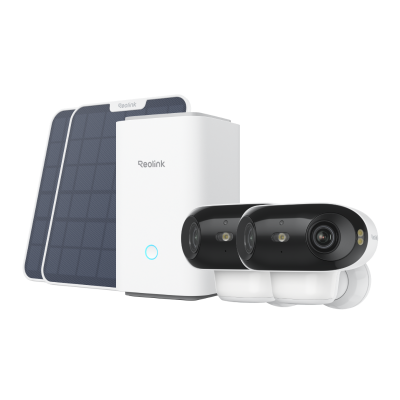
4K UHD Wi-Fi 6 Security System with 180° Blindspot-Free View
ColorX Night Vision, 1 Year of Local Storage, Exclusive Anti-Theft Algorithms, 180° Blindspot-Free Coverage, Expandable System Up to 8 Reolink Cams.
Home Hub with Argus PT Ultra
Home Hub with Argus PT Ultra is a standalone wireless security camera system that offers low latency. The Argus PT Ultra redefines flexible security monitoring with its 4K pan-tilt capabilities. It provides complete 360° coverage, allowing users to monitor every corner of their property. It offers a smooth live preview that you can see from any location in 4K.
The Home Hub includes 64GB storage (expandable to 2×512GB) and processes multiple feeds in real-time. It ensures low latency and offers local storage with anti-theft algorithms to protect your privacy and data.
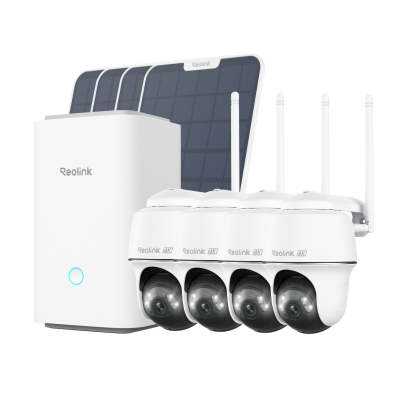
Wireless Security System With 4K PT Standalone Battery/Solar Wi-Fi Cameras
4K Color Footage Day & Night, 1 Year of Local Storage, Exclusive Anti-Theft Algorithms, 360° All-Around Coverage, Expandable System Up to 8 Reolink Cams.
FAQs
What is ultra-low latency video streaming?
Ultra-low latency video streaming achieves under 200ms delays for near real-time interaction. It's essential for gaming, live auctions, and remote control applications where milliseconds matter.
How to make a stream low latency?
Use protocols like WebRTC or SRT and configure encoders for minimal buffering. Optimize network settings and prioritize video packets for best results.
How to reduce latency in streaming?
Enable low-latency modes, use wired connections, and reduce encoding steps. Hardware acceleration and network optimization further decrease delays.
Is 70 ms latency bad?
No, 70ms is excellent for most applications. It's below the human perception threshold for delay in interactive scenarios.
Conclusion
Low latency streaming transforms real-time interactions across industries, from security to gaming. By minimizing delays, it enables instant response and seamless experiences. As technology advances, near-instant streaming will become standard, enhancing how we communicate and monitor our environments. Implement these solutions to stay ahead.
Search
Subscribe for the Latest Updates
Security insights & offers right into your inbox