
How Long Do LED Lights Last? Lifespan Explained
Everyone hears that LED lights save money and last far longer than old-style bulbs, yet the actual numbers and the small details are often left out. The simple question people type is: How long do LED lights last?
This article answers that question for the most common LED products and shows what influences the final number. You will also learn how to extend life and what to expect when the light finally dims.
Do LED Lights Wear Out?
Yes, LED lights wear out, but they do not pop like a blown fuse the way traditional bulbs do. Instead, the tiny light-emitting chips steadily grow dimmer. In the lighting industry, you will see the phrase L70. This label means that the product is expected to lose thirty percent of its original brightness. Most people see the change only when it drops closer to thirty percent, so manufacturers use L70 as the end-of-life point. The tiny diode itself is still working; it simply gives less light.
How Long Do LED Lights Last?
Under normal indoor use, a standard LED screw-in bulb sold in the United States today carries a rating of 15,000 to 50,000 hours before it reaches L70. Translated into years, that range yields:
-
15,000 hours ≈ 14 years if you keep the light on three hours a day.
-
25,000 hours ≈ 23 years, for three hours a day.
-
50,000 hours ≈ 46 years at the same daily use.
These numbers mark the point where the light drops to seventy percent of its first-day brightness. The bulb usually keeps running, so some brands mark L80 or even L90 in their paperwork to set a stricter cutoff.
How Long Do LED Strip Lights Last?
LED strip lights follow the same rule, because the tiny LED chips are the same type found in bulbs. Most reels of strip carry a datasheet value around 35,000 to 50,000 hours before the glow drops to L70. The rating assumes the strip runs at the rated voltage and the power supply limits heat. If you mount the strip behind wood without air flow, or you drive it at a higher voltage than the label allows, life drops quickly.
How Long Do LED Ceiling Lights Last?
Flush-mount and recessed LED ceiling fixtures move the components into one sealed unit. The diode array, the driver board, and the heat sink all sit inside the aluminum housing. Because the cooling design is already built in, most fixtures carry a label of 30,000 to 50,000 hours before L70.
How Long Do LED Christmas Lights Last?
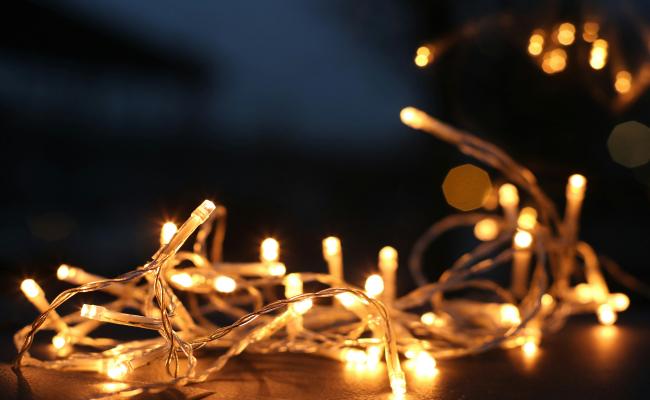
Strings of LED Christmas lights come with two sets of numbers. The LED diode itself retains life between 15,000 and 25,000 hours. The wiring, sockets, and controller box can fail years sooner if stored carelessly. If you wrap a set around a living-room tree for six hours every December day, it will stay bright for eleven to eighteen holiday seasons.
How Long Does LED Light Last in Security Cameras?
Infrared LED arrays built into outdoor security cameras serve one purpose: to paint the scene with invisible light for night vision. Such IR LEDs usually have long daily operation times and can be subjected to rain and even wind, as well as paint chips when other sanding activities are taking place nearby. Nonetheless, the majority of branded cameras cost up to 20,000 and 30,000 hours on the IR light source before its strength is too weak to harm night shots. Such a number is equivalent to two to three years of uninterrupted twenty-four-hour usage.
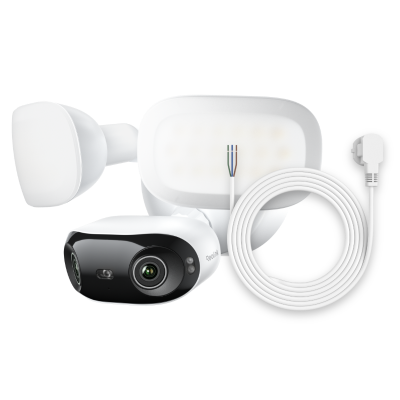
4K 180° Ultra-Wide Wired Floodlight Security Camera
3000-Lumen Dimmable Lighting, Adjustable Color Temperature, Local AI Video Search, Local Storage, Dual-Band Wi-Fi 6.
Factors That Affect How Long LED Lights Last
Several variables cut or add hours to the issue of how long do LED light bulbs last. Knowing them helps you match the product, the place, and the wiring so the light meets or beats the published value. The following five areas carry the most weight when you want the longest LED lifespan.
Usage per day
Leaving a lamp on around the clock consumes the available hours faster than using it for quick chores. A 25,000-hour bulb burns through its life in less than three years if left on twenty-four hours a day. The same bulb lasts over twenty-two years if you limit it to three hours daily. Switching off lights when not needed remains the simplest way to stretch life.
Environmental conditions
High heat, direct sun, moisture, salt air, and chemical vapors all shorten life. Strips mounted under a kitchen cabinet away from the stove often meet fifty-thousand-hour marks, while strips above the stove exhaust fan drop to twenty-thousand hours. Outdoor flood bulbs in Arizona attics see faster decay than identical bulbs in shaded porches. Choose IP-rated sealed fixtures for damp areas and avoid exposing bare strips to chlorinated pool rooms.
Heat management
Every LED chip creates waste heat. The fixture must get that heat away. A bulb that uses a thick aluminum body or a built-in fan keeps the junction temperature low. A non-dimmable bulb inside a glass globe with no vents cooks the electronics. In short, tight, closed lamps and enclosed recessed cans cut life in half unless the fixture label clearly states “suitable for LED.”
Quality of components
Cheap LED bulbs often drift below L70 after only five thousand hours because the diodes are low-grade and the tiny capacitor on the driver board dries out. Premium brands source better silicon, use larger drivers, and back the product with longer warranties. Spending a few extra dollars up front generally earns tens of thousands of extra hours of service.
Power supply
LED chips need steady, low-voltage direct current. A noisy, fluctuating supply or the wrong transformer will over-stress the driver. Flickering at half-second intervals is a sign of bad wiring or incompatible dimmer switches. Clean, stable power from a dedicated driver rated for the load keeps brightness steady and clocks more hours toward the fifty-thousand target.
Switching modes
Unlike old incandescent bulbs, LEDs do not suffer from frequent on-off cycles. Still, rapid flashing, such as stage lighting or animated Christmas controllers, does create minute thermal swings each time the chip switches from “on” to “off.” Daily household switching will not matter, but intense animation programs seven days a week can shave around five percent from the rated life.
How to Extend LED Bulb Lifespan?
Once you buy a good product and install it in a suitable spot, you can still squeeze extra life from the diodes. Apply the ideas below and keep the receipt the day you screw the bulb in, because many brands tie the warranty to the purchase date.
- Keep fixtures open or vented when the label allows. Burger-shaped closed domes look sleek, yet they trap heat. Swap the glass for wire-cage shades where style rules permit.
- Use dimmers rated for LED loads. If you must dim, buy a matching LED dimmer because cheap dimmers send chopped-up waves that stress the driver. Test the dimmer range before closing the switch plate screws.
- Wipe off dust from the bulb and fixture when you dust shelves every few weeks. Dust acts like insulation and makes the metal body warmer.
- Shut the switch when you leave a room for more than five minutes. The small number of on-off cycles does not cost life, yet every hour of darkness adds unused time to the LED bank.
- Protect outdoor fixtures from water directed by lawn sprinklers. A splash shield or aiming heads away trims decay from moisture intrusion.
FAQs
Do LED lights flicker before they burn out?
Most LEDs do not flicker as a warning sign the way a failing fluorescent tube does. When a bulb develops visible flicker, it is usually the power supply driver giving up, not the diode itself. Replace the bulb or the dimmer first to see if the problem goes away.
Why do my LED bulbs burn out so fast?
Fast loss of brightness or outright failure almost always ties to one of three issues: too much heat inside the fixture, an incompatible dimmer, or knock-off bulbs with poor components. Review the fixture style, dimmer model, and bulb nameplate one by one and upgrade the weakest link.
How often do you need to change LED lights?
Most households will change an LED bulb once in a decade. Recessed LED downlights may still shine fifteen years after move-in day, but the look of the room or a new paint job might tempt a change before the light dies. Check the attic driver first before you pull the whole fixture.
Conclusion
Quality LED lighting can serve from fifteen to fifty thousand hours under normal conditions, and most owners replace furniture or remodel before the actual light source gives out. By controlling heat, voltage, and moisture, you push the lifetime to the higher end of the scale. Share your experience with LED lifespan in the comments, and let us know which factors cut or extend the life in your own rooms.
Search
Subscribe for the Latest Updates
Security insights & offers right into your inbox