
Home Assistant Green vs Yellow – Key Differences Explained 2026

Home Assistant Green vs Yellow is the first question most buyers ask when they want a ready-made box that runs the open-source home automation system. This short guide keeps the focus on Home Assistant Yellow and Home Assistant Green so you can see where the extra money goes and which model still makes sense in 2026.
- Home Assistant Green vs Yellow: Overview
- Home Assistant Yellow vs Green: Key Differences
- Home Assistant Green vs. Yellow vs. Blue: Comparison Table
- Home Assistant Green vs Yellow: Pros and Cons
- Home Assistant Yellow vs Green: Which to Choose?
- Security Camera Integration with Home Assistant Yellow or Green
- FAQs
- Conclusion
Home Assistant Green vs Yellow: Overview
Both boxes arrive in small white cartons, yet the parts inside follow two separate design ideas. One aims for the lowest cost and fastest start, while the other adds extras that power users usually buy later. The next two sections explain the core idea behind each device.
What Is Home Assistant Green?
Home Assistant Green is a plug-and-play starter hub that was announced in late 2023. Its processor is a quad-core Amlogic S905X3, it has four gigabytes of RAM and thirty-two gigabytes of eMMC storage. The case on which the board seats is of matte plastic, about four inches square and one inch high.
The Home Assistant operating system is already pre-flashed to green ships; all that is required is to simply add power and Ethernet, create an account, and open the web dashboard. The external antenna connector does not exist, and there are no holes inside; thus, the hardware will never move.
What Is Home Assistant Yellow?
Home Assistant Yellow is a modular home assistant hub, which started off as the Home Assistant Amber crowdfunding project. It replaces the inexpensive TV-box chip with a Raspberry Pi Compute Module 4, which can be swapped in the future. The custom carrier board also includes an onboard Silicon Labs EFR32 Zigbee radio, an M.2 NVMe slot to add fast SSD storage, and a plastic top which also supports the addition of a 2.5-inch drive.
Yellow ships in two packages: a board-only package for people with an existing CM4, or a full-fledged one with an eight-gigabyte CM4 and power supply. Ready-to-run bundle will cost approximately one hundred and ninety-nine dollars, which is twice the price of Green.
Home Assistant Yellow vs Green: Key Differences
The numbers on the store page only tell half the story. When you place the two units side by side and trace the ports, radios, and upgrade paths, you see why Yellow costs more and why many owners still pick Green. The sections below walk through Home Assistant Green vs Yellow vs Raspberry Pi.
Processor
Green keeps the Amlogic S905X3, a chip built for 4-K TV dongles. It scores near fifty-five thousand on the standard UnixBench test, enough to run a medium Home Assistant setup with twenty integrations and two camera streams.
Yellow ships with the CM4 that holds a Broadcom BCM2711 quad-core Cortex-A72. The same bench run lands near one hundred and ten thousand, so automations answer faster, history graphs load sooner, and you can add more add-ons without lag. If a faster CM4 appears, you pull the old module and slide in the new one, something the sealed Green box can never do.
Connectivity
Green comes with Gigabit Ethernet, 2 USB 3.0, HDMI, and a micro-USB OTG port, which is hardly used by most people. Zigbee, Z-Wave, or Thread have no onboard radio, and you need to attach a USB dongle in case you need mesh devices. Yellow begins with the same Gigabit jack, plus it has a radio onboard that is Zigbee 3.0 with an external antenna.
The board exposes two USB 2.0 ports, one USB-C for recovery, and a standard forty-pin Pi header that you can use for relays, sensors, or even PoE if you buy the separate hat. NVMe over M.2 is the biggest plus; read speeds jump from eighty megabytes per second on Green’s eMMC to over four hundred on a mid-range SSD, which matters when you store weeks of camera clips.
Expandability
Green ends where it begins. It is impossible to add RAM, replace the drive, or add an internal radio without soldering. Yellow was constructed on growth. CM4 socket is compatible with any type of variation of one to eight gigabytes of RAM and with lite to thirty-two gigabytes of eMMC.
Power Supply
Green ships with a five-volt, three-amp wall wart that uses a USB-C barrel. Average draw while idle is two watts, and peaks near six watts when updates run. Yellow needs twelve volts at two amps because it must spin an SSD, run the Zigbee radio, and feed the CM4. Idle sits near four watts and peaks near ten watts when the disk and radio both work. The bigger supply is included in the complete bundle, so there is no hidden cost, but you should plan for double the energy use if you pay close attention to every watt.
Setup
Both units arrive with the same quick-start card. Green is the shortest path: plug power, plug Ethernet, wait four minutes, visit homeassistant.local, and the wizard starts. Yellow adds two steps. You must open the case, slide the CM4 into the socket, and press the metal latch, then decide if you want to boot from eMMC or NVMe. The case uses four thumb screws, so no tools are needed, yet the extra five minutes can feel scary to a first-time buyer. Once the system boots, both boxes show the same web interface, and backups restore between them without change.
Home Assistant Green vs. Yellow vs. Blue: Comparison Table
Buyers sometimes ask where the older Blue model fits, so the table below stacks all three side by side. Blue is no longer sold new, but you may see it on second-hand sites.
Home Assistant Green vs Yellow: Pros and Cons
Price is easy to read, but daily life brings smaller wins and annoyances that only appear after weeks of use. The lists below collect what owners report most often.
Home Assistant Green: pros and cons
Pros:
- Cheapest official hardware
- Boots in four minutes out of the box
- Uses only two watts at idle
- Stays silent because there is no fan
- Small footprint fits behind a router
Cons:
- Cannot add RAM or storage
- eMMC wears out after heavy database writes
- Needs a USB dongle for Zigbee or Z-Wave
- No SSD slot for video storage
Home Assistant Yellow: pros and cons
Pros:
- CM4 can be upgraded later
- The NVMe slot gives fast and large storage
- Zigbee radio and antenna built in
- Pi header opens door to hats and sensors
- Supports a 2.5-inch SATA drive on top
Cons:
- Costs twice as much as Green
- Needs a twelve-volt supply, not USB-C
- Slightly larger and taller
- The Compute Module shortage can delay orders
- Heavier power draw at idle
Home Assistant Yellow vs Green: Which to Choose?
The right box is the one that still fits your plan three years from now, not just on launch day. Ask yourself how many devices, cameras, and automations you expect, then pick the side that matches.
Choose Home Assistant Green if:
- You run thirty or fewer smart devices
- You have no plans to add more than two cameras
- You want the lowest power draw
- You prefer silence over expansion
- You do not want to handle CM4 boards
- You will store history in the cloud or on a NAS
- You like a sub-hundred-dollar price
Choose Home Assistant Yellow if:
- You already own a CM4 or plan to upgrade
- You need onboard Zigbee for bulbs, locks, or sensors
- You want local SSD storage for weeks of clips
- You expect to grow past fifty devices
- You enjoy opening the case and swapping parts
- You may add Thread, Matter, or Z-Wave later
- You accept higher idle power for future proofing
Security Camera Integration with Home Assistant Yellow or Green
Home Assistant treats most ONVIF and generic IP cameras the same, no matter which box you plug in, yet the hardware sets the ceiling on how smooth the picture looks. Green can decode one 1080p H.264 stream in software while the CPU stays below sixty percent. Add a second camera, and the dial touches ninety percent, so history clips may skip seconds.
Yellow with the CM4 has headroom for four 1080p streams before it breaks a sweat, and the NVMe drive writes sixty megabytes per second without stutter.
If you pick high-resolution Reolink cameras, the difference is visible: Green shows a two-second delay when you open the dashboard, while Yellow opens the feed almost instantly.
Both units let you turn motion sensors on the camera into Home Assistant automations, so a porch alert can turn on lights or sound a siren, no matter which box you own.
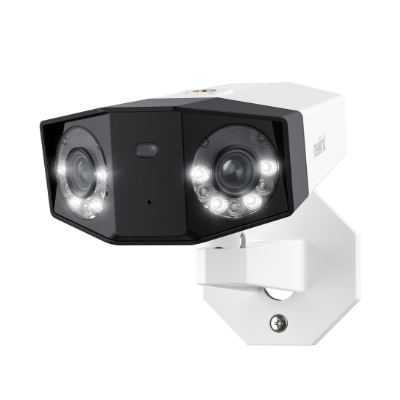
Groundbreaking 16MP Dual-Lens PoE Camera
16MP UHD, Dual-Lens, Motion Track, 180° Wide Viewing Angle, Power over Ethernet, Color Night Vision.
FAQs
Does Home Assistant Green need a subscription?
No. The operating system, add-on store, and dashboard updates are free for life. You only pay if you choose the optional cloud backup service, and you can cancel that at any time.
What can you do with Home Assistant Yellow?
You can control Zigbee bulbs, locks, and plugs without a USB stick, store weeks of camera clips on a fast SSD, and upgrade the compute module when faster boards appear, all from one small box.
Do I need a Zigbee dongle for Home Assistant Green?
Yes. Green has no onboard radio, so you must plug in a separate USB Zigbee, Z-Wave, or Thread dongle if you want to talk to mesh devices.
Conclusion
Home Assistant Green vs Yellow comes down to price today versus options tomorrow. Green gives you the lowest cost and the shortest path to a working dashboard, but it locks you into fixed memory, slow storage, and no internal radio.
Yellow asks for double the cash, yet it hands you an upgrade trail, onboard Zigbee, and room for a fast SSD that keeps video smooth. Pick Green if you want a silent, low-power hub that runs a modest smart home. Pick Yellow if you expect to grow, tinker, and store history locally for years. Share your pick and your reason in the comments so new buyers can learn from real use, not just the spec sheet.
Search
Subscribe for the Latest Updates
Security insights & offers right into your inbox