
Choosing Between FHD and IPS: The Key Differences Explained

There are many technical terms used with modern displays, with the two most popular being FHD vs. IPS. So, many people compare products using such terms when purchasing monitors, laptops, TVs, or security cameras. However, these are not the same thing.
The first is a screen resolution and the second is a display panel technology. In this guide, we will explore the differences to help you pick the best display device for work, gaming, entertainment, and surveillance.
FHD vs IPS: Can They be Compared?
The terms are used to compare and contrast, but they actually mean different things. FHD is an indicator of image resolution, while IPS indicates display panel quality. They are not competitive products because they are used for different things. An FHD panel can be an IPS panel as well.
For instance, one of the advancements of modern monitors is a combined IPS panel and Full HD resolution that provides sharper images and improved viewing angles. Rather than deciding between the two, the buyer should gain insight into how both technologies work in conjunction to enhance display performance.
Overview of FHD and IPS
It is important to first have an understanding of what each term means and what role they play in a display system before comparing them.
What is FHD?
It is the abbreviation of Full High Definition. It is a screen resolution of 1920 x 1080 pixels. It is often referred to as 1080p resolution, and is a standard resolution employed in television sets, computer monitors, notebooks, smartphones, and security cameras. It increases the number of pixels that are displayed on the screen, resulting in sharper images as compared to HD.
The more pixels, the better the image details, video playback, and text will look. Full High-Definition stays among the most popular resolutions due to the fact that it has a great balance of image quality, affordability, and performance. FHD displays can be used for:
- Watching videos and movies
- Use the internet for work and leisure
- Gaming or streaming content
- Security camera monitoring
FHD offers much sharper images and greater detail than other resolutions, such as HD (1280 × 720).
What is IPS?
IPS is a type of LCD Panel Technology. IPS panels offer increased viewing angle, brightness uniformity, and color accuracy over previous display technologies such as TN panels. One of the biggest benefits of IPS displays over other types is that colors are visible from the side, even when displayed from a distance. This is where IPS is ideal for professional, entertainment, and group viewing. IPS panels are widely used in:
- Professional monitors
- Graphic design displays
- Gaming monitors
- Smartphones and tablets
- Security monitoring systems
Overall, IPS panels tend to be more expensive than TN panels, but they offer several advantages, including improved image quality and a more comfortable viewing experience.
What’s the relationship between them?
FHD and IPS are complementary and not competing technologies. The sharpness of the image is controlled by the FHD, and the display view angle is controlled by the IPS; the IPS also affects the accuracy of the colors displayed. For example:
- It is possible to get FHD resolution in a monitor with a TN panel.
- IPS technology can be used on a monitor with a 4K resolution.
- A display can be a mixture of both FHD and IPS
This means that FHD and IPS are complementary technologies.
FHD vs IPS: Head-to-Head Chart
This comparison shows that FHD and IPS solve different display needs. One improves detail, while the other improves display quality.
Bonus: Why IPS and FHD are Important for Security Camera Systems
Both FHD and IPS are very useful in today's security systems. Security videos should be sharp enough to clearly and correctly recognize faces, cars, and movements. Meanwhile, security monitors are looked at in a variety of ways, and IPS technology is very useful.
The importance of FHD in a security system
Security cameras can record in FHD resolution:
- Sharper facial details
- Clearer license plates
- Better night footage
- Improved zoom quality
- More accurate event playback
The lower the video resolution, the harder it will be to see important details, particularly in the outdoors or in low-light conditions.
Why IPS is a crucial monitor technology for displays
Security personnel spend long periods of time watching screens from various angles. IPS displays are useful in providing:
- Wider viewing angles
- More accurate colors
- Better brightness consistency
- Reduced image distortion from side angles
This is particularly vital in offices, businesses, warehouses, and large houses where multiple individuals can monitor security feeds simultaneously.
The RLK16-1200D8-A system offers high-resolution video recording and powerful monitoring capabilities, making it suitable for residential and professional security applications. It offers color night vision, which appears crystal clear on your IPS displays. Meanwhile, the 12MP PoE system ensures that all details are on your FHD displays.
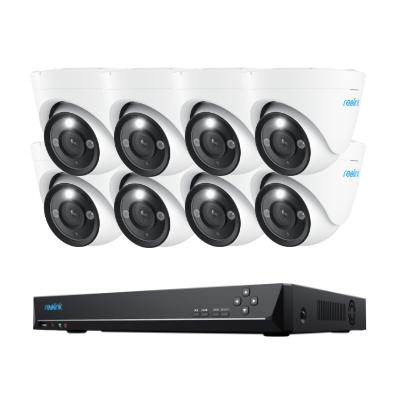
12MP PoE Security System with Color Night Vision
12MP Ultra HD, Person/Vehicle Detection, Power over Ethernet, 16-Channel NVR.
FAQs
Is an FHD IPS display good for gaming?
Yes, such a display is great for gaming. The resolution offers great image quality without the need for high-end equipment, and IPS panels have superior color and viewing angles. This monitor combination offers a good balance of video quality, responsiveness, and price, which makes it an attractive option for gamers.
Is FHD high quality?
Yes, it is good for most daily tasks. The 1920x1080 resolution ensures sharp visuals, detailed videos, and a comfortable viewing experience for gaming, office productivity, streaming, and security surveillance. Full High Definition has emerged as a popular resolution, thanks to its good performance and lower hardware requirements, although 4K is available for more detail.
What are the downsides of IPS?
IPS panels generally cost more than TN panels and can exhibit slightly slower response times in some older models. They may also suffer from “IPS glow,” which refers to the uneven brightness in dark scenes. However, the image quality of modern IPS displays has vastly improved, and overall image quality remains very good.
Conclusion
FHD and IPS are not the same technology; rather, they complement each other to enhance display quality. FHD emphasizes image sharpness, while IPS emphasizes color accuracy and viewing angles. Many will find it more advantageous to have displays featuring both technologies, as they provide a richer entertainment, gaming, work, and security monitoring experience, rather than using one or the other in FVD vs IPS monitor.
Search
Subscribe for the Latest Updates
Security insights & offers right into your inbox