
Doorbell Wiring for Home Improvement 2026
Upgrading or installing a new doorbell system is a popular home improvement project that can enhance the security and convenience of your living space. Proper doorbell wiring is crucial for ensuring that your system functions efficiently and reliably.
In this comprehensive guide, we'll explore the various aspects of doorbell wiring, covering essential components, wiring diagrams, and practical tips for a successful installation.
Key Components of Doorbell Wiring
-
Chime: The doorbell chime is the audible component that alerts you when someone is at your door. It is typically mounted inside your home and wired to the doorbell button and transformer. Proper doorbell chime wiring ensures that the chime produces a clear and audible tone when the button is pressed.
-
Transformer: The doorbell transformer is a crucial component that steps down the household voltage (typically 120V) to a lower voltage (usually 16-24V) suitable for powering the doorbell system. Correct doorbell transformer wiring is essential for safe and efficient operation.
-
Push Button: The doorbell push button is the component that initiates the signal to the chime. It is typically mounted outside your home, near the entryway. When pressed, the button sends a signal through the wires to the chime, causing it to ring.
Doorbell Wiring Diagrams
Traditional doorbell systems follow specific wiring diagrams to ensure proper functionality. Here are some common diagrams:
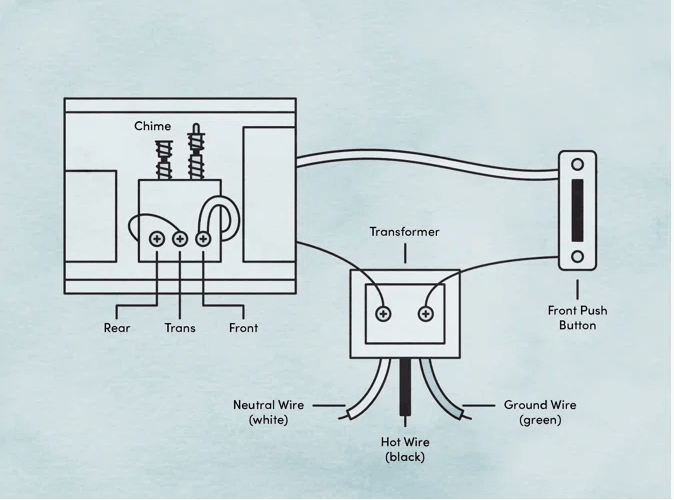
Single Doorbell Button and Single Chime
This is the simplest configuration, consisting of a single doorbell button wired to a single chime. The wiring runs from the transformer to the doorbell button, and then to the chime, forming a complete circuit.
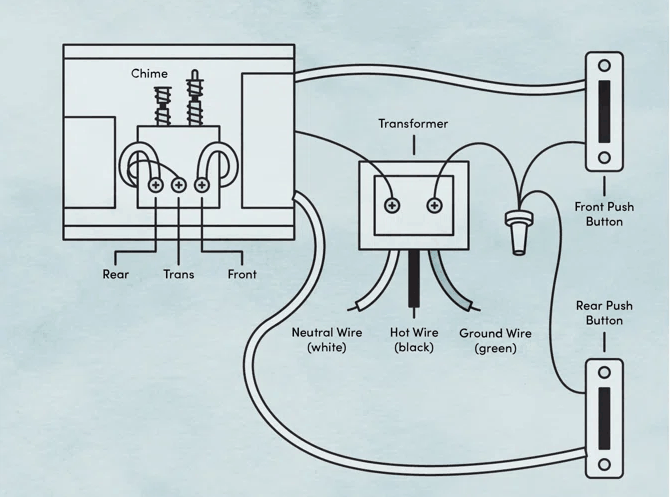
Front and Rear Double Doorbell Buttons and Single Chime
In this setup, two doorbell buttons (one for the front door and one for the rear door) are wired to a single chime. The wiring from the transformer splits to connect to both buttons, which are then wired to the chime in parallel.
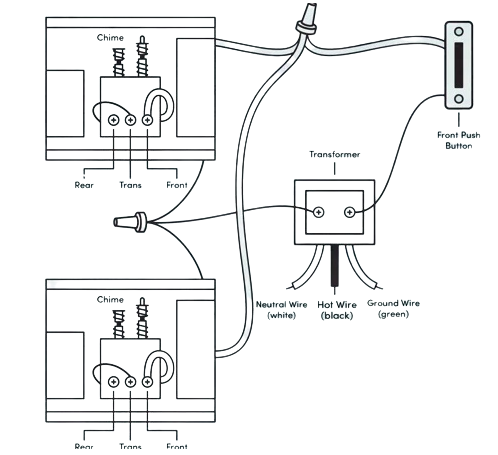
Single Doorbell Button and Double Chime
This configuration allows for two separate chimes to be installed, typically in different areas of the home. The wiring from the transformer runs to the doorbell button, and then splits to connect to both chimes in parallel.
Front and Rear Double Doorbell Buttons and Double Chime
This is a more complex setup, featuring two doorbell buttons (front and rear) and two separate chimes. The wiring from the transformer splits to connect to both buttons, and then further splits to connect to each chime in parallel.
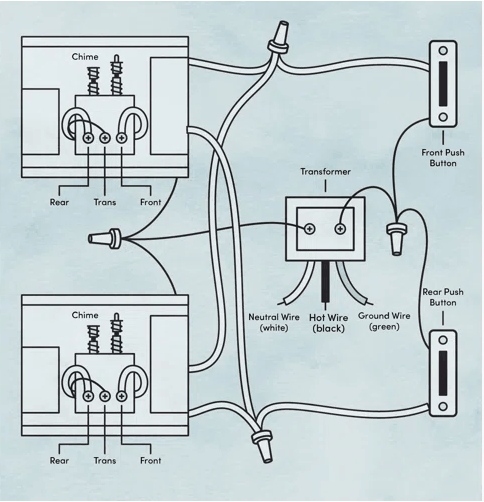
Picture Credits: theengineeringknowledge
wayfair
How to Wire a Doorbell and Chime? Key Steps
Turn off the power at the circuit breaker before you start. Connect one wire from the transformer to the doorbell button and connect the other transformer wire to the "TRANS" terminal on the chime. Then, take the second wire from the doorbell button and attach it to the “FRONT” terminal on the chime. This completes the doorbell circuit. Check the detailed steps:
Step 1. Prepare the wiring
- Before beginning any work, it's crucial to label the existing wires and components to avoid confusion during the installation process.
- Turn off the power to the circuit you will be working on at the electrical panel.
Step 2. Wire the transformer to the doorbell and chime
- Connect the transformer: Run a low-voltage wire from the transformer to the doorbell button. Connect one wire to one terminal on the doorbell button.
- Wire from the transformer to the doorbell chime: Connect a separate low-voltage wire from the transformer to the terminal on the chime labeled "TRANS" (for transformer).
Step 3. Wire the doorbell to the chime
- Run a second low-voltage wire from the doorbell button to the chime’s “FRONT” terminal to ensure correct doorbell wiring。
- Connect the second transformer wire to the 'TRANS' terminal, and the wire from the doorbell button to the 'FRONT' terminal. This completes the circuit when the button is pressed.
Step 4. Test the wiring
- Restore the power and press the doorbell button to ensure it chimes correctly.
Where Is Wiring Used? Common Scenarios
Most doorbell systems use low-voltage 2-conductor wiring, whether it’s a traditional chime or a modern video doorbell.
Two-Wire vs. Three-Wire Systems
- Two-wire systems: The most common setup, used for standard doorbells and many smart doorbells
- Three-wire systems: Less common, typically used in more complex or multi-chime configurations
Doorbell Button Wiring
- Doorbell buttons usually have two terminal screws
- The wire connection is not polarity-sensitive, so either wire can go on either screw
Doorbell wiring is simple and low-voltage, with most systems using two wires and flexible connections at the button for easy installation.
Best Doorbell Camera for Wiring Inside Home
Wired Doorbell with Chime - Reolink Video Doorbell PoE
If you're looking for a reliable and high-quality doorbell camera to integrate with your wired system, the Reolink Video Doorbell PoE is an excellent choice. This smart 2K+ (5MP) HD wired PoE video doorbell offers exceptional video quality, person detection capabilities, and seamless integration with Reolink NVRs.
The PoE (Power over Ethernet) design of this doorbell camera simplifies the installation process, as it can be powered directly through the Ethernet cable, eliminating the need for separate power cables or batteries. This feature makes it an ideal choice for wiring inside your home, ensuring a clean and tidy installation.
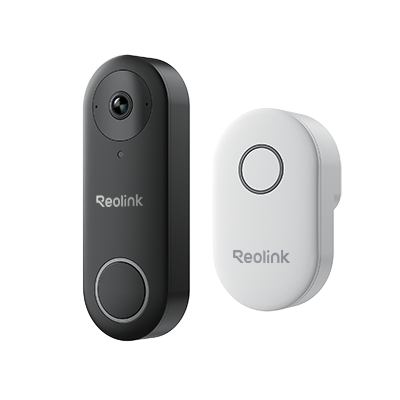
Smart 5MP Video Doorbell with Chime
5MP Super HD, Person Detection, Power over Ethernet, 180° Diagonal Viewing Angle, Two-Way Audio, High-Quality Night Vision.
Wired Video Doorbell Alternatives - Reolink Doorbell (Battery)
The Reolink Doorbell (Battery) is an excellent wireless video doorbell that offers 2K resolution video quality, ensuring clear visuals of visitors. With two-way audio, you can converse with guests from anywhere. It features smart detection for people, vehicles, and packages, sending timely notifications to your device.
Easy to install and battery-powered, it provides flexibility without the need for wiring, and its night vision capability ensures clear monitoring even in low light. Compatible with smart home systems like Alexa and Google Assistant, it also offers both local and cloud storage options, making it a high-performance choice for enhancing home security.
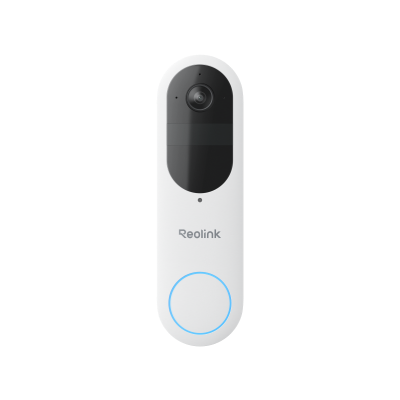
Smart 2K Dual-Band Wi-Fi Battery Doorbell
2K 4MP Head-to-Toe View; Person/Vehicle/Package Detection; Works with Reolink Home Hub & Wi-Fi NVR; 5/2.4GHz Dual-Band Wi-Fi.
FAQs
What wiring is needed for a doorbell?
Most doorbells use low-voltage 2-conductor wiring (typically 16–24V), which connects the transformer, chime, and doorbell button or video doorbell.
Do I need an electrician to wire a doorbell?
Not usually. Basic doorbell wiring is simple and DIY-friendly, but you may need an electrician if installing a new transformer or dealing with complex or high-voltage wiring.
Does it matter which wire goes to which terminal on a doorbell?
No. Standard doorbell buttons are not polarity-sensitive, so either wire can connect to either terminal.
Conclusion
Proper doorbell wiring is essential for ensuring the reliable and efficient operation of your home's doorbell system. By understanding the different types of wiring, essential components, and wiring diagrams, you can make informed decisions about your installation or upgrade project. Additionally, following the recommended techniques and tips will help you achieve a safe and successful wiring process.
We hope this comprehensive guide has provided you with valuable insights into doorbell wiring for home improvement. Feel free to share your thoughts, experiences, or any additional tips in the comments below.
Search
Subscribe for the Latest Updates
Security insights & offers right into your inbox