
Do Solar Panels Truly Work on Cloudy Days? Discover the Facts
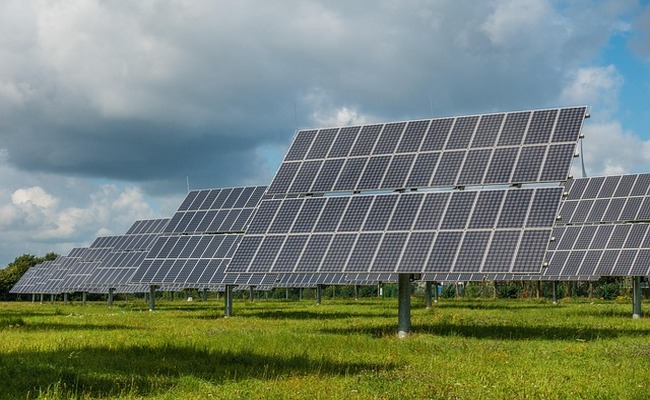
Planning for a solar panel system can be hectic if it's your first time. You will face some serious challenges, and cloudy days are often the real culprit. You may be confused about whether your solar panel is producing enough electricity.
However, a little guide could help you a lot in optimizing the maximum energy during these days. In this article, we will discuss the effects of cloudy days on solar panels and how you can maximize their efficiency.
Do Solar Panels Work On Cloudy Days
Yes, solar panels work on cloudy days but produce limited energy. The solar panels are specifically designed to capture the sun's irradiation, including both direct and diffuse radiation. However, in cloudy weather, it would struggle to produce the same amount of electricity as it does in normal weather. During these days, the solar panels can produce only 15% – 30% of their designed capacity.
The energy generation also depends upon the cloud thickness and density. It is clear that you will receive more scattered irradiations in thin clouds, while receiving only a few in thick clouds. The cloudy days might not be there for the whole year. You must focus on the yearly average energy generation because cloudy days would negligibly impact it.
How Well Do Solar Panels Work On Cloudy Days
Solar panel performance on cloudy days depends upon several factors, including the panel's type, cloud conditions, and location.
Technology
You can get the maximum energy output if you use the most advanced technology and basic tactics. From a technological perspective, a monocrystalline panel can capture the diffuse irradiance more efficiently than a polycrystalline panel. A more advanced option is the thin film that could capture more efficiently in low light.
Geography
The geographical factor matters a lot. A country close to the equator will receive more intense irradiation. In this case, it will have high energy production regardless of heavy clouds. In contrast, the northern areas usually experience cloudy weather, which results in lower energy production. The best strategy is to feed the excess energy to the grid during sunny days and take it back on cloudy days to balance the shortage.
Battery Backup
Having a good battery backup would also save you from struggling in cloudy weather. Taking the smart steps will help you utilize your maximum energy. People usually get confused in rainy weather, but the reality is that it will naturally take out the dirt and debris from your solar panels. Similarly, cloudy conditions in winter are also considered more efficient than summer due to the higher conversion efficiency of PVs.
Tips To Maximize Solar Efficiency In Cloudy Weather
- You must clean the solar panels manually or install an automatic washer to increase the efficiency.
- Always opt for bi-facial Monocrystalline panels, as they can capture the maximum amount of energy even in low-light conditions.
- Use smart tools like PVsyst to get the optimum tilt and azimuth angles to maximize the efficiency for every month.
- You can install a solar tracker, which automatically adjusts the panel orientation according to the sun's position.
- Ensure you have a good battery backup. You can store the excess energy in those batteries to use on cloudy days.
- You can install hybrid systems to take back the electricity from the grid and cover the shortage in cloudy weather.
- You should also keep monitoring the energy output to detect issues. A modern solar panel or a tool will help you gather real-time insights.
Bonus: Solar Power Security Camera Recommendation
Reolink Altas PT Ultra
Reolink Altas PT Ultra is a battery/solar-powered Wi-Fi security camera. It offers a 500-day battery backup on a single charge. It has a dedicated solar panel to charge the battery for automatic recharging and to extend battery life.
The camera offers 4K resolution with a 360° pan & tilt feature for efficient monitoring. It is equipped with Color X night vision technology, which captures clear videos in extreme darkness. With dual-band Wi-Fi 6 technology, you can stream seamlessly and monitor the real-time view without any delays.
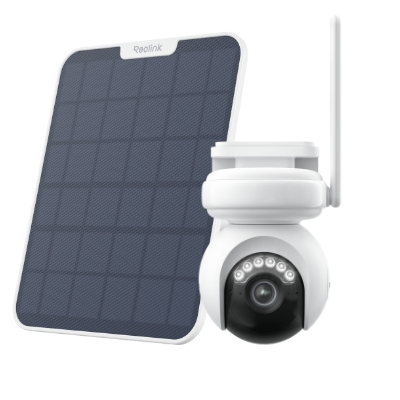
Industry-leading 4K Continuous Recording Battery Camera
4K UHD Continuous Recording; ColorX Night Vision; Pan & Tilt; Automatic Tracking; All Recordings Stored Locally.
Reolink Go Ranger PT
Reolink Go Ranger PT is a 4G LTE security camera for outdoor and wildlife monitoring. It has a solar panel mounted, which directly operates the camera or charges the battery for an endless backup. It works well in all weather conditions because of the IP64 rating.
It captures videos in 4K resolution and has no-glow night vision to record clear videos at night without disturbing anyone. It can detect animals and recognize different species. You receive real-time alerts on the connected device. It's perfect for remote locations where Wi-Fi isn't available.
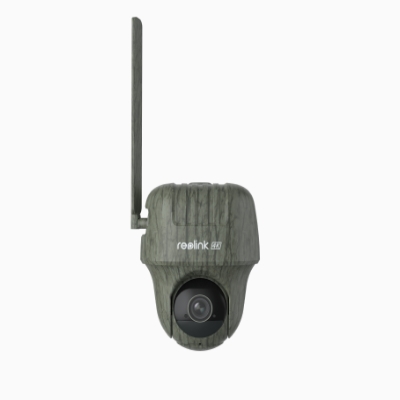
4K 4G LTE Wildlife Camera with 360° All-Around View
4G LTE Network, 4K 8MP Ultra HD, No-Glow IR LEDs, Person Detection, Animal Detection, Two-Way Audio, Battery/Solar Powered.
FAQs
1. Do solar panels work on rainy days?
Yes, solar panels can still generate energy on rainy days, but the output is lower. It is mainly due to the clouds, which restrict the irradiation from reaching the solar panel surface.
2. How do solar panels work if there is no sun?
Solar panels work if there is no direct contact with the sunlight. It is possible during the day when the reflected light from the clouds falls on the solar panel. However, the energy generation would be minimal compared to direct irradiation.
3. What is the biggest drawback of solar panels?
The biggest drawback of solar panels is their high initial costs and return on investment. Additionally, they are highly dependent on sunlight; a slight deviation in its tilt angle would reduce the efficiency.
4. Are solar panels worth it in cloudy regions?
Solar panels are worth it in cloudy regions as they can adapt to the reflected beam of sunlight. However, a noticeable point is that they would not generate enough energy, and also, the payback period will be longer.
Conclusion
Cloudy days are temporary, and they may not severely impact the yearly output of the PV panel. However, northern areas usually face cloudy weather. Still, the solar panels will work and generate a sufficient amount of electricity if the system is upgraded and other energy maximization tips are followed.
Search
Subscribe for the Latest Updates
Security insights & offers right into your inbox