
Camera Sensor Size: How It Affects Your Photos and Videos
If you want to capture in-depth and vibrant photographs, determining the correct camera sensor size is crucial. It helps get the desired image quality and lets you make informed decisions about the camera gear.
In this article, we will help you understand the sensor size comparison while discussing how it affects your photos and videos.
Introduction to Camera Sensor Size
A camera sensor is the hardware inside a camera responsible for catching light and converting it into signals to form an image. It consists of a million photosensitive elements or light sensor chips, which record the landscape exposed to the camera lens.
Now, why does the camera sensor size matter? Well, it does because the size controls how much light is used for image formation.
The larger camera sensor size results in higher-quality images, but the smaller size can provide patchy and unclear results. In addition, the smaller sensors can crop the capturing scene, restricting you from capturing more area in one frame.
Why sensors matter in photography?
- Low-light performance: A larger sensor can capture more light and improve image quality.
- Depth: Bigger sensors help to get shallower depth and to create a bokeh effect.
- Dynamic range: Larger sensors can capture more details in one frame. It also helps to achieve vibrant highlights.
- Field of view: Smaller sensors crop the image and provide a narrower field of view. Conversely, the larger sensors capture a wide field of view.
Common Camera Sensor Sizes
Each sensor size camera has its strengths and weaknesses, which suit different kinds of photography. When choosing the camera, it is essential to understand different sense size cameras as discussed below:
Full-frame sensor
The full-frame sensor is equal to the size of a 35mm film frame, which is the largest sensor commonly found. Full-frame sensors are popular among professionals for delivering excellent low-light performance and superior dynamic range.
They also have the ability to achieve shallow depth of field. Hence, if you are looking forward to making your career in photography, Full-Frame sensors are what you need.
APS-C sensor
The APS-C sensors are the second-largest sensors in terms of size. They measure around 22mm x 15 mm. These are commonly found in DSLRs as they offer a good balance between affordability and performance.
Micro four-thirds sensor
The Micro Four-Thirds sensor is smaller than the above-mentioned options. It offers dimensions of 17 x 13mm, thus establishing itself as an ideal option for travel shoots and to be used as the iPhone camera sensor size. Although the sensor size is good, you can still expect decent image quality under ideal light conditions.
Camera Sensor Size Chart
Knowing different camera sensor sizes and their offering is crucial to determining what camera sensor size will benefit you. To make this easy for you, we have provided a chart below with side by side comparison of unalike camera sensor sizes.
The chart involves dimensions and uses, along with other things. With the help of this chart, we have provided you with complete information about the image quality, low light performance, and moveableness of unalike sensor sizes.
How Camera Sensor Size Affects Image Quality
Factors like image quality and detail captured mostly depend on the camera sensor size you choose. With the information below, you will have a sense of what to expect from the results of different sensor sizes.
- More Surface Area: For high resolution, more surface area needs to be captured. A bigger sensor can capture a larger surface area.
- Improved Pixel Size: More pixels are inhold by bigger sensors. They capture more light, enhancing the image quality.
- Details: A bigger sensor allows for more detail and sharpness in the image. Textures and small things are more clearly visible if captured with a bigger camera sensor.
- Reduced crop factor: Cameras with larger sensor sizes offer crop factors, which indicate that you can achieve a comprehensive view without compromising quality.
How to Choose the Right Sensor Size for Different Cameras
When selecting a camera sensor, remember that the image quality will differ depending on size. Here is some information to help you choose the best-suited sensor for unalike cameras.
Phone Camera
Smartphone cameras have small sensors but deliver decent quality for everyday use. Check the phone's low-light performance and pixels; they should be good enough to capture happy moments.
Security Camera
Security cameras are crucial for capturing details and delivering clear footage. If capturing details is necessary, particularly at night, using security cameras with larger sensors is better. For example, the new Reolink Altas PT Ultra uses a large 1/1.8'' image sensor and can deliver full-color nighttime footage without using visible spotlights.
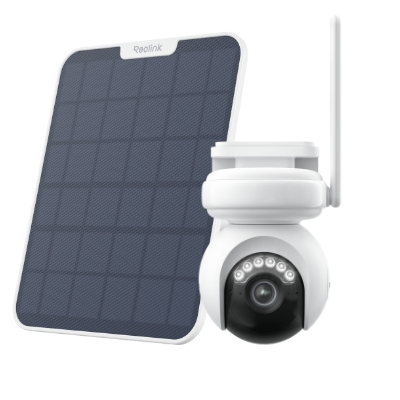
Industry-leading 4K Continuous Recording Battery Camera
4K UHD Continuous Recording; ColorX Night Vision; Pan & Tilt; Automatic Tracking; All Recordings Stored Locally.
Digital Camera
Full-frame sensors are best suited for digital cameras such as DSLRs. This helps achieve that premium quality. On the other hand, for casual use, APS-C works well at a lower price.
Action Camera
Action cameras like GoPro work well for capturing outdoor activities. They use small sensors, such as 1/2.3, which deliver decent quality. They are also a good option for capturing travel journeys.
FAQs
What is the sensor size on a camera?
The sensor size is the physical dimensions of your camera's sensor. It captures light and then signals the processor to form images.
The larger a camera sensor is, the more light it passes, creating images of higher quality, more vibrant, and more detailed. The smaller sensors are usually used for smartphones, while the largest ones are utilized in professional photography devices like DSLRs.
Does sensor size affect image quality?
The sensor size has a deep impact on the image quality. A larger sensor equals better image quality and improved sharpness. In addition, larger sensors grant you more control over depth of field, which can enhance background blurs and bokeh effects.
What does 1 2.3 sensor size mean?
The A1//2.3 sensor size is standard for compact cameras, such as smartphones. It measures around 6.17mm x 4.55 mm. Although it may not perform well in low-light conditions compared to larger sensors, it is suitable for all photography, especially travel shoots.
Conclusion
Camera Sensors are an integral part of understanding to get the desired image results. They are basically a component in your camera that manages the light and exposure to provide an in-depth, vibrant, or bokeh effect in the picture. The larger a camera sensor is, the more wide a frame it can capture, and vice versa.
If you found the content above helpful, please share it with your friends and family. Also, please provide valuable feedback in the comment section below.
Search
Subscribe for the Latest Updates
Security insights & offers right into your inbox