
AI Security Camera: A Comprehensive Guide
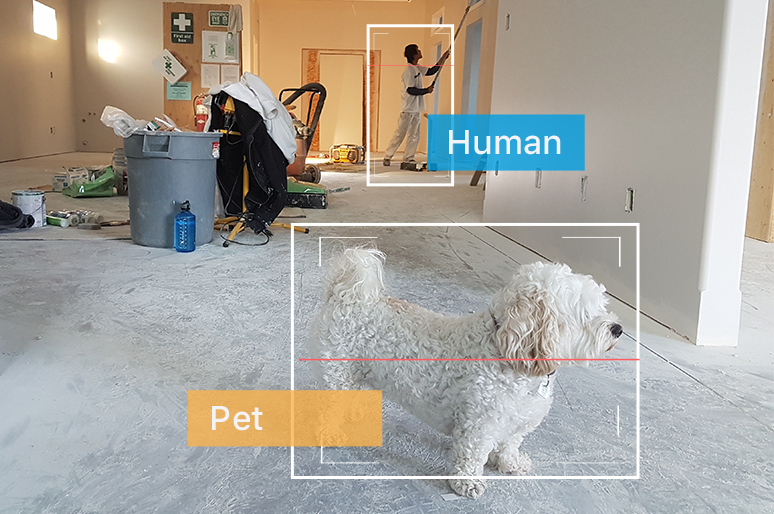
AI security cameras use smart technology to detect people, vehicles, and motion with high accuracy. Explore their benefits, how they differ from traditional cameras, and how to choose the right setup for your property without subscription fees.
Traditional motion-detection cameras have a major flaw: they cannot tell the difference between a real intruder and a blowing leaf, leading to constant false alarms and notification fatigue.
AI security cameras solve this by processing video footage in real-time, using advanced edge-computing to isolate and identify actual threats.
Rather than sending raw footage to a distant cloud server, modern AI surveillance systems rely on local processors to analyze shapes, track movements, and detect human or vehicular activity on the spot.
This guide breaks down how AI cameras work, defines the technical standards you should look for (such as aperture, compression, and local storage options), and helps you match the right camera setup to your property's layout.
- What Is an AI Security Camera?
- How Do AI Security Cameras Work?
- Why Choose AI-Powered Security Cameras?
- 6 Key Features of Best AI Security Cameras
- What Are Common Use Cases for AI Security Cameras?
- Best AI Security Cameras for Different Needs
- AI vs. Traditional Security Cameras: A Quick Comparison
- Real-World Feedback: Is an AI Security Camera Really Worth It?
- Buyer's Decision Table
- FAQs
- Conclusion
What Is an AI Security Camera?
An AI security camera is a surveillance device equipped with on-device computer vision and edge processors that analyze, classify, and interpret video footage in real-time without relying on cloud-based servers.
Traditional cameras act as passive observers, recording pixels as they change. In contrast, AI-powered security cameras actively evaluate the context of a scene to distinguish actual security threats from benign environment changes.
How Do AI Security Cameras Work?
To understand a scene in real-time, AI security cameras rely on a combination of specialized on-device hardware and advanced software algorithms to analyze physical shapes, depths, and movements.
-
Edge-Processing & Depth Modeling: High-performance built-in chipsets allow the camera to construct an updated mathematical 3D model of its monitoring zone. By measuring depth and volume, the system ignores flat 2D movement—like wind blowing through a tree branch or a headlight reflecting on a window—while triggering alerts only for actual 3D objects like humans, vehicles, or animals.
-
Deep Machine Learning & Object Classification: Using deep learning networks, these cameras catalog visual attributes and shapes over time. This enables them to reliably differentiate between specific types of movement—such as distinguishing a delivery van from a passenger car, or a person from a large pet—ensuring you are only alerted to relevant events.
-
Pose Estimation & Behavioral Analytics: Advanced AI cameras analyze skeletal "pose data" in real-time. By tracking the position of a target's limbs and matching it to predefined suspicious behaviors—such as loitering, crouching near a window, or picking up an item and placing it in a pocket—the system can intelligently predict and flag noteworthy events before a crime occurs.
Why Choose AI-Powered Security Cameras?
AI security cameras solve the industry's greatest vulnerability—notification fatigue—by automatically filtering out up to 90% to 95% of false alarms while providing instant, actionable threat detection.
By replacing basic motion sensors with intelligent, real-time edge processing, these systems ensure that homeowners and security personnel only react to genuine security events.
-
Fewer False Alarms: AI cameras can distinguish people, vehicles, and animals from movement caused by rain, shadows, insects, or swaying branches. For example, a backyard camera can ignore tree movement while still alerting you when someone enters the yard.
-
More Reliable Alerts: Fewer unnecessary notifications make important alerts easier to notice. Instead of receiving constant motion warnings, you can focus on events such as a person approaching the front door or a vehicle entering the driveway.
-
Faster Threat Response: AI surveillance can trigger a spotlight, siren, or voice warning as soon as someone enters a restricted area or remains there too long. This is useful for deterring a trespasser near a garage, gate, or storefront before an incident occurs.
-
Quicker Video Search: AI labels recorded events by type, helping users find relevant footage without reviewing the entire timeline. For example, you can filter recordings to locate a vehicle that entered the driveway or a person seen near the entrance.
6 Key Features of Best AI Security Cameras
The value of an AI security camera lies in its onboard processing features, which turn a passive video recorder into an active, automated security guard capable of identifying, tracking, and responding to real-world threats.
When evaluating AI security cameras, these six features represent the benchmark of modern smart surveillance:
1. Person, Vehicle, and Animal Detection
Onboard classification algorithms instantly sort moving targets to prevent false alarms caused by environmental changes.
Legacy motion-sensor cameras trigger a notification every time pixels change—such as wind blowing through trees or headlights sweeping across a wall. The best AI cameras use deep learning to match visual targets against three distinct physical categories: humans, vehicles, and pets. This ensures you are only alerted to relevant activity on your property.
2. High-Performance Optical Auto-Tracking
Smart pan-tilt-zoom (PTZ) cameras physically rotate to follow a target, keeping the subject centered in the frame.
Rather than letting an intruder quickly walk out of a fixed camera’s field of view, auto-tracking cameras use motorized gear systems to follow a moving object. High-end models employ dual-lens tracking: one wide-angle lens monitors the entire yard, while a second telephoto lens automatically zooms in to capture high-definition details like clothing, facial features, or carried objects.
3. Unusual Behavior & Loitering Detection
Behavioral AI flags suspicious actions, such as lingering near entry points, rather than simple movement.
Advanced AI cameras analyze the time an object spends in a designated "virtual zone." For example, if a vehicle drives past your house, the camera ignores it. However, if a person stands near your front door or side window for more than two minutes without knocking (loitering), the camera flags this deviation from normal patterns and triggers an immediate warning.
4. Direct, Smart Search for Video History
AI indexing lets users find specific moments in hours of recorded footage by entering simple search terms instead of manually reviewing the entire timeline. Reolink’s ReoNeura technology, for example, helps users quickly locate relevant people, vehicles, or events.
Traditional surveillance requires you to manually watch hours of empty video to find a specific event. AI security systems tag all recorded video with metadata. This lets you search your local storage or NVR for terms like "white van" or "person detected near garage," pulling up the exact clip in seconds.
5. Instant Local Edge-Processing and Local Storage
Processing video directly on the camera's built-in chipset reduces alert delay and eliminates the need for paid cloud subscriptions.
Instead of sending raw, heavy video files to a cloud server to analyze what is happening, top-tier AI cameras use powerful, built-in edge chips. Because the mathematical calculations happen directly on the device, threat detection alerts are pushed to your phone in under 2 seconds—and your private data stays safely stored on-site without a monthly fee.
6. Perimeter Protection & Virtual Fencing
Users can draw digital boundaries over their camera's view to trigger alarms when crossed.
With virtual boundary features (such as line-crossing or zone intrusion detection), you can draw custom digital lines across your driveway or around your backyard pool. If a person or vehicle crosses that exact digital threshold, the system immediately recognizes the intrusion and can trigger a siren, turn on integrated floodlights, or dispatch a priority notification to your phone.
What Are Common Use Cases for AI Security Cameras?
AI security cameras transition surveillance from passive post-incident review to active, real-time threat prevention and operational intelligence across residential, commercial, and municipal environments.
1. Smart Home Security: Preventing Intrusions Before They Happen
For homeowners, AI cameras act as proactive virtual guards that secure property boundaries and eliminate annoying false alarms caused by wind, pets, or shadows.
Rather than simply recording a break-in for police reports, AI cameras use active deterrence—such as built-in floodlights and siren warnings—the moment a human crosses a property boundary, while ignoring neighborhood cats or falling leaves.
It is 2:00 AM, and a stranger walks into your dark backyard. Instead of silently recording or ignoring the movement, the outdoor AI camera instantly classifies the shape as a "human" (ignoring a passing raccoon minutes prior). The camera automatically turns on its spotlight, sounds a warning tone, and pushes a critical alert to your phone. You wake up to a high-definition clip of the intruder retreating, having stopped a break-in before it ever began.
2. Business & Retail Intelligence: Protecting Assets and Analyzing Customers
In commercial spaces, AI surveillance protects physical inventory while doubling as a data tool to track foot traffic, customer paths, and store performance.
Commercial AI cameras run heat-mapping and people-counting algorithms. This allows business owners to analyze customer dwell times, optimize checkout lane staffing, and detect suspicious behavior (like loitering near emergency exits or restricted stockrooms).
A retail store manager notices a bottleneck near the entrance. By pulling up the AI camera's path-analysis dashboard, they see that 70% of shoppers crowd around a center display, blocking access to the back aisles. Using this visual data, the manager adjusts the store layout, instantly improving traffic flow and boosting sales of slower-moving inventory.
3. Smart Cities & Traffic Management: Streamlining Municipal Infrastructure
AI cameras serve as the sensory network for modern smart cities, dynamically optimizing traffic lights, detecting road accidents, and monitoring municipal infrastructure.
By analyzing vehicle volume and detecting accidents in real time, AI street cameras feed data directly to traffic control systems to adjust signal timing, reducing city gridlock, vehicle idle times, and carbon emissions.
An unexpected fender-bender blocks the left lane of a busy city bridge during rush hour. Within 15 seconds, a municipal AI camera detects the stopped vehicle pattern and automatically flags the incident on the city transit dashboard. The system instantly adjusts nearby traffic light cycles to detour incoming vehicles and dispatches roadside assistance, preventing a massive multi-mile traffic jam.
4. Construction Site Safety & Asset Protection: Monitoring Active Jobsites
On active construction sites, AI cameras serve as automated safety officers and security guards, monitoring PPE compliance, detecting hazardous conditions, and preventing high-value material theft.
Instead of relying on manual safety checks or reviewing theft footage after it occurs, construction AI cameras actively flag safety violations (such as missing hard hats or vests) in real-time and secure the perimeter after-hours to protect expensive tools and materials.
At 3:00 PM on a busy commercial jobsite, a subcontractor steps onto a high-elevation scaffolding deck without securing their safety harness. A mounted AI camera instantly analyzes the worker's pose, detects the missing safety line, and automatically sends a high-priority alert to the site manager's mobile app. The manager quickly intervenes, resolving the hazard before an accident occurs or an OSHA violation is triggered.
Best AI Security Cameras for Different Needs
There is no single "best" security camera for everyone; the right choice depends on your property’s physical layout, installation constraints, and power availability.
To help you cut through the technical noise, we have mapped out our top AI-powered cameras to the specific real-world pain points and scenarios they were designed to solve.
1. Best For Large Yards with No Outlets: Reolink Altas PT Ultra
Wide-area outdoor monitoring where running power cables is impossible, but motion-only clips aren't enough.
Standard battery cameras only wake up and record after they detect motion, meaning you often miss the critical seconds of an event before the trigger. However, hiring an electrician to run outdoor power cables to your driveway or backyard is incredibly expensive.
The Reolink Altas PT Ultra breaks the limitations of battery cameras by delivering true continuous recording on a massive 20,000mAh battery, paired with 4K clarity and motorized pan-tilt tracking.
It gives you the absolute freedom of wireless battery placement without sacrificing 24/7 coverage. Its advanced AI identifies humans and vehicles with extreme accuracy, ensuring that even with continuous recording, you can instantly jump to key events in your timeline.
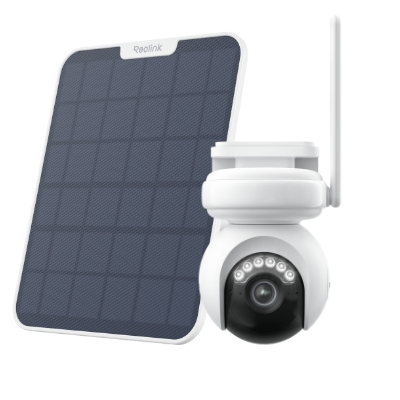
4K Battery-Powered PTZ Camera with Continuous Recording
👍 4K UHD video with continuous recording
👍 ColorX night vision in low light
👍 Pan, tilt, and automatic person tracking
👍 Local storage without monthly fees
2. Best For Renters & Quick Setups: Reolink Argus 4 Pro
Apartments, front porches, or temporary rental properties where drilling, wiring, and complicated installations are strictly off-limits.
You need reliable front-door security, but your lease forbids drilling holes into the walls. Additionally, you don't want a camera that floods your phone with false alerts every time a car drives past or a neighbor walks their dog.
The Reolink Argus 4 Pro is a highly compact, wire-free smart camera that installs in minutes and uses local AI to filter out environmental noise.
Using advanced PIR sensors and onboard algorithms, it distinguishes between people, vehicles, and pets. If an actual threat is identified, it doesn’t just log it—it actively deters them using a built-in spotlight and siren, keeping your home secure without any structural modifications.
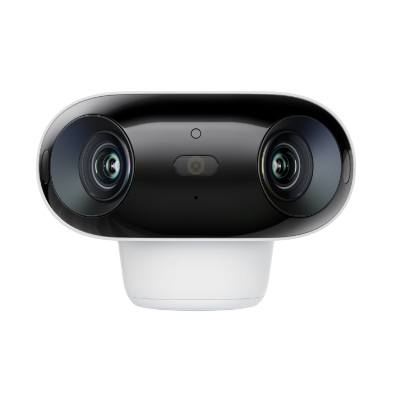
4k 180° Wire-free Color Night Vision Camera
4K UHD 180° Blindspot-free View; Color Vision Day and Night; 30% More Battery Life; Dual-band Wi-Fi 6; Smart detection.
3. Best For Dark Driveways & Blind Spots: Reolink TrackFlex Floodlight WiFi
Monitoring dark, vulnerable outdoor zones—like side alleys or driveways—where trespassers could easily slip away in the shadows.
Fixed-angle cameras leave massive blind spots, and standard night vision often produces blurry, dark images that make identifying details impossible.
The Reolink TrackFlex Floodlight WiFi combines ultra-bright motion-activated floodlights with a dual-lens 4K system that physically tracks and zooms in on moving targets.
With 360° coverage, the camera automatically tracks people or vehicles, keeping them locked in the center of the frame. The powerful, adjustable floodlights illuminate the entire area, turning pitch-black darkness into daytime-level clarity to deter trespassers on sight.
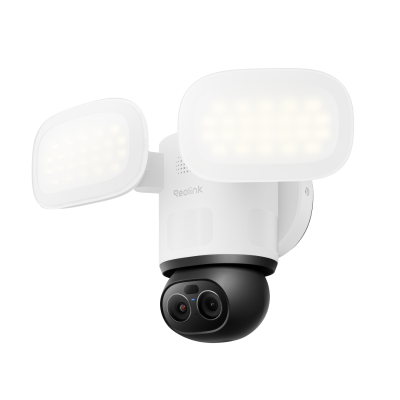
Smart 4K 360° Coverage Wi-Fi Floodlight Security Camera
Local AI Video Search, 4K 8MP Ultra HD, 360° Coverage View, 6X Hybrid Zoom, Dual-Color Floodlight.
4. Best For Whole-Home Protection (No Monthly Fees): Reolink RLK8-1200B4-A PoE Kit
Multi-zone property protection for homeowners who want 24/7 recording, maximum data privacy, and absolutely zero monthly subscription fees.
Cloud storage subscriptions are an ongoing financial drain, and storing your private family videos on third-party servers raises serious privacy concerns. Worse, searching through hours of raw 24/7 footage to find a single event is an exhausting chore.
The Reolink RLK8-1200B4-A is an all-in-one 4K+ (12MP) wired security kit that keeps your data safely stored on-site with zero subscription fees and features a powerful AI smart search tool.
With eight ultra-high-definition cameras and a centralized local storage NVR, this system provides bulletproof 24/7 security. Because the AI processing happens locally, you don't pay a dime for smart alerts. Best of all, instead of manual scrubbing, you can use the AI Video Search feature to filter footage by typing in search targets like "person in blue jacket" or "white van" to locate events in seconds.
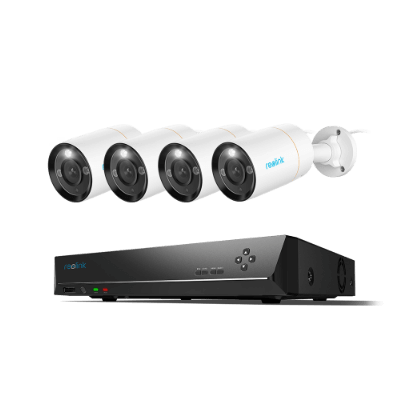
12MP 8-Channel PoE Surveillance Kit with Spotlights
4 pcs 12MP Ultra HD Security Cameras; 2TB HDD 8-Channel NVR for 24/7 Recording; Person/Vehicle Detection; Color Night Vision.
AI vs. Traditional Security Cameras: A Quick Comparison
Real-World Feedback: Is an AI Security Camera Really Worth It?
When you step away from manufacturer spec sheets and look at real-world consumer experiences, the consensus on "AI" security cameras is a mix of frustration with marketing hype and genuine appreciation for improved functionality.
According to discussions in the home security community on Reddit, users highlight both the limits and the practical benefits of modern on-device AI.
Opinion 1: "AI" as a Marketing Buzzword
Many users argue that the "AI" label slapped on entry-level consumer cameras is mostly a marketing gimmick rather than true artificial intelligence.
Some homeowners report that tuning entry-level cameras to avoid false alerts can be incredibly frustrating. In cheap or poorly optimized setups, the system may fail to distinguish between a physical human and a flat shadow moving on the ground.
-
Classification vs. True Understanding: Users point out that consumer "AI" is actually just basic object classification (sorting pixels into human, vehicle, or pet shapes) rather than understanding "intent". For example, the camera can tell you a person is there, but it cannot inherently tell the difference between a neighbor walking past and an intruder loitering with bad intentions.
-
Hardware Limitations: Cheap, battery-powered, or cloud-reliant cameras often lack the processing power to run complex algorithms locally, leading to slower response times or missed detections (like mistaking deer for people or missing a dirty car that blends into the background).
Opinion 2: A Massive Leap Over Traditional Motion Sensors
Despite the marketing noise, experienced users agree that even basic AI classification is a massive upgrade over traditional pixel-based motion detection.
-
No More False Alarms: With older, non-AI cameras, minor environmental shifts—like a cloud passing over on a sunny day or tree branches swaying—constantly trigger recording events and phone alerts. AI algorithms successfully filter out these light and environmental intensity changes, providing a much quieter, more reliable alert feed.
-
Smart Search: One of the most praised features of AI integration is the ability to search footage retrospectively. Instead of spending hours manually scrubbing through empty footage, users can filter archives instantly by "person" or "vehicle," reducing search times from hours to seconds.
-
Installation Matters: Multiple users note that AI performance relies heavily on proper installation. For instance, if a camera is mounted at a slanted angle rather than leveled horizontally, the algorithm may fail to recognize human shapes. Once properly calibrated and leveled, high-quality Power over Ethernet (PoE) systems are reported to be highly accurate.
Bottom Line: If you expect a consumer security camera to act like an autonomous guard that predicts human behavior, you will be disappointed. However, if your goal is to stop your phone from blowing up every time the wind blows, and to quickly locate specific footage of people or cars, a properly calibrated, on-device AI system is absolutely worth the investment.
Buyer's Decision Table
FAQs
What are the disadvantages of AI cameras?
AI cameras can cost more than basic security cameras and may require stronger hardware, reliable networking, or additional storage. Their detection is not perfect, so poor lighting, bad camera angles, fast movement, or partially blocked subjects can still cause missed or incorrect alerts. Some advanced features may also depend on cloud processing or a subscription, creating privacy, data-security, and ongoing-cost concerns.
Are AI cameras worth the money?
The value of AI security cameras depends on your specific needs, budget, and the level of security you require. AI security cameras are worth the money if you need advanced features like object tracking or facial recognition.
Can AI security cameras be used in outdoor spaces?
The answer is yes. AI CCTV cameras can be installed outdoors and withstand different weather conditions. You can check the camera's IP rating before purchasing. For outdoor use, look for an IP66 rating or higher.
Conclusion
AI-powered cameras offer several benefits but bring some possible concerns about individual privacy and data security. Traditional smart home security cameras can already cover security needs for the home, like watching the real-time video feed anywhere, recording videos when motion is detected, sending push notifications to your phone if anything happens, and more smart features.
Suppose you are not locked to the AI's world. In that case, there will be more options today to suit your various monitoring needs, like the wire-free camera for easy installation and the 4G cellular camera for video surveillance without the Internet. So, what do you think about the AI camera? Would you use AI for home security cameras? Please share your thoughts with us in the comment area down below!
Search
Subscribe for the Latest Updates
Security insights & offers right into your inbox