
16K Resolution Explained: What Sets It Apart from 4K and 8K?

16K resolution unveils exceptional details and optimal clarity, while ensuring an immersive experience. Even if you see the screen from an inch, there won't be any pixels visible, which defines incredible image quality.
In this article, we will explore what 16 resolution is. We will discuss its applications, limitations, and how it differs from 4K and 8K.
What Is 16K Resolution?
16K resolution refers to displays containing approximately 16,000 horizontal pixels. The most common 16K standard measures 15,360 × 8,640 pixels, totaling over 132 million individual pixels. It represents four times the pixel count of 8K, sixteen times that of 4K, and sixty-four times more than standard 1080p HD displays.
The 16K resolution offers incredible details, clarity, and sharpness. A single 16K frame contains more data than an entire minute of 1080p video. Displaying such resolution requires massive screens to appreciate the detail. While consumer 4K and 8K televisions now reach 85 inches and beyond, 16K screens typically span entire walls in specialized installations.
16K vs 8K vs 4K Resolution: Key Comparison
The key difference between 16K, 8K, and 4K is the total number of pixels, which defines sharpness, quality, and details. While 4K and 8K are targeted at home entertainment, 16K exists almost exclusively in specialized commercial environments. No consumer 16K televisions currently exist. The technology remains confined to massive installations such as simulation domes, immersive art exhibits, and high-end professional visualization systems.
Applications of 16K Resolution
16K resolution TV now exists for consumers, and the technology works well in specialized environments where detail and immersion justify extraordinary costs.
Commercial Flight Simulators: Massive curved 16K displays create realistic training environments where pilots read small instrument panels crucial for safety. The resolution allows trainees to practice emergency procedures with visual fidelity matching actual cockpits.
Military Simulation and Defense: Mission rehearsal systems use 16K resolution to create tactical training environments where identifying vehicles, terrain features, and personnel at a distance directly impacts training effectiveness. The detail supports realistic combat scenarios.
Immersive Entertainment Venues: Large-scale projection domes and planetariums use 16K projection to create wraparound experiences, transporting audiences into virtual worlds. The resolution eliminates pixelation even when viewers sit inches from the screen.
Digital Art Museums: Cultural institutions leverage 16K displays to showcase historical artifacts and artworks with detail exceeding what the naked eye perceives. Viewers examine brushstrokes and textures previously visible only under magnification.
Medical Imaging Visualization: Radiologists examining full-body scans need extreme detail to detect subtle abnormalities. 16K displays reveal nuances in medical imagery that lower resolutions might obscure, potentially improving diagnostic accuracy.
Challenges of 16K Resolution
Bringing 16K from concept to reality requires overcoming obstacles across manufacturing, content creation, and infrastructure. These challenges explain why 16K remains inaccessible to consumers despite its technical feasibility.
Manufacturing Complexity: Producing a single 16K panel requires near-perfect manufacturing across 132 million individual pixels. Any defect becomes obvious. Yield rates remain prohibitively low, driving costs into hundreds of thousands of dollars per display.
Content Creation Demands: A single minute of uncompressed 16K video consumes over 500 gigabytes of storage. Rendering 16K visual effects requires render farms operating for weeks to produce seconds of footage. No consumer cameras capture true 16K video.
Bandwidth Limitations: Streaming 16K video demands internet speeds exceeding 500 Mbps sustained. Current consumer broadband infrastructure cannot support such requirements. Compression would degrade the very quality that justifies the resolution.
Hardware Requirements: Current HDMI standards cannot transmit full 16K signals without compression. Graphics cards powerful enough to drive 16K displays cost more than most vehicles. The processing ecosystem simply does not exist outside specialized installations.
Content Ecosystem Gap: No streaming services offer 16K content. No physical media supports it. No broadcast standards exist. Even 8K content remains sparse years after displays became available. The content must exist before consumers will adopt new resolution standards.
Real-World Uses of High-Resolution Imaging
While 16K remains inaccessible for most, high-resolution imaging already transforms how we capture and view the world today. These practical applications deliver tangible benefits using available technology.
Home Security Surveillance: High-resolution security cameras capture crucial details and ensure optimal clarity for robust security. The Reolink TrackFlex Floodlight Wi-Fi is a 4K 8MP dual-lens camera that offers ultra-clear video with 6X hybrid zoom. With dual lenses, it captures the wide-angle and close-up views at the same time. It covers 360 degrees with pan and tilt motion and illuminates a massive area with its 3,000-lumen floodlight.
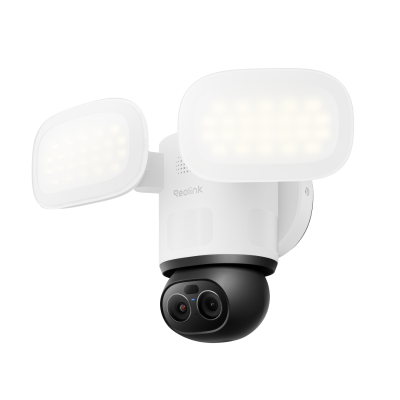
Smart 4K 360° Coverage Wi-Fi Floodlight Security Camera
Local AI Video Search, 4K 8MP Ultra HD, 360° Coverage View, 6X Hybrid Zoom, Dual-Color Floodlight.
Medical Diagnostics: Radiologists and surgeons rely on high-resolution displays to detect subtle abnormalities in medical scans. The detail reveals tumors, fractures, and anomalies that lower resolutions might obscure, directly impacting patient outcomes.
Product Photography: E-commerce and advertising demand high-resolution imagery showing products from every angle. Customers zoom in to examine textures, stitching, and details before purchasing. High resolution builds trust and reduces returns.
Wildlife Documentation: Researchers and filmmakers capture nature in extreme detail using high-resolution cameras. The footage serves scientific study while creating immersive content that brings viewers closer to animals without disturbing natural habitats.
Architectural Visualization: Architects and designers present building plans with photorealistic detail using high-resolution rendering. Clients examine finishes, sightlines, and spatial relationships before construction begins, reducing costly changes later.
FAQs
Does 16K resolution exist?
Yes, 16K resolution exists in specialized commercial and professional applications. However, no consumer 16K televisions or monitors are currently available for home purchase.
Can the human eye see 16K?
Under ideal conditions with optimal vision and appropriate viewing distance, the human eye can perceive detail beyond 16K. The limit depends on screen size, distance, and individual visual acuity.
Will there be a 32K resolution?
Technically possible, 32K would contain over 530 million pixels. Current manufacturing, bandwidth, and processing limitations make consumers decades away, if it ever arrives.
How good is 16K resolution?
At 132 million pixels, 16K offers sixty-four times the detail of 1080p. On appropriately sized screens viewed at proper distances, the image appears indistinguishable from reality to the human eye.
Conclusion
16K video resolution represents the outer frontier of display technology. With 132 million pixels, it delivers phenomenal details. However, practical barriers remain enormous. Manufacturing yields, content creation costs, and infrastructure limitations keep 16K firmly in specialized commercial applications. For consumers, 4K and 8K already deliver stunning visuals, while 16K isn't available for common applications.
Search
Subscribe for the Latest Updates
Security insights & offers right into your inbox