
Top 10 Worst Places to Live in the UK
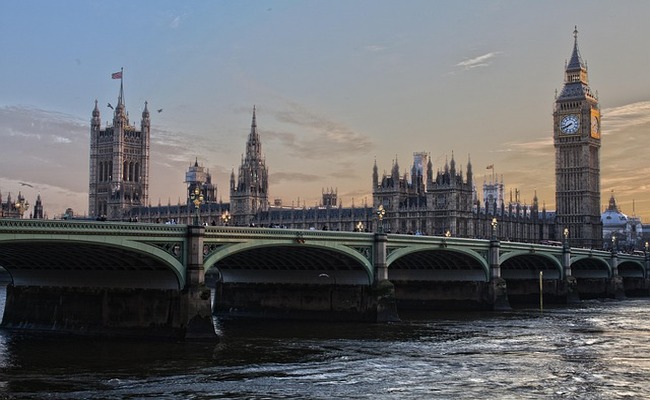
Some cities in the UK are the worst because of the high crime rate, unavailability of necessities, pollution, unemployment, high rentals, drug issues, and various other factors. If you are relocating, you might prefer to avoid these cities to live in the UK.
In this article, we will share the top 10 worst places to live in England. We will compare cities in different factors and share some recent statistics.
Top 10 Worst Places To Live In UK
We selected England’s top 10 worst cities based on key quality-of-life factors: crime, unemployment, pollution, traffic, weak infrastructure, and socioeconomic issues.
Data from the 2025/2026 English Indices of Deprivation (IMD) and police audits show how these pressures directly impact local livability. While multi-million-pound regeneration projects are underway, these cities currently rank at the bottom of UK livability indexes.
1. Bradford (West Yorkshire)
- The Context: Frequently ranking low on both economic output and local safety satisfaction surveys. According to PwC’s Good Growth for Cities report, Bradford tracks heavily near the bottom for economic growth metrics and average incomes.
- The Reality: According to localized crime reporting via CrimeRate.co.uk, the city logs an overall crime rate of 123 crimes per 1,000 people, which is 26% higher than the regional West Yorkshire average. Neighborhoods like Manningham and City Ward consistently fall into the most deprived 10% of England.
2. Luton (Bedfordshire)
- The Context: Luton scores poorly on civic pride and lifestyle satisfaction despite its major logistical advantage as a London commuter and airport hub.
- The Reality: Lifestyle indexes highlighted by London Property News rank Luton as the second least-desirable place to live in the country, hampered by poor ratings for green spaces and rising violent crime tracking sheets. Furthermore, severe infrastructure strain has caused local housing applications to far outpace supply.
3. Middlesbrough (North Yorkshire Sector)
- The Context: Middlesbrough has borne the heavy brunt of post-industrial decline since the collapse of its once-thriving manufacturing base, leading to systemic poverty gaps.
- The Reality: According to national deprivation audits, an astonishing 50% of Middlesbrough's localized areas are ranked in the most deprived decile nationally. Its overall crime rate sits at an alarming 141 crimes per 1,000 people, with violent offenses and criminal damage dominating police dashboards.
4. Peterborough (Cambridgeshire)
- The Context: Peterborough famously held the title of the absolute "worst place to live in England" for three consecutive years in public polls before being narrowly dethroned.
- The Reality: Rapid population growth has severely outpaced municipal infrastructure. Official crime data shows Peterborough logging 102 crimes per 1,000 people, with anti-social behavior (ASB) and shoplifting dominating the hollowed-out retail town center, leaving local healthcare and school capacity heavily overstretched.
5. Liverpool (Merseyside)
- The Context: While Liverpool’s central culture and waterfront are world-class cultural assets, the broader metropolitan borough faces staggering disparities between tourist zones and inner-city residential estates.
- The Reality: The wider borough sustains a high baseline crime rate of 107 crimes per 1,000 people. National index updates routinely name its outer residential rings among the highest concentrations of structural income deprivation in the United Kingdom.
6. Slough (Berkshire)
- The Context: Statistically ranked by property market studies as one of the least desirable places for lifestyle fulfillment, Slough suffers from an identity crisis despite its proximity to London.
- The Reality: Major location metrics show Slough scoring a notably low 28.18 out of 100 for lifestyle, with its culture score bottoming out due to an over-industrialized environment and heavy traffic congestion that eclipses its great connectivity via the Elizabeth Line.
7. Swindon (Wiltshire)
- The Context: Heavily criticized in public consensus for its uninspiring post-war architectural layouts and lack of a distinct cultural anchor.
- The Reality: Following the loss of major automotive manufacturing giants like Honda, Swindon's commercial core has experienced severe economic decay. Retail vacancy rates in the town center have jumped significantly, accompanied by a 15% spike in commercial shoplifting and property damage, forcing several high-street brands to pull out.
8. Jaywick (Essex)
- The Context: Jaywick (specifically the Brooklands area) holds the official, unfortunate record of being classified as the most deprived neighborhood in England across multiple consecutive government IMD release cycles.
- The Reality: Originally built as a temporary holiday resort in the 1930s, this coastal village battles severe infrastructural neglect, deteriorating housing stocks, immense flood risks, and a drastic lack of basic public transport or local health services.
9. Barking and Dagenham (East London)
- The Context: As one of Greater London's cheapest boroughs, it has faced an immense strain on public services due to rapid, dense population migration.
- The Reality: Metropolitan Police data highlights the borough for elevated vehicle thefts, knife crime, and public order offenses. It also ranks near the top for indexes monitoring income deprivation affecting children (IDACI).
10. Blackpool (Lancashire)
- The Context: Once a booming seaside holiday destination, Blackpool’s economy now suffers from a highly seasonal tourism model that fails to provide year-round stability for locals.
- The Reality: Blackpool features town-wide deprivation challenges rather than isolated pockets. It tracks a remarkably high crime rate of 133 crimes per 1,000 people, with alcohol-related public disorders, vandalism, and anti-social behavior saturating its central corridors.
Quick Table about Worst Places to Live in the UK
How We Determain the Worst Places?
How We Determine the “Worst” Towns to Live
Ranking towns by quality of life is never straightforward, as individual priorities vary. To establish an objective assessment, researchers and urban analysts rely on measurable, data-driven factors across three primary dimensions:
- Economic Factors & Employment: Job availability, wage growth, and youth retention heavily dictate local prosperity. According to the Demos-PwC Good Growth for Cities Index, employment opportunities and skills development are the strongest drivers of city performance. Towns lagging in these metrics consistently score lower in livability.
- Crime Rates & Public Safety: Personal security remains a top concern for residents. Utilizing official statistics from the Office for National Statistics (ONS), we focus on key safety metrics including violent offenses, burglary rates, and anti-social behavior—all of which directly impact community well-being.
- Overall Quality of Living: Drawing from the English Indices of Deprivation, which evaluates over 33,000 neighborhoods across seven critical domains (income, employment, education, health, crime, housing, and living environment). Lower scores in these areas often correspond with declining high streets, underfunded public amenities, reduced transit access, and lower average life expectancy.
How to Stay Safe in these Worst Places In UK?
Living in or relocating to an area with lower livability ratings often means dealing with specific urban challenges—from high resident turnover to elevated property crime. Here is how to proactively protect your home based on common localized risks:
1. Secure Vulnerable Access Points & Porches
In high-density or high-turnover neighborhoods (such as Luton or Barking & Dagenham), side alleys, rear gardens, and front porches are prime targets for opportunist thieves. Installing a Video Doorbell or Security Camera with Smart Person/Package Detection ensures you get instant mobile alerts when a delivery arrives or when someone lingers near your door—allowing you to respond via Two-Way Audio without opening the door to strangers.

All-in-one Triple-Lens 180° Panoramic Pan-Tilt Security Camera
10MP Dual-Lens 180° View, 4K 360° Full Coverage, SyncTrack with auto framing & auto tracking, Local Storage (No Monthly Fees), Local AI Video Search.
2. Deter Vehicle & Catalytic Converter Theft
Vehicle-related crime is a leading issue in boroughs like Slough and Barking. Protect your vehicle by keeping key fobs in signal-blocking Faraday pouches to prevent keyless relay attacks. Additionally, positioning a motion-activated spotlight camera toward your driveway serves as a visual deterrent while capturing high-definition color footage at night.
3. Combat Anti-Social Behavior Around Your Property
For homes in town centers battling frequent anti-social behavior (such as Peterborough or Blackpool), visible surveillance acts as a strong deterrent against vandalism and trespassing. Cameras equipped with active deterrence features—such as built-in sirens and motion-triggered spotlights—can automatically warn off trespassers before damage occurs.
4. Leverage Community & Postcode Crime Data
Before moving or making security upgrades, stay informed about localized crime trends. Tools like Reolink’s Postcode Crime Checker and neighborhood platforms like Nextdoor provide real-time updates on active vehicle break-ins, burglary spikes, and community safety alerts in your specific area.
FAQs
1. What's the poorest place in the UK?
According to the official Indices of Deprivation (IMD), the most structurally deprived neighborhood in England is the Brooklands area in Jaywick (Clacton-on-Sea, Tendring), which has consistently ranked at the bottom for income, housing, and employment.
2. What is the unhappiest place in the UK?
Based on national life satisfaction and resident well-being surveys (such as ONS and Rightmove Happiness Indexes), areas like Bexley and Slough frequently record lower scores due to high living costs, heavy traffic congestion, and limited cultural amenities.
3. What is the least desirable place to live in the UK?
Statistically, Jaywick in Essex is considered the least desirable due to its severe structural poverty and flood risks. On an urban scale, towns like Slough and Luton rank lowest for lifestyle fulfillment due to over-industrialization, housing imbalances, and rising crime concerns.
4. Where is crime highest in the UK outside London?
Middlesbrough holds the highest overall crime rate for a major town outside London (~141 crimes per 1,000 people). However, seaside destinations like Blackpool (133 per 1,000) and industrial hubs like Bradford (123 per 1,000) also record exceptionally high frequencies of violent offenses and property crime.
5. Where is the least safest place to live in the UK?
Statistically, Middlesbrough in North Yorkshire is widely recognized as the least safe place to live in the UK, logging the highest overall crime rate for any major residential town outside London at roughly 141 to 158 crimes per 1,000 residents.
Conclusion
We have listed the worst places to live in the UK. These cities have the highest crime statistics, socioeconomic issues, poverty, and various other problems. You can avoid these places if you are looking to relocate to any city in the UK. Before moving, be sure to research the crime rate and other local issues. And no matter where you are, pay special attention to your safety and ensure safety measures.
Search
Subscribe for the Latest Updates
Security insights & offers right into your inbox