
What Is ISO on a Camera? A Beginner’s Guide to Photography Settings
Light is the starting point of photography, and all settings of a camera are aimed at manipulating the light so that it reaches the sensor. The latter, in a variety of apertures, shutter speeds, and ISO, is often confusing at first.
This article explains the ISO meaning and ISO in photography so you can leave auto mode behind and take clear, well-exposed pictures in any situation.
What Is ISO Photography?
ISO photography is the practice of adjusting a camera’s sensitivity setting so the sensor needs more or less light to create a normal picture. A low number, such as 100, needs plenty of light but gives clean files. A high number, such as 6400, needs little light but adds grain. The setting is repeatable on every digital or film camera, so once you learn it, you can work with any brand.
What Is ISO on a Camera?
ISO on a camera is the numerical scale that tells the imaging chip how hard it should work. This scale begins at close to 50 on some and at more than 100,000 on others. Every step is 2 times 100-200, 200-400, etc. The doubling of the ISO enables you to retain the same brightness with half of the light, either by covering the aperture or by shortening the shutter rate. The setting does not change the physical light entering, but only the electronic data gets enhanced after the exposure is made.
What Is ISO on a Security Camera?
Security cameras use the same ISO idea, but makers often hide the number inside menus labelled “gain” or “sensitivity.” A high ISO lets a hallway remain visible at night under dim emergency lights, yet the image turns grainy and colors drift. For identification shots, installers pair extra LED lights with moderate ISO so faces stay sharp instead of blotchy.
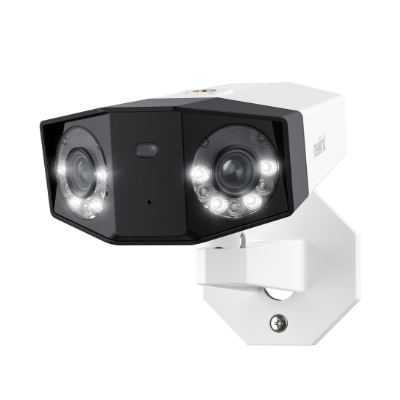
Groundbreaking 16MP Dual-Lens PoE Camera
16MP UHD, Dual-Lens, Motion Track, 180° Wide Viewing Angle, Power over Ethernet, Color Night Vision.
What Is ISO on a Digital Camera?
In a digital camera, ISO is a software that is used immediately after the shutter is closed. The sensor uses the same raw data regardless of the dialed-in ISO; the camera merely multiplies the numbers by it before it writes the file.
Some advanced models let you see two results: a bright JPEG created with the chosen ISO and a darker raw file that you can brighten later in editing software without extra noise. This dual output is why many photographers shoot raw when they expect to raise ISO.
What Is ISO Speed on a Camera?
ISO speed is the older film term that digital cameras kept. It tells you how quickly a surface reacts to light. A “fast” ISO such as 3200 reacts quickly and lets you shoot at 1/500 s indoors. A “slow” ISO, such as 100, reacts slowly and needs a tripod or flash. The word speed does not refer to shutter motion; it refers to the time the material needs to reach proper density.
Why ISO Matters in Photography?
You now know the basic iso meaning. The next step is to see how the setting changes in every picture you take. ISO matters because it gives you freedom when light, subject, or style refuses to cooperate.
- Rescue dim scenes: Indoor birthdays, evening street shots, and gymnasiums often have too little light for base ISO. Raising ISO keeps the shutter fast enough to freeze smiles and basketballs.
- Preserve image quality: Low ISO prevents pixel noise, colors are accurate, and dynamic range is in place, which is essential in big prints or in major cuts of the image.
- Control motion blur: You have 1/2000 s to freeze a flying bird, and you have a wide-open lens. To control motion blur, you mainly adjust your shutter speed: faster shutter speeds freeze motion, slower speeds can create blur.
- Control depth of field: When you want all the flowers in the field to be in focus at f/11 but the wind continues to blow the stems around, a higher ISO will allow you to shoot with the small aperture and still use a fast shutter.
- Balance flash power: In dark reception halls, doubling the ISO doubles the effective range of your flash, thus the batteries have more lives and the recycle times are reduced.
- Match camera to task: A news photographer can shoot at ISO 12800 to capture the shot, whereas a product shooter can remain at ISO 50 to maintain the smoothness of textures. The environment allows the same body to serve the two markets.
How to Choose the Right ISO in a Camera?
Picking an ISO number is easier once you think in terms of light, subject, and final use. The list below gives practical steps you can repeat in the field.
- Begin at base ISO: All cameras are set to a low value, usually 100 or 200. Turn it on in cases where there is a lot of light or where the camera is on a tripod. You reap the purest field and the greatest space of amendment.
- What is your required shutter speed: A strolling individual requires 1/125 s, a runner requires 1/500 s, a handheld 200 mm lens requires 1/250 s, or you will shake. When the meter indicates that the shot will be too dark at base ISO, increase the number until the shutter stops on the safe side.
- See the aperture narrative: Landscapes require f/8 to f/11 to be sharp, and portraits require f/1.8 to be blurred. In cases where the light is low and the aperture is already too big, then the only thing that can be done is to raise the ISO.
- Test the noise floor: There is a breaking point for every camera model. Entry models are clean to around 800mids to 3200, and pro bodies 12800. Shoot tests at home to know your own ceiling.
- Use auto ISO with limits: Most bodies let you set a maximum ISO and a minimum shutter. The camera then floats inside that box. This is ideal for street or wedding work where light changes every few steps.
- Balance raw versus JPEG: If you shoot raw, you can underexpose at low ISO and brighten later with less penalty than if you shoot JPEG at high ISO. Learn your software before you trust this trick in paid jobs.
- Mind the output size: A picture that looks noisy at 100 percent on screen can appear smooth when printed at 8×10 inches. Do not raise ISO higher than the final product truly needs.
- Bracket for safety: When light is ugly and the job matters, shoot one frame at the meter reading, then a second at one stop lower ISO, and a third at one stop higher. Pick the cleanest file that still holds the moment.
FAQs
What is a good ISO for camera?
The smallest number that yet produces a sharp picture is a good ISO. Exposure to the sun at ISO 100 is ideal. It is typical in the house with ISO 800 to 1600. Test your personal camera to know where the noise begins to annoy you.
Is ISO 400 or 800 better?
Cleaner files can be created with ISO 400, and twice the shutter speed or half power can be used with ISO 800. When the lighting is good, use pick 400, and when you must freeze action or work in darker rooms, use pick 800.
What does ISO on a camera mean?
The camera ISO informs the sensor of the degree of intensification of the light signal. Low ISO maintains smoothness to the image, but requires more light. An increased ISO enhances the picture but introduces noise. The scale runs 100, 200, 400, 800, 1600, and so on.
Is higher or lower ISO better?
Low ISO is superior in terms of quality and color as well as dynamic range. Increased ISO is more suitable for speed and low light. Select the minimum number with which you will achieve the shutter and aperture you want.
Conclusion
At this point, you have understood the complete meaning of ISO and how ISO in photography regulates brightness, noise, and options of creativity. Set each shoot to base ISO, increment only when you need to push your hand because of shutter or aperture limits, and record test shots because you understand what your camera can noisily capture.
Learning to use this single dial will liberate you to take shots in dark churches, indoor fast sports halls, and bright beaches with no trepidation. In case the guide was helpful, post a couple of tips that are specific to ISO, or post questions at the bottom that will allow other beginners to leverage your experience.
Search
Subscribe for the Latest Updates
Security insights & offers right into your inbox