
Solar Panel Size Explained: Find the Best Fit for Your Space
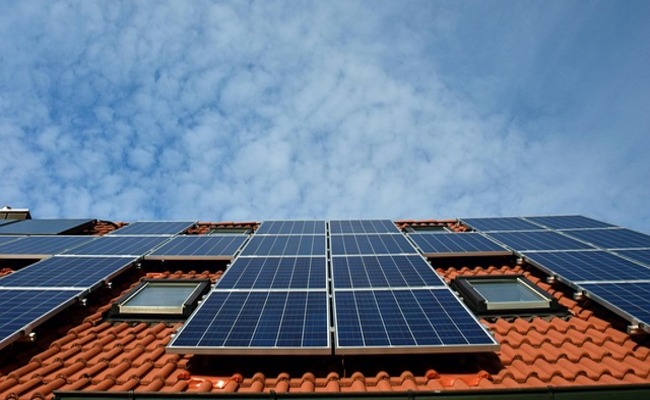
With a quick shift to cleaner energy sources, solar panels play a crucial role in meeting the energy needs of your home or commercial space. For an efficient conversion, solar panel size matters a lot. Sunlight capture is entirely dependent on the solar panel's size; the larger the panel, the higher the output.
In this article, we will discuss all the important aspects of solar panel size. This guide will help you select the right solar panel size through detailed calculations.
Standard Solar Panel Size
Average Commercial Solar Panel Size
Commercial solar panels are designed for large-scale energy production for factories, solar parks, institutions, and other businesses. Typically, a commercial solar panel is 6.5 x 3.2 feet and contains 72 cells. These panels generally weigh more than 50 pounds and have a 6 x 12 grid. Each commercial panel could generate 400W - 600W or more, depending on the type of panel and its efficiency.
Another commercial type is a 96-cell solar panel, which can yield higher output. However, monocrystalline panels are preferred for commercial use cases to generate electricity even in cloudy conditions. The larger panel area allows more irradiance capture for higher production. If your requirement is for 150KW, you will require at least 250-270 72-cell panels to fulfill the usage.
Average Residential Solar Panel Size
Residential solar panels are a viable option for limited space and energy requirements. It typically contains 60 cells aligned in a 12 x 5 grid. The size is about 5.5 x 3 feet with a thickness of 1.5-2 inches. The energy output varies by manufacturer and model, but it usually ranges from 250 to 400 watts.
For instance, your required energy per month is 5-7KWh, considering a 250W panel, you will need at least 20-28 panels to fulfill it. However, energy generation depends on both location and efficiency. For residential purposes, people usually prefer installing a bi-facial monocrystalline PV panel for higher irradiance capture in any conditions.
Solar Panel Size Chart
What Will Affect Solar Panel Size?
There are several factors involved in solar panel size selection. A single factor could be the reason to downscale or upscale the system. Let's discuss the factors and see their impact.
Floor Space
Floor space is a critical factor for solar panel size. For a residential space, you will require a compact system with a minimal number of panels. Similarly, on a commercial scale, you will need a larger panel to meet the energy requirements.
Energy Requirement
Panel size is highly dependent upon the energy requirement. For a lower energy requirement, you can go with 250-450 W and a 60 Cell panel. If your requirements are higher, a 72-cell or 96-cell panel will work, and surely it will have a larger size.
Installation Location
Location is also a key factor that can change the PV panel size. For instance, a small solar panel installed in a location with higher irradiance can produce the same amount of energy as a larger panel in a cloudy region.
Efficiency
Panel efficiency measures the conversion of irradiance to electricity. A high-efficiency panel can produce more energy. Similarly, low-efficiency panels will produce lower outputs that will result in increasing the number of units to reach the required power.
How To Choose The Right Solar Panel Size?
Initially, choosing the right solar panel size depends on the average monthly energy consumption. You should calculate the monthly energy requirement based on the equipment used, or you can estimate it from monthly electric bills.
After that, you must evaluate the available space for solar installation. Through area, you can estimate the maximum number of panels to be installed.
You must choose the right type and efficiency of solar panels according to the location. For example, a residential space will require higher efficiency due to the compact space.
At last, you should consult a professional installer who can perform a site visit and manually evaluate PV sizing, tilt angles, shading, and azimuth, or use a professional tool.
How To Calculate Solar Panel Size?
Calculating the size of a solar panel is easier and can be done with just a few steps. It requires accurate input to accurately determine the number of panels required.
Step 1: Calculate your annual production.
Take your electricity bill and calculate the monthly average consumption. Multiply the consumption by 12 to get the annual consumption.
For Example:
Average Monthly Consumption = 800KWh/month
Annual Consumption = 800 x 12 = 9600KWh/year
Step 2: Determine the annual sunlight hours
For example, if your city/area gets 4 hours of sunlight daily. Multiply the value by 365 to get the annual sunlight hours.
Annual Sunlight hours = 4 x 365= 1460 hrs/year
Step 3: Required system size estimation
For this step, divide your annual consumption by the annual sunlight hours to determine the system size.
Required System Size = Annual Consumption / Annual Sunlight Hours
= 9600 / 1460
= 6.57 KW
Step 4: Estimation of the number of panels & required area
You will need to divide the system size by the panel's wattage. For example, you have selected the 500W (0.5KW) model of Canadian Solar.
No Of Panels = 6.57 / 0.5= 13.14 ≈ 14 panels.
For the required area, refer to the panel's specification for the panel size. For example, the selected panel is 21 sq ft. Please multiply the panel area by the number of panels to get the total system area.
Total System Area = 21 x 14= 294 sq ft.
Bonus: Security Camera With Solar Panel
Reolink Argus PT Ultra
Reolink Argus PT Ultra is a standalone security camera offering a 360° view. It has a 3W detachable solar panel that can recharge the batteries in 20 minutes, providing 24-hour backup. The batteries provide 4 months of backup on a single charge.
It records videos in 4K resolution and captures clear details. At night, it offers dual night vision, allowing users to choose between color and infrared. It detects objects and auto-tracks the movements of any individual, vehicle, or animal. With Dual-band Wi-Fi-6 technology, you will never miss a frame.
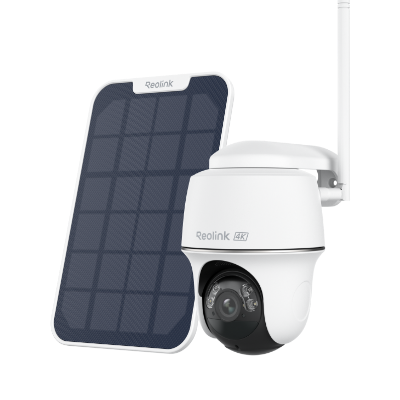
4k 100% Wire-Free PT Camera
4K 8MP Ultra HD; 5GHz/2.4GHz WiFi; Rechargeable Battery & Solar Powered; 355° Pan & 140° Tilt; IP65 Certified Weatherproof; Clear Night Vision; 2-Way Audio; 122° Wide Viewing Angle.
Reolink Go PT Ultra
Reolink Go PT Ultra is a solar & battery-powered 4G LTE camera that offers individuals an eco-friendly, cost-effective solution. With 6W solar panels, you can enjoy uninterrupted 24/7 surveillance. The camera is robust and withstands harsh weather conditions due to its IP64 rating.
It's a pan-and-tilt security camera that covers 360°. Its 4K resolution offers optimal clarity. It detects motion smartly, tracks objects, and sends real-time alerts to the connected devices. At night, it has dual night vision so that you don't miss a moment.
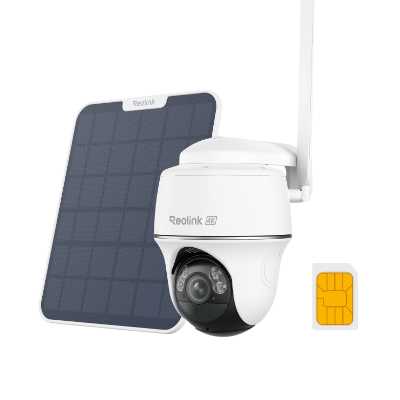
4K 8MP Wire-Free 4G LTE PT Battery Camera
4K 8MP; Smart Detection; 355° Pan & 140° Tilt; Battery/Solar Powered; Color Night Vision; Smart Real-Time Alert.
FAQs
1. What size solar panel to charge a 12V battery?
For a 12V 100Ah battery, you will require at least a 200W panel to charge it within 6 hours. For quick charging, consider upgrading the system to 400W-500W to charge it within 3 hours.
2. What will a 400W solar panel run?
If you are receiving 4-6 hours of irradiance, the solar panel can generate at least 2 kWh of energy per day. You can easily run LED lights, 30W fans, a Wi-Fi router, a mini fridge, small appliances, laptops, and mobile chargers.
3. How many solar panels do I need for a 3,000 sq ft home?
You need to calculate the power consumption and install solar panels accordingly. Typically, you'll need around 18-30 solar panels.
Conclusion
Solar panel size solely depends on your annual energy requirements. You must also consider space and select the best panel size that meets your target. However, it is recommended to always look for financial and technical aspects before installing the system. You should seek professional advice from an individual or a tool to achieve efficient conversion.
Search
Subscribe for the Latest Updates
Security insights & offers right into your inbox