
SD Card vs. TF Card: What’s the Difference and Which One to Choose?
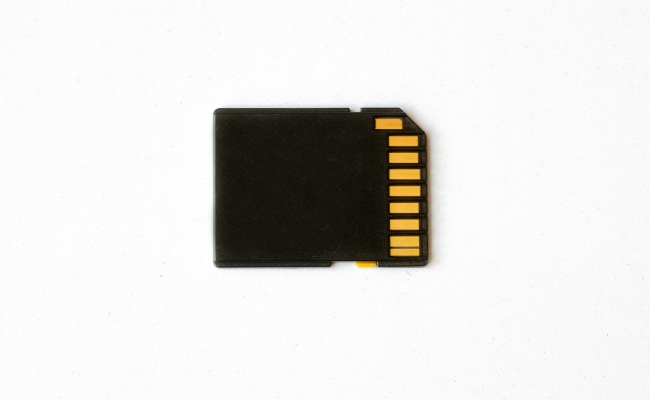
TF card vs SD card are two of the most common types of flash memory cards used in consumer electronics like cameras, phones, drones, dashcams, and more. But what exactly is the difference between an SD card and a TF card? Are they the same thing with different names? Read on to find out the difference between TF and SD cards.
TF vs. SD Card: A Brief Overview
TF cards and SD cards are two of the most common storage devices utilized throughout consumer electronics today. But with such similar nomenclature, it is easy to get confused about the fundamental differences between these small memory cards.
Before diving deeper into their differences, let’s first briefly introduce what precisely TF and SD cards are and how they operate.
What is a TF card?
TF is short for "TransFlash". A TF card is a very small removable flash memory card, commonly found in smartphones and smaller devices such as MP3 players. The TF card was developed as a mini version of miniSD cards, with the TF acronym meaning "thin and fine".
TF cards are in fact a form of microSD card, the official title for this extremely small flash storage format. TF cards and microSD cards therefore describe precisely the same kind of card, TF being more of a marketing label. TF/microSD cards employ flash memory and contain no mechanical parts, making them able to store data without continuous power.
What is an SD card?
SD stands for “Secure Digital”. SD cards function as removable flash memory components that permit users to save photos, videos, documents, music, and additional content from digital cameras phones, drones, dashcams, handheld GPS devices, and video game consoles.
SD cards entered the market in 1999 through Panasonic, SanDisk, and Toshiba as an enhancement of MultiMediaCards (MMC) which provided increased storage capabilities and enhanced speed. Different versions of SD cards with miniSD, microSD, and SDXC have become available since their initial release in 1999.
TF Card vs. SD Card: What's the Difference?
TF cards, also known as microSD, are the modern, smaller version of SD cards, measuring 15 × 11 × 1 mm compared to standard SD cards at 32 × 24 × 2.1 mm. TF cards are typically used in small devices like smartphones, drones, and security cameras, while standard SD cards are common in digital cameras and laptops. Check out the following breakdowns of their main differences:
Physical Size
The most obvious difference is physical size. TF cards are extremely small, only weighing 0.25 grams and with dimensions of 15 x 11 x 1 mm. TF cards are actually the same as microSD cards.
Full-size SD cards measure 24 x 32 x 2.1 mm and weigh around 2 grams. MiniSD and microSD cards were created later as smaller alternatives to standard SD cards, with microSD cards being the smallest SD card variant.
Compatible Devices
Due to the smaller size, TF cards are mainly designed for and used in smartphones and smaller consumer electronics devices like action cameras, fitness trackers, dashcams, tablets, and drones. Most new flagship Android phones use TF/microSD cards for expandable storage.
Standard SD cards are universally compatible with the majority of cameras and devices including DSLR and mirrorless cameras, camcorders, laptops, Nintendo Switch, dash cams, and others. Their bigger size distinguishes SD cards as more durable and easy to handle. They are the most widely available and used SD cards.
Cross Compatibility
An advantage of TF cards is that they can be used in certain devices that have SD card slots, with the help of a simple TF-to-SD adapter. This adapter converts the small TF card into a standard SD card form factor so it can physically fit and work in SD card slots.
However, the reverse is not always true. Standard SD cards cannot be converted to use in TF slots, as they are simply too large. Attempting to force an SD card into a TF slot can damage both the card and the device.
Another disadvantage of using a TF-to-SD adapter is the potential reduced speed/performance, as some devices may not be optimized to take full advantage of the smaller TF card format.
TF Card vs. SD Card: Comparison Table
Check out the following comparison table for a quick visualization:
SD Card vs. TF Card: Pros and Cons
Now let's compare some of the major pros and cons of standard TF vs micro SD card:
TF Card: pros and cons
Pros:
- Extremely small size
- Useful for storage expansion in smartphones
- Some compatibility with SD card slots using a simple adapter
- Often cheaper than same-capacity SD card
Cons:
- Durability can be a concern due to small physical size
- Generally lower maximum capacities available compared to the latest SD cards
- The adapter required to use in standard SD card slots causes potential speed reduction
SD card: pros and cons
Pros:
- High compatibility with a vast range of consumer cameras and electronics
- Excellent durability and ease of handling due to larger size
- No adapter is required as it works natively in all SD card devices
- SD standards continually evolving (SDXC, SDUC) allowing very high-capacity cards
Cons:
- Larger physical size unsuitable for smallest devices
- Generally more expensive than same-capacity TF cards
- Not used in most new flagship smartphones
TF Card vs. SD Card: How to Choose?
Deciding between a TF or SD card requires evaluating your personal use case across four key factors:
- Compatibility - Confirm whether your target device(s) support SD, TF, or both formats. Most phones and portable gadgets utilize TF cards, while larger electronics like DSLR cameras have full-sized SD slots.
- Capacity - Assess your storage needs in gigabytes. Both TF and SD offer sizes up to 1TB, but SD cards tend to reach higher maximum capacities for things like 8K video recording or massive image libraries.
- Performance - If blazing read/write speeds are necessary for intense tasks like burst mode photography or 4K filming, compare speed ratings like UHS-I/II. Top-end SD options generally outperform TF cards in sustained speed tests.
- Adaptability - A major TF benefit is microSD-to-SD adaptors enabling usage across some SD devices, while SD cards cannot physically fit TF slots. But adapters may reduce max speeds.
SD vs. TF Card: Which is Better for Security Cameras?
When looking at flash storage specifically for security cameras, like home CCTV or business surveillance systems, microSD cards have distinct advantages that make them the preferred choice over standard SD cards.
Because security hardware requires discreet placement and must withstand tough environmental conditions, the compact size, shock resistance, and temperature tolerance of microSD cards make them a natural fit. For 24/7 continuous recording, specialized High-Endurance microSD cards are engineered specifically to handle these constant write cycles without failing.
Accessing your critical is also simple. you can either connect the camera directly to a computer, or remove the memory card and insert it into a standard SD card adapter.
As surveillance technology moves toward multi-lens setups, the reliance on this compact format becomes even more critical. For instance, the Reolink OMVI 3i PoE streams high-resolution panoramic and 4K footage simultaneously. To save internal space for its motorized pan-tilt components, it skips standard SD slots entirely, relying instead on a single, high-capacity 512GB TF card.
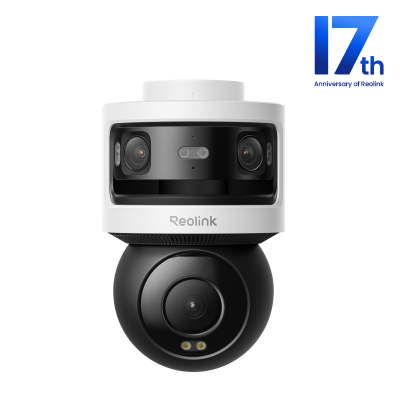
All-in-one Triple-Lens 180° Panoramic Pan-Tilt Security Camera
10MP Dual-Lens 180° View, 4K 360° Full Coverage, SyncTrack with auto framing & auto tracking, Local Storage (No Monthly Fees), Local AI Video Search.
Pro Tip: Most Reolink hardware leverages this TF (microSD) format for reliable local storage. If you upgrade to a standalone multi-lens camera, look for "High Endurance" TF cards rated Class 10 or V30 to handle the dual-lens data load.
On the flip side, a centralized indoor station has the physical room that standalone cameras lack. The Reolink Home Hub leverages this extra real estate to accommodate the larger standard SD format, providing compatibility for up to two 512GB SD cards to manage multiple wireless cameras from a single secure location.
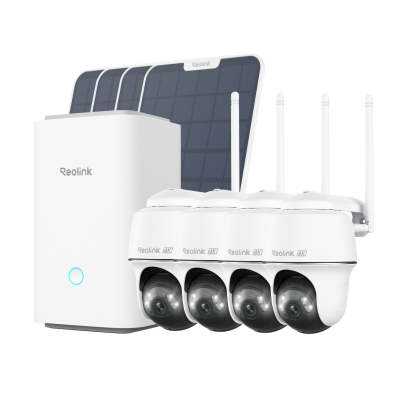
Wireless Security System With 4K PT Standalone Battery/Solar Wi-Fi Cameras
4K Color Footage Day & Night, 1 Year of Local Storage, Exclusive Anti-Theft Algorithms, 360° All-Around Coverage, Expandable System Up to 8 Reolink Cams.
FAQs
Can you put a TF card in a microSD slot?
Yes! A TF card is actually the same as a microSD card, so it can be into any device with a microSD slot. You can use it in smartphones, drones, security cameras, or any device that supports microSD/TF cards. Just make sure the card’s capacity and speed class are compatible with your device for the best performance.
Do I need a TF card for my camera?
It depends on your camera. Many cameras, especially compact cameras, security cameras, drones, and some action cameras, use TF cards (microSD cards) for storing photos and videos.
Why do I need a TF card?
You need a TF card (microSD card) because it acts as removable storage for your device. It stores photos, videos, and other data so you can access, transfer, or back up your files easily. For devices like security cameras, drones, smartphones, or action cameras, a TF card is essential.
Conclusion
While SD cards and TF cards share similarities as removable flash memory card formats, they differ significantly in terms of their intended usage, physical attributes, capacities, and device compatibility.
TF cards excel in compact and mobile devices where small size is essential. Standard SD cards shine for versatility across the widest variety of electronics and for maximum storage capacity needs. What has been your experience using TF/microSD cards and SD cards? Do you have a preference between them for your devices? Please share your thoughts below!
Search
Subscribe for the Latest Updates
Security insights & offers right into your inbox