
Parking Lot Security Cameras | Ultimate Guide
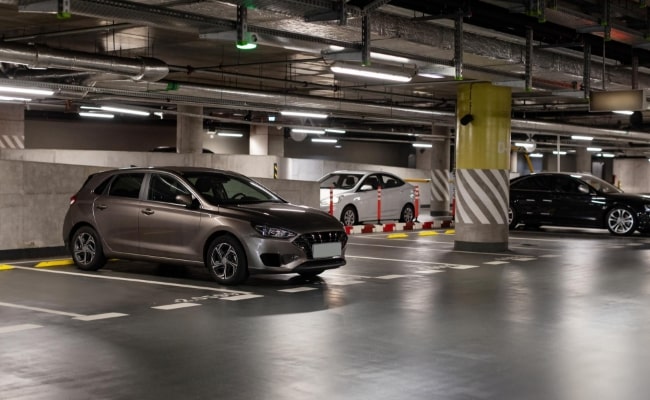
Parking lots are vulnerable to theft, vandalism, vehicle damage, and other incidents, especially at night or when unattended. Parking lot security cameras help monitor these areas and capture useful evidence when incidents occur.
Choosing the right camera depends on the parking area, lighting, power, and network access. This guide explains the main camera types, key features, placement, costs, and recommended options for different parking lots.
Key Takeaways:
- Parking lots often need a mix of fixed, panoramic, PTZ, and LPR cameras for different monitoring needs.
- 4K resolution, night vision, person/vehicle detection, and LPR are key features to consider for identifying important parking lot events.
- PoE is suitable for permanent 24/7 surveillance, while Wi-Fi and 4G LTE offer more flexibility where wired connections are unavailable.
- Place cameras at entrances and exits, parking rows, blind spots, and large open areas to combine detailed and wide-area coverage.
Types of Parking Lot Security Camera
Parking lots usually need more than one type of camera. Overview cameras monitor general activity, while dedicated cameras may be needed for entrances, licence plates, or areas requiring closer tracking.
Fixed Security Cameras
Fixed cameras continuously monitor one predefined area and are commonly aimed at entrances, exits, payment stations, pedestrian walkways, or individual parking lanes. Because the viewing direction does not change, they are useful for locations where important activity must remain in view at all times.
Wide-Angle and Panoramic Cameras
Wide-angle cameras are designed to cover several parking spaces or lanes from one mounting point. Panoramic and dual-lens models can provide up to 180° horizontal coverage, making them useful along building façades or at the edge of an open parking lot where reducing blind spots is a priority.
Pan-Tilt-Zoom (PTZ) Cameras
PTZ cameras use motorised pan, tilt, and zoom functions to inspect different parts of a large parking lot. They can follow vehicles or people and zoom in on activity at a distance, but when the camera turns toward one area, events outside its current field of view may not be recorded.
License Plate Recognition (LPR) Cameras
LPR cameras focus on capturing licence plates as vehicles enter or leave the property. Unlike general overview cameras, they are typically positioned at controlled entry or exit lanes with a narrower view so that more image detail is dedicated to each passing vehicle.
Mobile Surveillance Towers
Mobile surveillance towers are tall, portable units that typically combine cameras with telescoping poles, solar or battery power, flashing strobe lights, and speakers. They are commonly used in large retail and mall parking lots, as well as temporary sites where permanent cabling or fixed surveillance infrastructure is unavailable.
What to Consider When Choosing Parking Lot Security Cameras?
Choosing parking lot security cameras requires considering the size of the area, required image detail, vehicle monitoring needs, and available network and power infrastructure.
Parking Lot Size and Coverage
Match the camera coverage to the size and layout of the parking lot. 180° panoramic cameras can cover several parking spaces or lanes from one position, while PTZ cameras with pan, tilt, and optical or hybrid zoom are useful for monitoring larger open areas. Entrances, exits, pedestrian routes, and blind spots may still require dedicated fixed cameras.
Resolution and Night Vision
For parking lots where vehicle and person details need to be reviewed, consider 4K (8MP) cameras for greater image detail and digital zoom than lower-resolution options. For night monitoring, infrared (IR) night vision works in very low light, while full-colour night vision is more suitable where ambient lighting or camera spotlights are available.
Vehicle Detection and License Plate Capture
AI person and vehicle detection can classify common parking lot events and make relevant recordings easier to find. If readable licence plates are required, use a dedicated LPR (License Plate Recognition) camera at entrances or exits rather than relying on general vehicle detection or high resolution alone.
Network and Power
For permanent installations, PoE (Power over Ethernet) carries power and data through one Ethernet cable and supports stable 24/7 operation. Wi-Fi cameras require reliable wireless coverage, while 4G LTE cameras combined with battery or solar power are better suited to remote parking areas without Wi-Fi, Ethernet, or nearby power.
Recording and Storage
Choose storage according to camera count and recording mode. NVRs are better suited to multiple cameras recording 24/7, while microSD cards can work for individual cameras or motion-triggered recording. Higher resolution, higher bitrates, more cameras, and longer retention periods all increase storage requirements.
Remote Monitoring and Smart Alerts
Look for remote live view, push notifications, detection zones, person/vehicle detection, and event playback if the parking lot will not always have on-site security staff. For larger areas, auto-tracking PTZ cameras can follow detected people or vehicles, while fixed cameras continue monitoring critical locations.
Where to Place Parking Lot Security Cameras
Camera placement should ensure that vehicles can be followed from entering the parking lot to parking and leaving, while keeping important areas within a usable viewing distance.
Vehicle Entrances and Exits
Install fixed cameras facing each entrance and exit lane so every vehicle passes through the camera's view. For licence plate capture, use a dedicated LPR camera aimed directly at the lane and keep the viewing angle relatively narrow; a camera mounted high above the entire entrance may show the vehicle but not provide a readable plate.
Ends of Parking Rows
Place fixed wide-angle or 180° panoramic cameras at the ends of parking rows, facing down the driving lanes. This position can cover vehicles parked on both sides as well as cars and people moving through the lane, while reducing the obstruction caused by parked vehicles.
Building-Facing Parking Areas
For parking spaces directly outside shops, offices, hotels, or other buildings, mount cameras on the building façade facing outward toward the parking spaces and access lanes. This provides a clear view of vehicles closest to the building and people moving between parked cars and the entrance.
Corners and Obstructed Areas
Check for areas hidden behind walls, landscaping, ramps, columns, or separate sections of the lot. Install a dedicated fixed camera where these obstacles create a permanent blind spot instead of expecting a distant panoramic or PTZ camera to cover around them.
Large Open Sections
For large open sections that cannot be covered efficiently by several fixed cameras, install a PTZ camera on a pole or building corner with a clear view across the area. Use it for wide-area monitoring and tracking, while fixed cameras continue recording critical locations such as entrances and exits.
Best Parking Lot Camera & System Recommendation
Reolink provides several top-tier parking lot security cameras along with complete systems. Different parking lots have different surveillance needs, from covering wide areas and tracking moving vehicles to continuous multi-camera recording and flexible installation.
Reolink Duo 3 PoE – Best for Wide Parking Lot Coverage
Large parking lots often require multiple cameras to reduce blind spots. Reolink Duo 3 PoE uses dual lenses to provide a 180° panoramic view, making it suitable for monitoring multiple parking spaces and driving lanes from one position.
Its PoE connection carries power and data through one Ethernet cable, making it suitable for permanent installations that require a stable connection. Person and vehicle detection also helps users find relevant parking lot events more quickly.
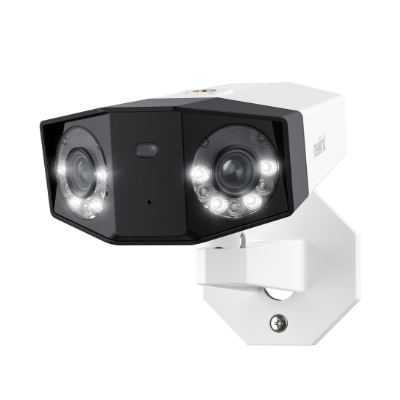
Groundbreaking 16MP Dual-Lens PoE Camera
16MP UHD, Dual-Lens, Motion Track, 180° Wide Viewing Angle, Power over Ethernet, Color Night Vision.
Reolink TrackMix PoE – Best for Tracking Movement Across Parking Lots
In larger parking lots, people and vehicles can quickly move beyond a fixed camera's main viewing area. Reolink TrackMix PoE uses pan-and-tilt movement with auto tracking to follow detected targets as they move across the parking area.
Its dual-lens design provides both a wide-angle view and a telephoto view, allowing users to monitor the overall scene while getting a closer view of the tracked target. PoE provides continuous power and a stable wired connection for permanent parking lot installations.
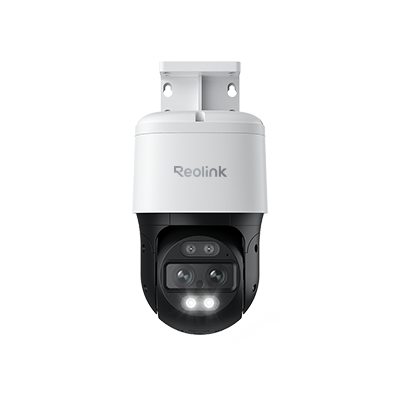
4K Dual-Lens PTZ Camera with Dual Tracking
4K 8MP Ultra HD, Wide & Telephoto Lenses, Pan & Tilt, Auto-Tracking, Person/Vehicle Detection, Power over Ethernet, Two-Way Audio.
Reolink RLK8-800B4 – Best for 24/7 Multi-Camera Parking Lot Monitoring
A single camera may not be enough to cover entrances, exits, parking rows, and other important areas continuously. Reolink RLK8-800B4 combines multiple PoE cameras with an NVR, allowing different parts of the parking lot to be monitored and recorded 24/7.
The NVR provides centralised recording and footage management, making it easier to review incidents captured by different cameras. Remote access also allows property owners or security staff to check the parking lot when they are off-site.
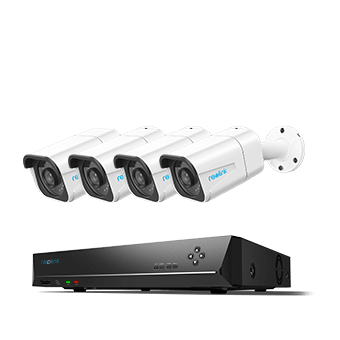
4K 8-Channel PoE Security System
4 pcs 4K Ultra HD Security Cameras; 2TB HDD 8-Channel NVR for 24/7 Recording; Person/Vehicle Detection; Plug & Play; 2 Network Solutions.
FAQs
Do hotels have security cameras in the parking lot?
Most hotels implement security cameras in their parking areas to protect guests. The degree of surveillance control in hotel parking lots depends on security funding levels and corporate monitoring standards.
How often are parking lot security cameras checked?
The owner of the business property determines when to check security cameras. Security cameras can have real-time monitoring functions, but incident-related surveillance often requires them to be reviewed. Hotels should perform regular inspections to guarantee their security systems function properly.
Are parking cameras worth it?
All the benefits provided by parking cameras make them worth the financial investment. They protect against crime and liability while increasing security and safety measures for property and business owners.
How much do parking lot security cameras cost?
Parking lot security cameras can cost from a few hundred dollars for a basic DIY setup to tens of thousands of dollars for a professionally installed commercial system. Current 2026 estimates put commercial-grade parking lot cameras at roughly $200–$1,500 per camera before or depending on installation scope, while complete systems can cost $5,000–$15,000 for a small lot and $35,000–$80,000 or more for a large lot.
The final cost depends on the number and type of cameras, PoE cabling, mounting poles, NVR and storage capacity, LPR or PTZ requirements, installation labour, and any cloud or monitoring fees. A local-storage system may avoid recurring cloud fees, while professionally monitored or cloud-based systems can add monthly costs.
What are those cameras in parking lots called?
The tall camera units commonly seen in retail and mall parking lots are often called mobile surveillance towers, security towers, or simply camera towers. They typically combine elevated security cameras with solar or battery power, speakers, and flashing lights.
Conclusion
The installation of parking lot security cameras creates three crucial functions that achieve safety protection, deterring crime, and providing evidence. Camera system selection calls for evaluating wired and wireless systems, as well as image quality, AI functions, and purchase costs.
Investing in a reliable parking lot surveillance system offers strong advantages for security enhancement. Share your parking lot camera observations in the comment section.
Search
Subscribe for the Latest Updates
Security insights & offers right into your inbox