
Most Dangerous Cities in Alabama: Safety Guide
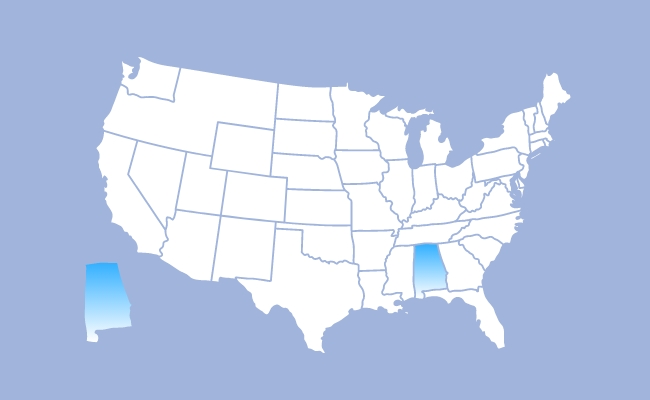
Alabama presents a complex safety landscape where historic Southern charm contrasts with urban crime challenges. Our analysis of the most dangerous cities in Alabama examines FBI crime data to identify high-risk areas and emerging trends.
The state's violent crime rate exceeds national averages, particularly in economically distressed urban centers. This guide provides residents and visitors with crucial safety information. Understanding these patterns helps individuals make informed decisions about their security in the Heart of Dixie.
Is Alabama Dangerous?
Alabama’s crime rates remain higher than the national average, particularly in urban areas. The state records a violent crime rate of 5.1 incidents per 1,000 residents compared to the U.S. average of 4.0, along with a property crime rate of 28.3 per 1,000 residents. Cities such as Birmingham and Mobile contribute significantly to these figures, while some urban areas report homicide rates several times higher than rural regions. These disparities are largely linked to economic inequality and concentrated poverty.
Recent trends show mixed changes in public safety. Since 2022, vehicle thefts have increased by about 17 percent, and domestic violence accounts for nearly 40 percent of violent crime in smaller cities. Drug-related issues, including methamphetamine offenses, continue to rise annually. However, some cities such as Montgomery have seen improvements due to targeted policing strategies and community safety initiatives, which have helped reduce certain crime categories.
Top 10 Most Dangerous Cities in Alabama
Alabama is currently experiencing a historic downward trend in violent crime. In 2025, major cities like Birmingham saw homicide rates drop to 10-year lows, and the state's overall violent crime rate decreased by approximately 13.7%. Despite these improvements, localized "hotspots" keep several cities significantly above the national average.
1. Bessemer
Bessemer currently sits at the top of the list, having overtaken larger cities due to a sustained high violent crime rate of 33.1 per 1,000 residents. While major neighbors saw crime fall in 2025, Bessemer's industrial pockets continue to struggle with aggravated assaults and gang activity. The city’s risk factor is roughly six times the national median, largely driven by high poverty levels that strain local law enforcement.
2. Birmingham
Birmingham is a city in transition. In 2025, it achieved a historic 44% reduction in homicides, falling below 100 killings for the first time in a decade. However, it maintains a high ranking because its property crime rate (52.6 per 1,000) remains the highest in the state. Most violent incidents are now highly localized in the West Precinct, while the downtown area is increasingly focused on high-tech surveillance to curb carjackings.
3. Anniston
Anniston saw overall violent crime drop by 15.5% in 2025, yet it remains dangerous due to a specific surge in robberies, which nearly doubled over the last 12 months. Its position on the I-20 corridor makes it a major artery for drug trafficking, leading to high rates of highway-adjacent larceny. Despite the "Street Crimes Team" efforts, its violent crime rate of 12.3 keeps it near the top of the list.
4. Selma
Selma’s ranking is driven by a high concentration of burglaries and structural blight in its low-income residential zones. While its violent crime rate (9.8) is lower than the industrial hubs, the city has a high frequency of property crimes relative to its small population. Economic stagnation has limited the police department's ability to expand beyond "hotspot" policing in the most troubled blocks.
5. Dothan
Dothan appears on the list primarily due to a high volume of domestic violence-related assaults, which account for nearly 28% of its violent crime cases. While the city feels safer than the Birmingham metro, its property crime rate of 32.1 is roughly double the national average. Successful "bait bike" and camera initiatives have helped, but the city still struggles with high rates of theft in commercial districts.
6. Mobile
Mobile saw a significant safety improvement in 2025, ending the year with 32 homicides, a notable decrease from previous years. The Port City has successfully used lighting and dock security to slash cargo theft and nighttime robberies, but the entertainment district still reports frequent late-night assaults. Its crime rate is trending downward faster than many other cities on this list.
7. Montgomery
The capital city of Montgomery reported 61 homicides in 2025, a number that has remained stagnant even as other violent crimes dropped by 25%. While the city has removed over 2,100 illegal firearms from the streets, auto thefts along the I-85 corridor remain a major driver of its high property crime rate. Revitalization downtown has created a "safe zone" that contrasts sharply with the outer residential precincts.
8. Prichard
Prichard suffers from a high robbery rate and persistent juvenile crime, though total arrests for minors dropped by 27% in 2025 due to new youth center initiatives. As a smaller suburb with a limited tax base, it often relies on joint operations with the Mobile Police Department to handle fugitive recovery and gang interdiction, which keeps its crime metrics closely tied to the larger metro area.
9. Gadsden
Gadsden’s danger profile is unique for its seasonal spikes. Summer tourism near the river and business districts often leads to a 28% increase in larceny and retail theft. While its violent crime rate is among the lowest on this list at 7.6, the high volume of property offenses and drug-related incidents in transit areas keeps it within the top 10 most dangerous cities.
10. Tuscaloosa
Tuscaloosa’s crime data is heavily skewed by the University of Alabama's "game day" crowds and student housing density. Property crimes, specifically auto theft and residential burglary, are the primary concerns here. While the "Safe Strip" initiative has improved nighttime safety for students, the city still sees a violent crime rate of 7.0, which is approximately 46% higher than the national median.
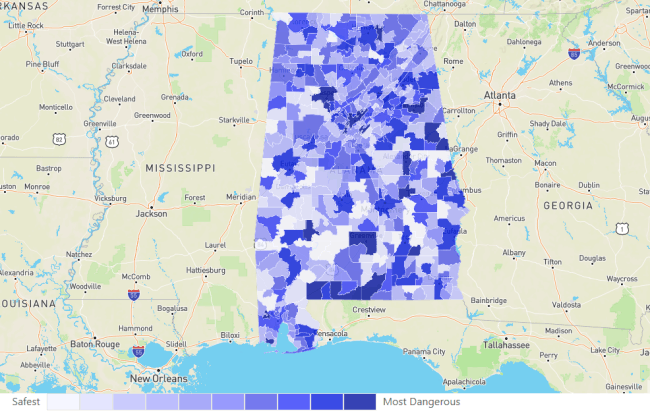
Summary of Most Dangerous Cities in Alabama
*Rates per 1,000 residents.
How We Determine the Most Dangerous City in Alabama (2025–2026)
Overview of Crime Data Evaluation
To assess city safety in Alabama for 2025–2026, state and federal agencies now use more detailed and transparent reporting systems. These updated metrics help distinguish between overall urban crime levels and localized neighborhood safety conditions.
Modern Crime Reporting System (NIBRS)
The Alabama Law Enforcement Agency (ALEA) now uses the FBI’s National Incident-Based Reporting System (NIBRS), replacing the older Summary Reporting System (SRS).
Key features of NIBRS:
- Tracks 71 distinct offense types
- Records victim–offender relationships
- Captures time, location, and context of each crime
- Logs all offenses within a single incident (not just the most serious one)
This incident-based model improves accuracy and reduces under-reporting by capturing complete crime details.
Key Metrics for Comparing Cities
To fairly compare cities of different sizes (e.g., Birmingham vs. Bessemer), officials focus on standardized crime rates.
Primary metric:
- Violent Crime Rate (VCR) per 1,000 residents
This is the main benchmark used by the Alabama Justice Information Commission for public safety analysis.
Additional policy update (2025):
- New framework (SB 298) monitors police staffing levels
- Recommended standard: 2 officers per 1,000 residents
- Goal: improve response times and public safety coverage
Interactive Crime Data Tools
Residents can access real-time crime data through the Alabama Criminal Justice Information Center (CJIC) at crime.alabama.gov.
Features include:
- Neighborhood-level crime data
- Interactive hotspot maps
- Trend tracking over multiple years
Crime Trends and Insights in Alabama
While some areas still report high crime volumes, statewide trends show improvement:
- Alabama cities saw a 19%–21% decrease in homicides in 2025
- Declines suggest that local prevention programs are becoming more effective
- Long-term trends are more important than single-year fluctuations
How to Stay Safe in High-Risk Areas in Alabama?
Personal Safety in Urban Areas
In higher-risk cities such as Birmingham, personal awareness is essential, especially in urban environments.
Key safety practices:
- Avoid walking alone at night in poorly lit areas
- Park only in secure, well-lit parking lots
- Stay alert in entertainment districts and transportation hubs, where incidents are more common
- Be aware of your surroundings in crowded public spaces
Home Security Protection
Securing your home is a critical layer of protection in high-risk areas.
Security camera solution
Reolink IP security cameras provide 24/7 home monitoring with reliable performance.
Key features:
- High-resolution video recording
- Smart motion and object detection
- Real-time alerts sent to mobile devices
- Continuous property surveillance for improved safety

Industry-leading 4K Continuous Recording Battery Camera
4K UHD Continuous Recording; ColorX Night Vision; Pan & Tilt; Automatic Tracking; All Recordings Stored Locally.
Community-Based Safety Measures
Community involvement plays an important role in reducing crime rates.
Key findings:
- Neighborhood watch programs reduce crime by an average of 16%
- Strong community engagement improves overall safety
- Neighbor relationships create informal surveillance networks
- Youth programs help address root causes of crime
FAQs
What town in Alabama has the highest crime rate?
Birmingham is most often reported as having the highest overall crime rates in Alabama, especially for violent and property crimes. Mobile and Montgomery also rank high depending on the metric used.
Where not to stay in Alabama?
There is no single area to completely avoid, but some neighborhoods in larger cities like Birmingham, Mobile, and Montgomery tend to have higher crime rates. Most suburban and rural areas are generally safer.
What's the safest city in Alabama?
Safest cities in Alabama typically include Madison, Vestavia Hills, and Homewood, which consistently report lower crime rates than the state average.
Conclusion
The most dangerous cities in Alabama present significant but manageable safety challenges for residents and visitors. From Birmingham's urban violence to Mobile's property crime hotspots, understanding local risks is essential for personal security. Modern solutions like Reolink security cameras provide effective protection when combined with community awareness and engagement.
Search
Subscribe for the Latest Updates
Security insights & offers right into your inbox