
7 Hot Tips: How to Stop Cars Blocking Your Driveway?
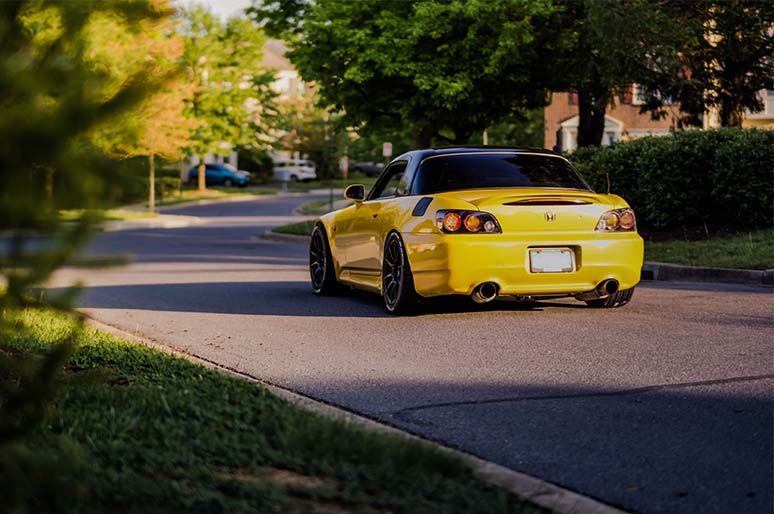
You are running late as you walk out the door with your car keys in hand and there it is. Someone has parked across your driveway and you can't get out.
Or worse, you come home and can't even get in!
We get it. It's an infuriating scenario. But, the good news is you have several options, both for dealing with the situation right now and preventing it from happening again.
Is It Illegal to Block a Driveway?
Yes. Blocking someone's driveway is illegal in virtually every jurisdiction in the United States, UK, Canada, and Australia. It doesn't matter whether the driveway is residential or commercial. Obstructing access to a private property is a parking violation, and the vehicle can be ticketed, fined, or towed at the owner's expense.
In California, for example, it's also illegal to park within 15 feet of a fire station driveway. The rules are in place to allow emergency vehicles to have clear access, and property owners to have a right in entering and exiting their own property.
That said, there's an important distinction. If someone parks on your private driveway, that's trespassing. If they park on the public street in a way that blocks your driveway entrance, that's a parking violation and the police can act.
What Is Considered Blocking a Driveway?
A vehicle is considered blocking a driveway when it's parked in a way that prevents you from driving in or out. That typically means parking directly across the driveway entrance. But in many places, you can also receive a ticket for parking too close to a driveway. Most jurisdictions require at least 5 feet of clearance while some require more.
A few situations that often catch people out:
- Parking partially across a dropped curb counts as a block in most US cities and across the UK
- Parking on the public road directly in front of your garage, even without crossing the curb line, can be ticketable in some areas
- Construction vehicles or delivery trucks that temporarily obstruct access may still be in violation. Roadworks are the exception, not the rule
If you're unsure whether a specific situation counts, your local council or municipal parking authority can clarify. It's worth knowing before you call it in.
7 Ways on How to Stop Someone Parking in Front of Your Driveway
The methods below range from free and immediate to more permanent solutions. Start with whatever matches the frequency and severity of the problem.
1. Talk to the Driver Calmly
If the culprit is a neighbor, a direct conversation is usually the fastest fix. Most people don't realise they've caused a problem. Sometimes, a calm chat resolves it permanently far more often than you'd expect.
Explain that their parked vehicle blocks your access and ask them to use an alternative spot. Avoid accusations or raised voices as you want them to feel like they're doing you a favour, not losing an argument. If you're not confident knocking on the door, a written note delivered personally works too.
2. Leave a Note on the Car
For unknown vehicles or one-off offenders, a note on the windscreen is probably your best line of defence. Skip the insults. A note that clearly states the situation and consequences is far more effective.
Here's a template you can use:
"Your vehicle is blocking access to a private driveway at [your address]. Please move your car immediately. If the vehicle remains, it will be reported to local parking enforcement and may be towed at the owner's expense."
3. Put Up "No Parking" Signs and Traffic Cones
Never underestimate a well-placed sign. "No Parking - Driveway Entrance" signs remove any ambiguity and eliminates the "I didn't know" defence if you escalate to enforcement later.
For the sign to carry weight:
- Position it at eye level, near the entrance to your driveway
- Make sure it's unobstructed and clearly visible from the road
- Include a line about towing consequences: "Violators will be ticketed and towed"
You can find compliant no-parking signs like the one below at most hardware stores or on Amazon for under $20.

Traffic cones offer a physical deterrent for persistent offenders. A few orange cones spaced across the entrance will require the driver to actively remove them before parking, which makes it inconvenient for him/her to do so. Keep them in your boot if you leave regularly so you can set them out on return.
Note: Signs and cones must be placed entirely on private property and must not be placed on the street, curb, sidewalk, or other public right of way.
4. Install a Driveway Security Camera
A visible security camera does two things. It deters people from blocking your driveway in the first place, and it captures footage you can use as evidence if you need to report an illegal parking case.
For driveway coverage, you'll want a camera with wide-angle coverage, clear night vision, and local storage so footage isn't lost if Wi-Fi drops.
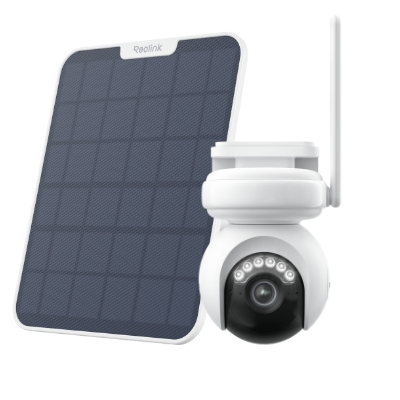
Industry-leading 4K Continuous Recording Battery Camera
4K UHD Continuous Recording; ColorX Night Vision; Pan & Tilt; Automatic Tracking; All Recordings Stored Locally.
The Reolink Altas PT Ultra is purpose-built for this. it records in 4K, has pan-and-tilt capability to track movement across the driveway entrance, and its 20,000 mAh battery supports up to 8 hours of continuous recording per day without needing a power cable run.
Pro Tip: Pair the security camera with a visible sticker labelled "24/7 CCTV in operation" at the driveway entrance to further deter opportunistic drivers.
5. Call a Tow Company
You can call a tow company directly, but whether it's legal to do so depends on where the vehicle is parked. Under Washington State law (used as a general reference for private property towing rules):
- A car illegally parked on residential private property can be towed immediately
- A car blocking a non-residential private driveway with a posted "No Parking" sign can also be towed immediately
- A car blocking a non-residential private driveway without a sign must wait 24 hours before towing
Do note that some towing laws are different across other states. Always verify your specific state statutes or local municipal codes before taking action.
Pro Tip: If the vehicle is on the public road partially blocking your entrance, call the police or parking authority first. They'll ticket the car and from that point, the towing cost which can run to several hundred dollars for impound fees, is entirely on the offending driver. You won't pay a penny.
6. Contact the Police or Local Parking Authority
Who to call depends on where you live. Here's a general rule:
Here's also a list of key details required to ensure the smooth handling of a reported case:
- Vehicle's licence plate
- Vehicle make
- Vehicle model
- Vehicle colour
- Your address
- The exact location of the vehicle
- How long the vehicle has been parked there
Note: If someone is parked on your private driveway (not the public road), you may have grounds to report it as trespassing rather than a parking violation, which carries heavier consequences. Check with local police on the appropriate route.
7. Install a Gate, Chain, or Physical Barrier
For persistent problems, nothing beats a physical barrier. There are three main options depending on your budget and how often you need access:
Gate: The most secure option. Be it an automatic or manual gate with a padlock, it prevents entry entirely. If someone breaks through a locked gate to park on your property, that's considered a break-in, which carries far more serious consequences than a parking violation. Costs vary widely, from around $300 for a basic manual gate to $2,000+ for an automated system.
Chain or rope: A cheaper and surprisingly effective option. Two low posts on either side of the driveway entrance, with a heavy chain or rope strung between them at bumper height physically blocks access without the full cost of a gate. Add on a "No Parking" sign on the chain for maximum clarity.
Bollards: Retractable bollards are popular for commercial properties and wide driveways. Fixed bollards are cheaper and still effective. Either way, they're a visible, professional-looking deterrent.
What NOT to Do if Someone Is Blocking Your Driveway
A few actions that feel satisfying in the moment but will create problems for you:
Don't block them in: Parking behind the offending vehicle traps them. But it may also trap you and in some jurisdictions, it creates a new parking violation on your part.
Don't touch or damage the vehicle: Scratching the paintwork, letting down a tyre, or moving objects around the car can result in criminal damage or civil liability charges. The legal risk isn't worth it.
Don't leave threatening notes: A firm, factual note is fine. Threats can be used against you if the situation escalates to a legal dispute.
Don't confront aggressively: If you find the driver and they become hostile, disengage immediately. Get their licence plate, avoid the driver, and call the authorities. Your safety matters more than winning the argument.
Don't attempt to tow a vehicle yourself: Unauthorized towing can lead to legal complications you may be responsible for.
FAQs
Can I Park an RV, Commercial Vehicle, Boat, Trailer, Motorhome, etc. in Front of My Own Driveway
It depends. In some states, you can park your devices across your own driveway as long as they are less than 20 feet long without blocking the sidewalk or the street.
Below we list some regions you can park in your private driveway.
In some areas, it is against the law to park in front of a private driveway, even if it's your own driveway. Violators can face a $35 fine.
How to report a car blocking my driveway?
Call 311 in most US cities, or your local council parking enforcement team in the UK. Have the vehicle's licence plate, make, model, and your address ready. Some cities, including NYC and Los Angeles have 311 apps that let you submit a photo directly. If the vehicle is on your private property, you can also report it as trespassing.
How long can someone park in front of your house?
On a public street, there's no universal time limit. It varies by local ordinance. Many residential areas (not all) have 72-hour limits before a vehicle can be reported as abandoned. If the parking is blocking your driveway entrance, time limits don't apply. It's immediately reportable regardless of how long the car has been there. Check with your authorities for more information.
Can I park in front of my own driveway?
It depends on the jurisdiction. In some areas, you can park across your own driveway if the vehicle is less than 20 feet long and doesn't block the sidewalk. In others, it's prohibited regardless of whether it's your own property and violators can face fines of $35 or more. Check your local council's rules before assuming it's allowed.
Can I block my own driveway?
It depends on local law. In some jurisdictions, you may block your own driveway under limited conditions. In many others, it is generally illegal to block any driveway, even the one you own. For this reason, installing a gate, chain, or bollards on private property is usually a safer and more reliable solution than parking a vehicle across the entrance.
Conclusion
A blocked driveway is frustrating but you have more options than most people realise. Start with the simplest fix: try to find the driver. If that doesn't work, a combination of a clear note, a call, and some visible deterrents like signs or a security camera resolves the majority of cases.
For persistent problems, physical barriers and a properly marked driveway entrance are your most durable long-term solutions. Last but certainly not least, a driveway camera can add a layer of evidence and deterrence that makes repeat offences far less likely.
Got a tip that worked for you, or a question about your specific situation? Leave it in the comments below.
Search
Subscribe for the Latest Updates
Security insights & offers right into your inbox