
How to Get Rid of Skunks In Your Yard Humanely

The fastest and most humane way to get rid of skunks is to completely cut off their access to food, water, and shelter. Secure your rubbish bins, remove outdoor pet food, and rake up fallen fruit. Once the area is cleared of attractants, use motion-activated deterrents to startle them away and permanently seal off empty den sites under decks or sheds using metal mesh. Because skunks are opportunists, simply removing what attracts them will usually force them to move on. No need for traps or poisons.
The first clue is usually the smell. That sharp, sulfuric waft drifting through an open window at midnight, or the frantic energy of a dog that clearly made the wrong call in the back garden.
If this sounds familiar, you've got a skunk problem, and you're not alone. This guide covers exactly how to get rid of skunks using methods that are effective, low-effort.

How to Tell If You Actually Have Skunks
Before you start setting deterrents, it's worth confirming skunks are the culprit. Several garden visitors leave similar evidence, and misidentifying the pest means wasted effort. Skunks leave a fairly distinctive calling card:
- Small, shallow cone-shaped holes in the lawn, roughly 3–4 inches wide, dug in search of grubs overnight
- A persistent musky odour near a structure, even if no spray event has occurred
- Tipped trash cans or chewed-through bags
- Skunk burrow entrances under decks, sheds, or porches — usually a loosely dug hole about 4 inches across
- Tracks resembling a cat's but with five toes and visible claw marks
Note: an overwatered lawn can actually attract skunks. Wet soil pushes grubs close to the surface, making your yard an easy dinner. If the holes are appearing after irrigation days, that's often the connection.
Why Skunks Are in Your Yard (and What to Fix First)
Skunks don't pick yards randomly. They're looking for three things: food, water, and somewhere dry to sleep. The fastest path to a skunk-free yard is cutting off access to all three, before you try any repellent or deterrent.
Food sources that attract skunks include:
- Unsecured rubbish bins (even the smell through a standard lid is enough)
- Pet food left outside overnight
- Fallen fruit or vegetables from garden beds
- Bird feeders that drop seed onto the ground
- Compost heaps without secure lids
Skunk den sites are usually any low, sheltered space: under a porch, deck, garden shed, or even a woodpile. They don't build from scratch; they move into gaps that already exist.
The key difference between a temporary visitor and a resident skunk is whether they've found a reliable food source and shelter on your property.
Fix those two things and the rest of the deterrents become far more effective.
How to Get Rid of Skunks: 7 Methods That Work
1. Remove food sources (non-negotiable)
This has to come first. Switch to bins with locking lids, bring pet bowls inside before sunset, and rake up fallen fruit regularly. If skunks have a dependable food supply, every other method becomes significantly less effective. This step alone can solve a casual visitor problem within a week.
2. Use scent-based deterrents with realistic expectations

Skunks have an acute sense of smell. While certain scents are unappealing to them, wildlife experts caution that scent repellents generally have mixed results. Mild irritants like citrus peels (orange or lemon) or homemade jalapeño sprays might cause temporary annoyance, but they will rarely override a skunk's drive if there is a reliable food source or a warm den nearby.
However, ammonia-soaked rags are an exception when used correctly for evictions. As detailed by the Humane Sociey of the United States, placing ammonia-soaked rags near (but not blocking) an established den can make the smell intolerable and encourage the skunk to voluntarily vacate.
3. Install motion-activated deterrents

Motion-activated sprinklers are highly effective because they combine a physical startle (the burst of water) with a mechanical sound that skunks learn to associate with the area. A device covering a 30–40 foot arc, set up near likely entry points or den sites, can discourage skunks within a few nights.
Motion sensor lights also help. Skunks are nocturnal and strongly prefer darkness. A 180-degree light that triggers at dusk and covers the area around your deck or rubbish area changes the risk calculation for them. Solar-powered models with red LED 'eyes' are particularly effective, as they mimic the gaze of a nocturnal predator.
4. Use sound to make the area uncomfortable

A battery-powered radio placed near a known den site can encourage skunks to relocate. Tune it to a talk station rather than music: the irregular cadence of human voices signals human presence more effectively. Run it from dusk to midnight, which covers peak skunk activity hours.
Ultrasonic repellers are available but results are genuinely mixed. Some users report good results; others see no change. They're worth trying if you already own one, but probably not worth purchasing specifically for skunks.
5. Fence out new visitors

A mesh fence buried 12 inches into the ground and angled outward at the base (an L-shape footprint) will stop skunks digging under it. PVC garden mesh with small holes works well. This is a longer-term solution and won't help if skunks are already established under a structure, but it's effective for protecting garden beds or specific areas.
6. Keep pets securely away

It is a common misconception that a dog's scent or presence will deter skunks. In reality, dogs do not naturally deter skunks. Instead, their curious nature often provokes them.
According to resources from the ASPCA and wildlife experts at WildCare, dogs tend to ignore a skunk's warning signs like stomping feet or a raised tail. They will frequently rush right up to them, which almost guarantees the dog will get sprayed or, worse, bitten by an animal that is a known rabies vector.
Keep pets safely indoors at night, and always check the yard before letting them out after dusk.
7. Call a wildlife professional (for established dens)

If skunks are already living under your property, DIY deterrents alone are unlikely to evict them, especially if they're raising young (late winter to early spring is breeding season). A licensed wildlife removal professional will inspect the den, use a humane trap with appropriate bait, and can seal entry points after eviction. In many states, trapping and relocating skunks requires a permit, so don't attempt it yourself without checking local regulations first.
How to Get Rid of Skunks Under Your House or Deck
A skunk den under a structure is a different challenge to a yard visitor. Before sealing anything, you need to confirm whether the den is occupied.
The simplest way to check is to loosely fill the entrance hole with leaves, straw, or crumpled newspaper. If a skunk is inside, they'll push through overnight and reopen it. If the plug stays undisturbed for two to three nights, the den is empty and safe to seal permanently.
Pro Tip: In winter, give it longer. Skunks enter a semi-hibernation state and may not emerge for several days at a stretch. To encourage an active den to clear out, try placing ammonia-soaked rags near the entrance to make the smell intolerable for them.
Once you've confirmed it's empty, seal the entrance with quarter-inch hardware cloth or galvanized metal mesh. Bury it 6 to 12 inches below ground and extend it outward in an L-shape to prevent digging underneath. Flat boards or rocks placed against the base of the structure add extra resistance.
If the den is occupied, don't try to seal it with the animal inside. Trapped skunks will spray, damage the structure trying to escape, and potentially die underneath your home. This is the scenario where professional help is genuinely worth the cost.
What Doesn't Work (and Why)
A few popular suggestions circulate online that are either ineffective or outright counterproductive:
- Mothballs: mildly irritating but not a reliable deterrent, and toxic to soil, pets, and wildlife. Not recommended.
- Killing or poisoning skunks: in most regions, killing native wildlife is illegal without a licence. It also doesn't solve the underlying attraction; new skunks will move into the vacated territory within weeks.
- Smoke or flooding dens: causes distress and may drive a skunk to spray inside an enclosed space. Avoid.
Effective skunk deterrence is about changing the reward structure in your yard, not about direct confrontation. That's why the food and shelter steps matter so much.
Know What's Happening in Your Yard

A big part of the skunk frustration is not knowing what you're dealing with until the damage is done or your dog has already had a close encounter.
That's where a well-placed outdoor security camera pays for itself quickly. Reolink's outdoor cameras are designed for exactly this kind of monitoring: accurate motion detection, colour night vision, and wide enough coverage angles to see along fence lines and under-deck entry points.
Rather than discovering skunk activity after the fact, you can confirm what's visiting, when, and from which direction.
Reolink Argus 4 Pro - Best Security Camera for Flexible Placement

4k 180° Wire-free Color Night Vision Camera
4K UHD 180° Blindspot-free View; Color Vision Day and Night; 30% More Battery Life; Dual-band Wi-Fi 6; Smart detection.
Wire-free and fully weatherproof, the Argus 4 Pro records in 4K with colour night vision that picks up clearly even in a completely dark yard. Because it runs on battery or solar power, you can position it wherever skunks are most active, without needing to run cable. Motion alerts hit your phone within seconds, so you know when something's moving before you've stepped outside.
Reolink RLC-810A - Best Security Camera for Fixed Coverage of Entry Points
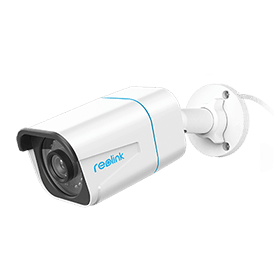
4K PoE IP Camera with Person/Vehicle Detection
Smart Person/Vehicle Alerts; 4K UHD Day; Night; 100ft Night Vision; Time Lapse; IP66 Certified Weatherproof; Audio Recording.
If you know skunks are coming in from a specific direction, the RLC-810A gives you 4K wired coverage with built-in smart detection that can tell the difference between animal and human motion. It works in near-total darkness thanks to infrared and colour LEDs, and the 110-degree field of view covers a full fence line or the front of a deck. Footage is stored locally, so there's no monthly fee.
Reolink cameras are now on sale! Don’t miss the Reolink 17th Anniversary Sale for the best deals!

🎉 Limited-Time Security Camera Prime Deals
- Explore Special Offers on Individual Cameras and Security Systems.
- Protect Your Home for Less with Bundles & Multi-Packs.
FAQs
What is the most effective way to get rid of skunks?
Removing food sources is step one, and it works faster than most people expect. After that, a combination of habitat exclusion (sealing den sites once empty) and humane eviction methods (like ammonia-soaked rags near dens or motion-activated sprinklers) covers most skunk problems. Established dens under structures usually need professional removal.
Will skunks go away on their own?
Sometimes. A skunk that's just passing through and hasn't found reliable food or shelter may move on within a few days. A skunk that has established a den, particularly during breeding season (late winter to early spring), is much less likely to leave without intervention.
Do mothballs keep skunks away?
Not reliably. Mothballs are mildly irritating to skunks but not potent enough to consistently deter them. They're also toxic to pets, wildlife, and soil, so they're not recommended.
Is it legal to trap and relocate skunks?
This varies by state and country. In many US states, trapping and relocating wildlife requires a permit. Even where legal, relocating skunks to unfamiliar territory can be harmful to the animal. Check local wildlife regulations before attempting it, and consider hiring a licensed professional who is already authorised to do so.
Conclusion
Skunks are genuinely mild-mannered animals that spray only as a last resort. Most of the time, they're in your yard because it's offering something they need, and taking away that offering is the fastest route to solving the problem.
Start with food sources and obvious shelter points. Add a humane deterrent or two if visits persist. And if they've already moved in under a structure, check the den before sealing anything and don't rush a confrontation.
A wildlife professional with the right equipment can handle an established den quickly and without anyone getting sprayed. A motion-detecting camera, positioned where skunks are most active, takes the guesswork out of it entirely.
Search
Subscribe for the Latest Updates
Security insights & offers right into your inbox