
Fiber vs Cable Internet: Which is the Best Choice for You?
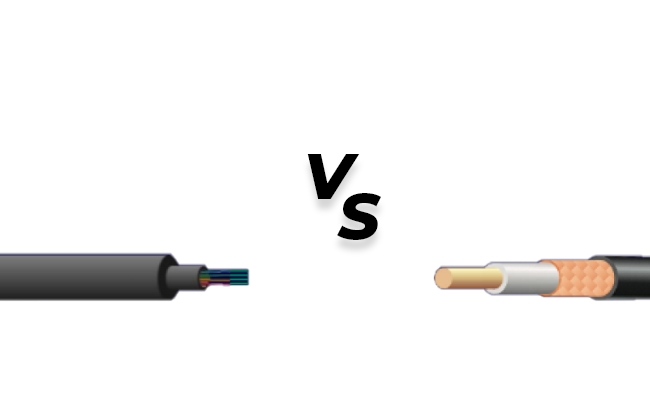
Fiber and cable are two internet connection options that users typically choose when selecting a new connection. However, users often get confused about which one to select.
In this article, we will discuss fiber vs cable internet. We will explain the difference between the two in detail, along with their pros & cons, pricing, and features. It will help you select the right internet connection for your applications.
- What's the Difference Between Fiber and Cable Internet?
- Fiber vs Cable Internet: Quick Comparison Table
- Fiber vs Cable Internet: Pros and Cons of Fiber Internet
- Fiber vs Cable Internet: Pros and Cons of Cable Internet
- Fiber vs Cable Internet: Plans, Price, and Providers
- Bonus: Reliable Network IP Camera recommendation
- FAQs
- Conclusion
What's the Difference Between Fiber and Cable Internet?
The fiber internet uses a fiber optic cable to transmit data. It transmits data as pulses of light through thin strands of glass or plastic. In contrast, cable internet is an old technology and is getting obsolete over time. It uses a coaxial cable, which is the same as the TV cable.
Fiber offers incredible asymmetrical speed, which means equal download and upload speeds for better performance. The data transfer capacity is a lot more than cable internet, and its low latency is ideal for real-time applications. It offers incredible reliability and security.
Cable is slower compared to the fiber internet, but still suitable for most households and everyday applications. It is susceptible to interference, and at longer distances, the speed is affected. It’s widely available and easier to set up, and after all, more affordable than fiber internet.
Fiber vs Cable Internet: Quick Comparison Table
Fiber vs Cable Internet: Pros and Cons of Fiber Internet
Pros of Fiber Internet
- Fiber internet offers blazing-fast speed, which is perfect for high bandwidth applications
- Both upload and download speeds are similar, so users can do anything without any hassle
- Low latency, which is ideal for real-time applications such as streaming and online gaming.
- Minimal congestion and interference to enjoy a smooth performance
- It’s a future-proof option as it can carry a vast amount of data over long distances
- More secure compared to cable internet, as it is difficult to tamper with
Cons of Fiber Internet
- The installation is a bit complex and requires specialized equipment
- The cost of plans is higher
- Fiber optic cables are quite fragile and can be damaged easily
Fiber vs Cable Internet: Pros and Cons of Cable Internet
Pros of Cable Internet
- It is quite affordable and plans often come along with TV bundles
- Easily accessible anywhere, as it uses the existing TV cable network
- The speed is suitable for most household applications
- Extremely easy and quick installation
Cons of Cable Internet
- Asymmetrical speed for upload and download
- Susceptible to interference
- Higher latency, which slows down the real-time applications
- Due to shared bandwidth, it can experience network congestion
Fiber vs Cable Internet: Plans, Price, and Providers
When it comes to pricing, cable internet is much cheaper. The pricing starts at $15 per month with a maximum download speed of 100Mbps. It goes up to $30 to $40 for a 300-400 Mbps connection. In contrast, the price of a 100 Mbps connection costs $20-$ 30 per month. A 500 Mbps connection could be $70 per month. You can also opt for higher plans with speeds exceeding 1Gbps, which cost $100-$ 300 per month.
The plans for cable and fiber internet connections depend on the service providers. Primarily, they offer an attractive package that includes TV, landline, and mobile services. You need to compare the monthly subscription cost, installation cost, data caps, and bundles. You can enjoy more discounts with cumulative packages.
Some major internet cable service providers are Comcast Xfinity, Spectrum, Cox Communications, Mediacom, and WOW! Internet. If you are looking for fiber internet, consider options such as AT&T Fiber, Verizon Fios, Google Fiber, Frontier Fiber, and Lumen Technologies.
Bonus: Reliable Network IP Camera recommendation
Duo 3V PoE
Duo 3V PoE is a 16MP vandal-proof security camera. It is ideal for reliable outdoor security and monitoring. It captures a 180⁰ wider area with exceptional clarity and intricate details. It can even capture license plates of parked cars from up to 16 meters. Even at night, it records videos in vivid colors.
It smartly detects objects without a monthly fee and shares real-time alerts. It automatically tracks the motion of objects and offers smart playback options. It is a tampering- and vandal-proof security camera with IP67 protection, designed to operate in all weather conditions.
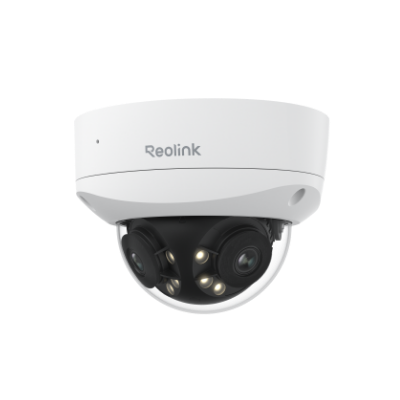
16MP Dual-Lens IK10 Vandal-Proof PoE Camera
16MP Ultra HD, 180° Panorama, Motion Track, IK10 Vandal-Proof, color night vision.
Reolink CX820
Reolink CX820 is a dome PoE security camera for reliable and fast performance. It captures videos in 4K resolution to ensure optimal clarity. It is equipped with HDR technology, which captures vivid colors to bring every scene to life. With the Reolink ColorX technology, it can record colored videos even in the dimmest light conditions.
The camera has a 25fps high frame rate for smooth video playback. It can detect objects and distinguish between persons, pets, and vehicles for accurate alerts. It also features two-way audio for easy communication, as well as double warning and perimeter protection to deter intruders.
FAQs
1. Is fiber internet better?
Yes, fiber internet is better than cable internet in terms of speed, latency, interference, capacity, and reliability. It is an advanced technology with enhanced security and greater future-proofing capabilities.
2. Is switching to fiber worth it?
Yes, switching to fiber is worth it. It enhances the internet experience, even for bandwidth-intensive applications. Its symmetrical upload and download speeds, along with low latency, are suitable for real-time data transfer.
3. Is fiber internet affected by weather?
It is less susceptible to weather-related issues. Fiber cable damage is rare but can happen due to high wind, snow accumulation, moisture ingress, and flooding.
4. Cable vs Fiber Internet: Which Is More Available?
Cable is more available because it uses the same cable as the TV network cable. However, people are switching to fiber over time.
Conclusion
When installing a new internet connection, users must choose between fiber or cable. Both these internet connections have distinct features. Users need to compare these in terms of speed, latency, security, and other factors to select the best one for their needs. We have explained the difference in detail to help you understand what you need and make your selection easier.
Search
Subscribe for the Latest Updates
Security insights & offers right into your inbox