
Can My Neighbor Record Me On My Property - What to Do?
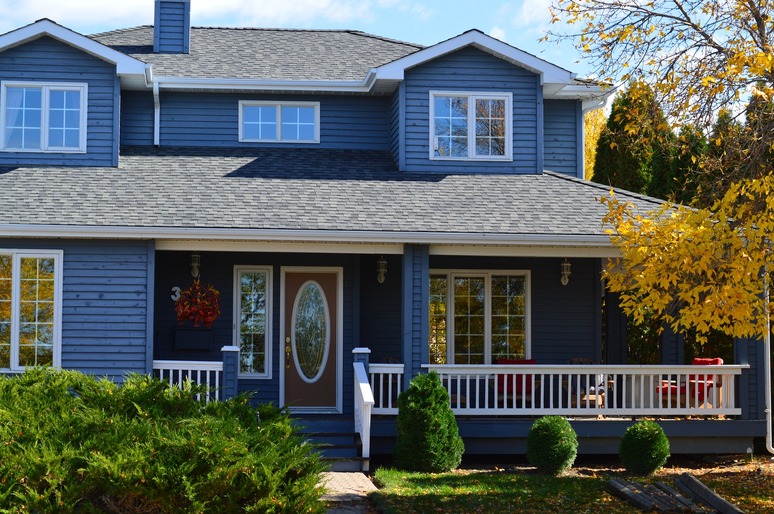
It’s always an unsettling matter when a neighbor’s camera is pointing straight at your property and it immediately raises a question most homeowners haven't thought about until it happens to them: can my neighbor legally record me on my property?
The short answer is: sometimes yes, sometimes no. The line between legal and illegal comes down to where you were standing and what your neighbor did with the footage. This guide breaks down exactly where that line is, what the law says in the US, and what practical steps you can take if a neighbor's camera is crossing it.
- Understanding Reasonable Expectation of Privacy
- When Is It Legal for a Neighbor’s Security Camera to Point at My House?
- When Is It Illegal for a Neighbor’s Security Camera to Point at My House?
- Is It Illegal If My Neighbor's Security Camera Also Records Audio?
- What to Do If Your Neighbor Has a Camera Pointed at Your House
- Bonus Tip: How to Set Up Your Own Security Camera Without Invading Privacy
- FAQs
- Conclusion
Understanding Reasonable Expectation of Privacy
To understand whether your neighbor's camera is pointed at your house legally, you first need to be familiar with one foundational legal concept: reasonable expectation of privacy.
This doctrine originates from the landmark US Supreme Court case Katz v. United States and forms the backbone of how courts assess privacy violations. According to the Cornell Law School Legal Information Institute, the test has two parts:
- The individual has a genuine, personal expectation of privacy in that space.
- Society broadly agrees that this expectation is reasonable.
In other words, if a reasonable person would expect to be unobserved in a given location, they have privacy rights there. If the space is visible to anyone passing by, those rights are weaker.
In practice, this creates two categories:
- Low privacy expectation areas: your front yard, driveway, front porch, and any area visible from the street. Recording here is generally lawful.
- High privacy expectation areas: your bedroom, bathroom, and a fenced or enclosed backyard. Capturing these spaces may constitute an illegal invasion of privacy.
This distinction is the foundation for everything that follows.
When Is It Legal for a Neighbor’s Security Camera to Point at My House?
When cameras capture only publicly visible areas
Your neighbors are generally allowed to install security cameras on and around their home. If those cameras happen to capture areas of your property that are clearly visible from the streets (e.g. your front driveway, front door, or an unfenced yard), this is usually legal in the US.
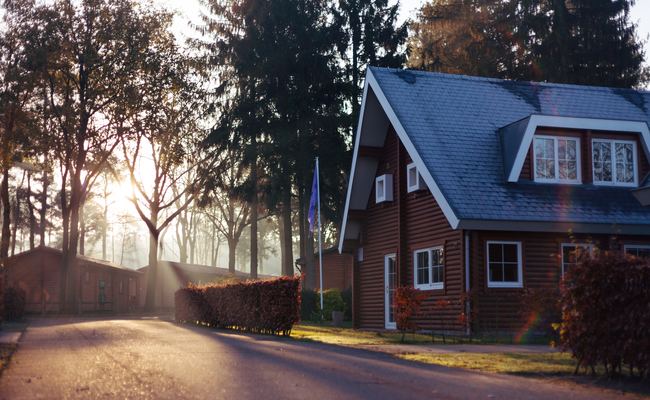
Private individuals may use visible surveillance cameras for security purposes as long as the cameras are not placed in private areas and do not violate state or federal law. In these situations, parts of your property may appear incidentally as background while your neighbor monitors their own property. By itself, this typically does not provide grounds for a complaint.
Pro Tip: If you have some difficult neighbors to handle, it is best to find a mediator to negotiate instead of you.
When the footage is used for lawful purposes
How your neighbor handles the footage matters just as much as where the camera points. If recordings are used solely for security purposes (such as monitoring for package theft or deterring burglars), that use is lawful, even if your property occasionally appears in the footage.
footage may also serve a legitimate purpose when provided to law enforcement as evidence. Security camera recordings have helped solve break-ins, package theft, and property damage in many cases for this reason.
When Is It Illegal for a Neighbor’s Security Camera to Point at My House?
When cameras invade spaces where you expect privacy
Your neighbor's right to record does not extend into your private spaces. If their security cameras are pointed directly at your private spaces where you have a clear expectation of seclusion, a legal line is likely crossed.
Most state laws reflect this. The more targeted and deliberate the surveillance of a private area, the stronger your legal case.
When footage is misused
Even lawfully captured footage can become illegal depending on how it's used. If a neighbor posts recordings of you on social media, shares footage without your consent, or uses it to harass or intimidate you, this shifts the situation from surveillance into harassment, and in many states, stalking.
Intentional misuse of security footage is treated seriously by courts. The key legal test, as noted by legal experts, is whether the recording was intentional and whether a reasonable person would find it offensive or harmful.
When homeowners' association (HOA) rules or local ordinances apply
State law isn't the only framework that governs camera placement. Many homeowners association agreements and local municipal ordinances impose restrictions that go beyond what state law requires, including rules about camera angles, signage, and neighbor notification.
If you live in an HOA community, your CC&Rs (Covenants, Conditions & Restrictions) may give you additional grounds to challenge a neighbor's camera placement even if the state law doesn't. Check your HOA rules and contact your local municipal authority to understand what additional protections apply in your area.
Is It Illegal If My Neighbor's Security Camera Also Records Audio?
Video and audio recording are treated very differently under US law and this is where many people are surprised.
The federal baseline: one-party consent
Under the federal Wiretap Act (18 U.S.C. § 2511), audio recording of a conversation is legal as long as at least one party to that conversation consents. In practice, this means your neighbor can lawfully record a conversation they're participating in. For example, talking to you over the fence, without telling you.
State law adds a second layer
Many states have stricter rules than the federal baseline. They fall into two categories:
If your neighbor's security camera is recording audio of conversations in your backyard without your knowledge and in an all-party consent state, that may consider to be a violation of your state's wiretapping law, regardless of whether the video recording is legal.
Audio recording laws vary significantly by state so be sure to always check your specific state's statutes or consult a local attorney if audio is involved.
What to Do If Your Neighbor Has a Camera Pointed at Your House
If you believe a neighbor's camera is invading your privacy, here's how to handle it effectively.
Step 1: Assess the camera's angle and scope
Before taking any action, be sure to observe where the camera is actually pointed. Is it capturing your front yard visible from the street, or is it aimed into a fenced backyard? Is it a doorbell camera with incidental coverage, or a PTZ camera focused on your property? This determines whether you have a legitimate concern.
Step 2: Document the situation
Take photos or videos showing the camera's position and angle relative to your property. Note the date, time, and what areas appear to be in its field of view. This record becomes important if you need to escalate.
Step 3: Talk to your neighbor amicably first
A calm, direct conversation resolves more disputes than any legal action. You might be surprised but many neighbors genuinely don't realize their camera's field of view extends onto your property. Approach the matter with an open mind, let them know you've noticed the camera and that it appears to point toward an area where you expect privacy, and ask if they'd be willing to adjust the angle.
Step 4: Create physical barriers
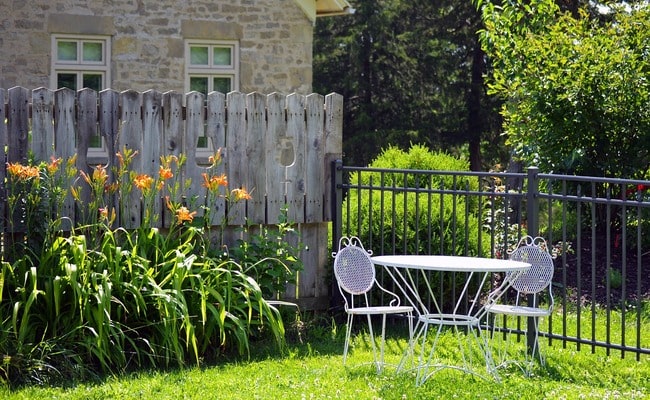
If conversation doesn't resolve it or isn't possible, you can block the camera's view from your own property. This is when physical barriers like privacy fencing, or even a strategically placed garden trellis can obstruct a camera's line of sight without touching or interfering with your neighbor's equipment.
Step 5: Contact your HOA or local authority
If you live in an HOA community, file a formal complaint citing the relevant CC&R provisions. For non-HOA situations, your local code enforcement office or municipal authority may be able to intervene if the camera violates a local ordinance.
Step 6: Consult law enforcement or an attorney
If the camera is clearly targeting a private space, footage has been misused, or your neighbor refuses to cooperate after you've raised the issue formally, contact local police or consult a privacy attorney. In egregious cases where cameras were pointed into bedrooms or footage has been posted online without consent, law enforcement can act quickly.
What not to do: Never attempt to physically block, disable, jam, or damage your neighbor's camera. Even if the camera is pointing somewhere it shouldn't, tampering with it could expose you to criminal charges for vandalism, which can put you in the wrong legally regardless of the original issue.
Bonus Tip: How to Set Up Your Own Security Camera Without Invading Privacy
Understanding your rights as someone being recorded is one thing. If you're also a homeowner with security cameras or planning to install them, here are some ways you can position them responsibly to protect your neighbors' privacy and more importantly, keep you out of legal trouble.
Point security cameras toward your own property, not beyond it
Your camera's field of view should cover only key points of your property. Never point it across a neighbor's yard or aim at their windows. Most modern security cameras allow you to configure the viewing angle to ensure coverage stays on your property.
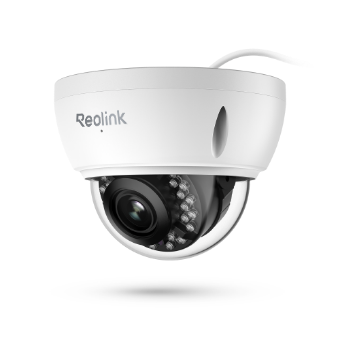
4K PoE IP Camera with Intelligent Detection
4K 8MP Ultra HD, Person/Vehicle Alerts, 5X Optical Zoom, IK10 Vandal Proof, Audio Recording, Live View Anytime, IP66 Certified Weatherproof.
Something like Reolink's RLC-842A is perfect for privacy as its 5x optical zoom lets you physically crop out neighbors’ yards and windows. Pair that with custom privacy masks and a vandal-proof dome design, and you get a discreet camera that stays focused strictly on your property.
Use privacy masking for unavoidable overlap
This can happen but if your camera's field of view unavoidably captures a portion of a neighbor's property (a common situation with wide-angle cameras), use your camera's privacy masking feature to black out that section of the frame.
Pro Tip: Reolink cameras’ privacy masking features support customizable privacy zones, letting you block out specific areas so neighbors' spaces are never recorded.
Disable audio recording unless you need it
Given the stricter laws around audio, if your camera records sound and you're in an all-party consent state, disable audio recording unless you have a specific reason to need it and have checked your state's laws.
Mount cameras in visible locations
Openly mounted cameras are less likely to cause neighbor disputes than hidden ones, and in many states, visible placement reduces legal risk.
FAQs
Can I sue my neighbor for recording me?
You can sue your neighbor for recording you, but only in specific circumstances. You generally have legal grounds if a camera records an area where you have a reasonable expectation of privacy, if audio is captured in violation of your state’s consent laws, or if the footage is misused. Consult a local attorney to evaluate your situation.
Can my neighbor record my backyard?
It depends on how your backyard is set up. If the area is open and visible from public spaces or neighboring properties, recording it may be legal because there is little expectation of privacy in openly visible outdoor areas. But, if your backyard is fully enclosed, a neighbor’s recording may violate privacy laws, especially if the camera is deliberately aimed at the space.
How do I block my neighbor's camera in my yard?
The most effective and legally safe option is to install a physical barrier on your own property, such as a privacy fence. You can also speak with your neighbor and ask them to adjust the camera’s angle. What you should not do is tamper with or disable the camera, as doing so could constitute vandalism.
What are the laws around home cameras?
Federal law on privacy expectations states that it's generally legal to record video in public places. This includes doorbell cameras and security cameras. However, anyone being recorded should not be in a place where they have a reasonable expectation of privacy.
Conclusion
The legality and ethics of your neighbor having security cameras pointed at your house can be a complex issue that depends on local laws, privacy considerations, and the specific circumstances. While it's generally legal for individuals to have surveillance cameras on their property, there are boundaries in terms of invasion of privacy. Respecting the privacy of neighbors is crucial for maintaining a harmonious community.
If you like this article and find it helpful, share it with your friends. Do you have something to say about camera footage? Make sure you leave a comment below!
Search
Subscribe for the Latest Updates
Security insights & offers right into your inbox