
Portable Security Cameras: Compact Solutions for On-the-Go Security
- How Do Portable Security Cameras Work?
- Types of Portable Security Cameras
- What to Look for in a Portable Security Camera
- Best Reolink Portable Security Camera Recommendation
- Where to Use Portable Wireless Security Camera?
- Common Mistakes When Buying a Portable Security Camera
- Buyer Decision Table
- FAQs
- Conclusion
How Do Portable Security Cameras Work?

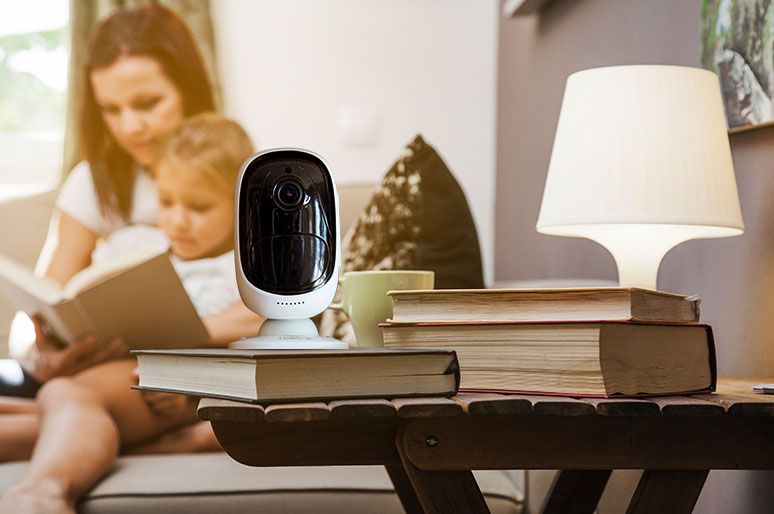
A portable security camera is a small, battery-powered camera you can move between locations without drilling holes or running wires. These are security cameras particularly suitable for a short-term rental, a camera that travels with you between hotel rooms and campsites, or year-round coverage for a vacation home.
Most battery-powered portable security cameras connect over Wi-Fi or a cellular network, so there is no dependency on a fixed power outlet or router. Features like remote viewing, push notifications, and live streaming work the same way they would on a permanently mounted camera. The difference is you can pack a portable model in a bag and set it up again somewhere else in minutes.
Types of Portable Security Cameras
Battery-Powered Cameras

Battery-powered cameras run on a swappable or rechargeable batteries instead of a wired connection, which makes them the easiest type to pick up and move. They come in mainly either a palm-sized magnetic or clip-on form built for frequent repositioning, and larger bracket-mounted units designed to stay in one outdoor spot for longer stretches.
Solar-Assisted Cameras

Solar-assisted cameras pair a battery with a small solar panel. This enables the camera to continue operating unattended in the outdoors without a battery swap or recharge. They suit a fixed outdoor spot with reliable sun exposure more than frequent repositioning.
Cellular (4G/LTE) Cameras

Cellular cameras connect over a mobile network instead of Wi-Fi, so they work in locations with no internet setup at all. These could be places such as campsites, rural properties, or job sites before utilities are connected.
What to Look for in a Portable Security Camera
When selecting a portable security camera, a handful of features matter more than the rest. Here's what to check before buying.
Local Storage Options
Local storage keeps your footage on a microSD card instead of a company's cloud servers, so there is no monthly fee and no third party holding your video.
For the card itself, look for a Class 10 or UHS-1 microSD card built for continuous video, not a standard card meant for photos. A 64GB to 128GB card is usually enough for a few weeks of motion-triggered clips on a single camera before it needs to be cleared or swapped. It's best to size up to 256GB if the camera runs 24/7 or you rarely check the footage. If the camera records around the clock rather than only on motion, look specifically for a card labeled "High Endurance," since standard cards wear out faster under constant write cycles.
Pro tip: A standard photo-rated microSD card will drop frames under constant motion recording. Confirm "Class 10" or "UHS-1" on the packaging before buying.
Flexibility
What makes a security camera "portable" comes down to how it's powered and how it connects, not whether it needs a screwdriver. A battery-powered camera you can unmount and relocate in an afternoon is portable in a way a plug-in camera wired into a wall is not, even if both use a screwed bracket to begin with.
Mounting hardware still varies by model, some can be installed with just a magnetic pad while some might be shipped with a bracket that needs a screwdriver and drywall anchors. even though the camera itself runs on battery or cellular power with no wiring to run.
Cellular (4G/LTE) models take this further by dropping the Wi-Fi requirement entirely. Because they connect over a mobile network instead of a router, you get remote access and alerts even in places with no internet setup at all.
Night Vision
Night vision on a portable CCTV camera generally comes in two types. The first is infrared (IR), which produces black-and-white footage in complete darkness. The second type is color night vision, which uses a more sensitive sensor to show color in low light. Either works for checking on a room or a porch after dark. But, which one matters more depends on whether you need to make out details like clothing color from the footage.
A portable indoor camera with night vision lets you monitor anything without turning on a light or walking in. Mounted outside, the same feature lets you see who or what is approaching a porch or driveway before deciding how to respond.
Waterproof Ratings
For any portable camera you plan to use outside, IP65 is the minimum. IP65 handles dust and everyday rain, enough for most climates as long as it isn't facing months of near-constant downpours. IP66 goes further and holds up through extensive rain and heavy snow, which matters if the camera is staying outside somewhere with a genuinely harsh winter or rainy season.
Portable outdoor security cameras with an IP65 or IP66 rating work for homes and small businesses alike. An indoor-only camera carries neither rating, so it should stay inside regardless of how weatherproof its casing looks. Reolink's IP66 camera guide breaks down which rating fits which installation spot in more detail.
Smartphone App
A portable camera is only as useful as its app, since that's how you'll view live footage, get motion alerts, and adjust settings remotely. Nearly every current model ships with a free companion app, so the real question isn't whether one exists but how reliable and full-featured it is. Confirm it supports both iOS and Android before buying if your household uses a mix of phones.
Best Reolink Portable Security Camera Recommendation
The three picks below cover the situations most portable-camera buyers run into: outdoor use, no internet access, and tight budgets. Each is built specifically for portability rather than adapted from a fixed-mount design.
Best Portable Outdoor Security Camera - Argus 4 Pro

The Argus 4 Pro combines two lenses into one housing for a combined 180-degree field of view, wide enough to cover a full porch or a two-car driveway from a single mounting point instead of needing two cameras. It's also IP66-rated, a step up from the IP65 minimum most battery-powered cameras use. Full-color night vision works without a visible spotlight, so it stays discreet at night. This is the pick if you need the camera to be installed in one general area and Wi-Fi is available.
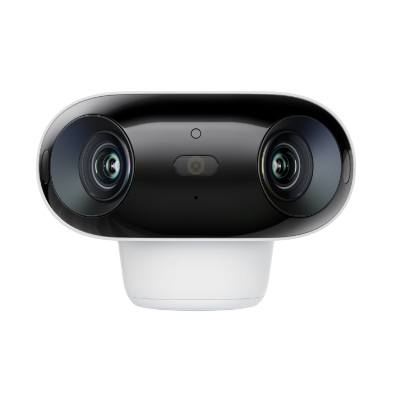
4k 180° Wire-free Color Night Vision Camera
4K UHD 180° Blindspot-free View; Color Vision Day and Night; 30% More Battery Life; Dual-band Wi-Fi 6; Smart detection.
Best Portable Cellular Security Camera - Go Plus
The Go Plus connects over a 4G LTE cellular network instead of Wi-Fi, so it works anywhere there's cell coverage, including campsites, RVs, and trailers with no router in sight. It's a fixed-lens camera rather than pan-tilt, and its 105-degree field of view and IP65 rating make it a straightforward, genuinely weatherproof pick for a spot you're leaving in place without the added cost or moving parts of a pan-tilt mechanism. Like the Argus 4 Pro, it mounts with a screw-in bracket rather than a magnetic or adhesive pad, either to a wall or strapped around a post or tree, so plan for a few minutes with a screwdriver rather than a tool-free setup. This is a great pick for off-grid locations where Wi-Fi isn't an option.
Best Ultra Portable Budget Security Camera - Reolink Argus Magicam

At only 108 grams (half the weight of a smartphone), the Argus MagiCam fits in a palm and attaches with just a magnetic mounting pad. Running on replaceable AA lithium batteries, it can last up to 9 months per set under normal use with its built in Smart power Mode. Plug it into a USB-C power source and it records continuously to a microSD card.


Independent hands-on testing backs this up. Impulse Gamer's review found daytime image clarity "great for the size," no glare even in direct afternoon sun, and motion detection sensitive enough to pick up movement across the street, calling it a strong performer for a camera in this price range.
For frequent travelers or renters with the tightest budget, this is definitely the best pick.
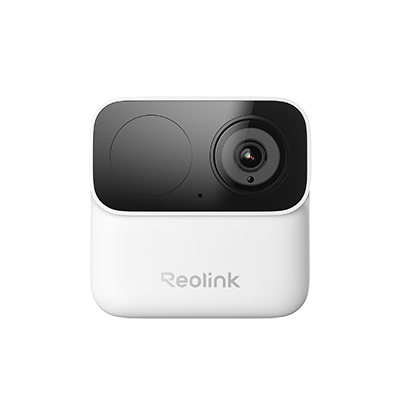
2MP Wireless Power-Efficient Camera
Magnetic Mounting for Easy Installation, Max. 9-Month Battery Life, Dual-Band 2.4/5GHz Wi-Fi, No Monthly Fees.
Where to Use Portable Wireless Security Camera?

A portable wireless security camera earns its keep in places where a wired camera isn't practical.
- Rental properties: Highly suitable for monitoring a unit between tenants or during short-term and vacation rentals.
- Vacation homes: Useful to keep an eye on a second home during the months no one is there.
- Airbnbs and short-term rentals: Check on guest activity and the property itself between bookings.
- Hotel rooms: Can be used as a temporary security camera to watch your belongings while traveling.
- Campsites and RVs: Great for keeping watch over gear and the vehicle's surroundings when campground Wi-Fi signal is bad or non-existent.
- Vehicles: Place one on a dashboard or rear window to capture hit-and-run incidents or break-ins while parked.
Common Mistakes When Buying a Portable Security Camera
Assuming "portable" means weatherproof
Many mini and indoor-oriented portable cameras aren't IP65 or IP66 rated. Check the rating before mounting one outside, on a balcony, or in a car.
Trusting the advertised battery life at face value.
Manufacturer estimates are usually measured at room temperature with limited daily triggers. But, cold weather changes that. Lithium batteries hold up well right at freezing, losing only about 2 to 5 percent of their capacity, but that loss grows to 10 to 20 percent in sustained sub-zero conditions, and compounding factors like more frequent Wi-Fi reconnects widen the gap further in an actual outdoor camera.
Choosing Wi-Fi-only for an off-grid location
Off-grid locations such as campsites or rural farms tend to have unreliable or non-existent Wi-Fi. This is when a cellular (4G/LTE) camera is the only type that will actually record and send alerts.
Ignoring local storage capacity before you need footage
SD cards fill up faster than expected once motion recording is on for a busy driveway or hallway. Check the SD card guidance above before your first trip, not after you need a clip that's already been overwritten.
Assuming AI features and hub compatibility carry over to every power mode
Battery-powered cameras with AI functions generally scale back advanced processing to conserve charge, and many models need an additional hub before they can expose ONVIF or RTSP to third-party software at all. Check how a specific model's features change between battery and plugged-in modes before assuming the spec sheet applies at all times.
Buyer Decision Table
We get that comparing every feature side by side can get overwhelming. This is why we've put together a Buyer Decision Table so you can match your situation to the right type of portable camera without re-reading the whole guide.
Before comparing specific cameras, it's always good to factor in cost of ownership instead of just the sticker price. A camera that relies on cloud storage usually comes with a recurring monthly or annual fee for as long as you use it. However, a camera that records to a local microSD card has no ongoing storage fee at all. The only cost is the card itself. Over a year or two, that difference can add up to more than the price of the camera.
FAQs
How do wireless cameras get power?
Many wireless security cameras run on built-in batteries, which need to be recharged regularly. Some are compatible with solar panels, letting them use solar energy as a backup.
Can you have a security camera without internet or Wi-Fi?
Yes. Some security cameras use a 3G or 4G cellular network for video and data transmission instead of Wi-Fi. These are often portable and flexible in placement, making them useful for locations without a reliable internet connection.
What's the best SD card for a portable security camera?
Look for a Class 10 or UHS-1 microSD card built for continuous video recording, not a standard card meant for photos. A 64GB to 128GB card usually holds a few weeks of motion-triggered clips before it needs to be cleared or swapped.
Can I take a portable security camera with me when I move or travel?
Yes, that's the main advantage over a fixed-mount camera. Since most portable models use a magnetic base, adhesive pad, or simple bracket instead of permanent wiring, you can unmount one and set it up again at a new address or a temporary location in minutes.
How long does a portable security camera's battery last?
Battery life ranges from a few weeks to about 9 months depending on the model, temperature, and how often motion recording is triggered. Cold weather and high-traffic areas both shorten it, so treat the advertised number as a best-case estimate.
Do portable security cameras need a subscription?
No. Many portable security cameras record locally with no monthly fee. Cloud storage is usually offered as an optional add-on, not a requirement.
Conclusion
The right portable security camera comes down to where it needs to work and how long it needs to run without your attention. Match that to the Buyer Decision Table above, and the choice narrows quickly.
For most renters and travelers, a battery-powered mini camera with a magnetic mount covers the majority of situations without drilling a single hole. Off-grid locations call for a cellular model instead, and properties with more than one entry point are better served by a small portable surveillance system than a single camera stretched too thin.
Ready to compare specific models? Browse Reolink's current portable security camera lineup to see specs, pricing, and availability side by side.
Search
Subscribe for the Latest Updates
Security insights & offers right into your inbox