
Best Places to Live in the US in 2026, Ranked by Safety

Most people spend months researching a move. They compare school ratings, map commute times, run cost-of-living calculations. Then they arrive at their new front door with boxes stacked to the ceiling and exactly zero security in place.
The best places to live in the US in 2026 share a few things: strong job markets, reasonable housing value, and low crime rates that hold up at the neighborhood level, not just the city average. Carmel, Indiana tops nearly every credible ranking this year, but the right pick depends heavily on which part of the country works for your situation.
This guide covers both sides of the equation. The seven cities below are curated from US News' 2026-2027 rankings, WalletHub's 2026 family city data, and FBI's First Look: 2025 Crime Data.
What Makes a City One of the Best Places to Live in 2026?
Our team at Reolink has given some deep thoughts to this topic and we've come to agreed that the best livable cities have to score well on four things:
- job stability
- Housing value relative to income
- School quality
- Neighborhood safety.
Safety is the one that consistently gets underweighted, but it's almost always the deciding factor for families making the final call.
The national picture is genuinely encouraging. The FBI's First Look: 2025 Crime Data shows residential burglaries fell 17% year-on-year and are down 47% compared to pre-pandemic 2019 levels. Violent crime saw its largest single-year decline since 1937. But, national trends don't protect you if you land in the wrong ZIP code in an otherwise well-ranked city.
Thing is, a city's overall crime rate reflects the whole city, including commercial corridors and higher-density areas that have nothing to do with the residential block you're moving to. The seven cities we have shortlisted have not just good averages, but consistently low variance across residential neighborhoods, which is what actually matters when you're choosing a street to live on.
Best Places to Live in the US for 2026
Each city has a distinct profile. The right choice depends on your budget, job situation, and preferred region; read each one on its own terms rather than defaulting to the top of the list.
Carmel, Indiana: Best Overall. Safest Big City in the Midwest

"Carmel, IN" by Rob Slaven is licensed under CC BY 2.0 / Resized from original.
Carmel holds the top spot in US News's 2026-2027 Best Places to Live rankings, and its safety record is a big part of why. MoneyGeek's 2026 analysis puts the estimated annual crime cost per resident at approximately $64, among the lowest of any city its size in the country.
Beyond the numbers, Carmel has a strong local identity: an arts district, award-winning public schools, and a job market with genuine depth from Indianapolis's expanding tech and healthcare sectors. Its low-density suburban layout (population around 100,000) keeps neighborhood-level crime variance unusually small. Families relocating from Chicago or Indianapolis get real space and real safety without giving up career optionality.
The honest trade-off? Walkability is limited. You need a car for almost everything.
Irvine, California: Safest Large City in the Western US

"Fountain of South Lake at Irvine, California" by Dora is licensed under CC BY-SA 4.0 / Resized from original.
Irvine holds the second-lowest violent crime rate per capita among large US cities according to WalletHub. What makes that figure meaningful is the context. Irvine is a major metropolitan hub, home to UC Irvine and a dense cluster of Fortune 500 regional offices in one of the country's most active tech and biotech corridors.
The city was master-planned from the ground up, which means commercial corridors, residential streets, and parks are deliberately separated. That design keeps property crime concentrated away from homes. Median home values sit above $1M, so this is primarily a city for dual-income households or buyers with existing equity.
Naperville, Illinois: Best for Midwest Families

"Naperville IL Skyline 2022" is licensed under CC BY-SA 4.0 / Resized from original.
Naperville is where Chicago-area families go when they want the metro's job market without its crime rates. It sits 30 miles from downtown, well below the national average for property crime, and has active neighborhood watch programs across most residential areas.
DuPage County is Illinois's second-largest job center, which means the commute case holds even for people who don't need to go into Chicago itself. Top-rated public schools, low crime, and a strong community feel give it a consistent top-ten placement in national family city rankings.
Johns Creek, Georgia: Lowest Crime Rate in the South

"Perimeter Church, Johns Creek, GA Oct 2017 3" by Thomson200 is licensed under CC0 1.0 (Public Domain) / Resized from original.
Johns Creek consistently ranks no.1 nationally for low crime among suburban Atlanta cities, with a median household income of approximately $165,000. It's the kind of city that looks almost too good on paper.
Access to Hartsfield-Jackson airport and Atlanta's growing tech scene makes it viable for in-office and remote workers alike. Diverse community, strong schools, and genuine affordability relative to coastal cities with comparable safety profiles. For families who want to land in the Southeast with confidence, this is a serious option.
Overland Park, Kansas: Best Midwest Value

"Aerial View of Oak Park Mall" by City of Overland Park is licensed under CC BY 2.0 / Resized from original.
Overland Park doesn't generate the press coverage it deserves. Wallethub puts it at no.2 nationally for family living, driven by 3.2% unemployment and a median family income near $135,000 (cost-adjusted). Property crime rates are among the lowest for any US city over 100,000 residents.
Housing is genuinely affordable by national standards: buyers get more space per dollar here than in almost any comparably safe city on this list. Growing financial services and healthcare sectors mean the job market isn't dependent on any single industry. A reliable, underrated pick.
Cary, North Carolina: Fastest-Growing Safe City in the Southeast
 "Cary Arts Center" by Pithon314 is licensed under CC BY-SA 4.0 / Resized from original.
Cary sits inside the Research Triangle (the Raleigh-Durham metro anchored by SAS, Cisco, and a dense biotech and university research cluster). North Carolina saw some of the highest population inflows in 2024-2025 according to US Census data, and Cary captures a disproportionate share because its residential infrastructure has kept pace with the growth.
Crime has remained low despite rapid expansion, which tends to not be the case for fast-growing cities. New school construction, planned suburban development, and deliberate city planning have kept the livability story intact as the population has climbed.
Fremont, California: Highest Income, Lowest Poverty Rate on the List
 "Mission Peak over Lake Elizabeth, in Fremont, California" is licensed under CC BY-SA 3.0 / Resized from original.
Fremont tops WalletHub's ranking as the best city in America to raise a family. The headline figures are striking: Median family income over $137,000 adjusted for Bay Area cost of living, second-lowest share of families in poverty nationally.
East Bay job opportunities are highly prospective. Tesla's Gigafactory is here, and the tech corridor runs from Fremont north through Oakland and Berkeley. Lower profile than Palo Alto or San Jose, but consistently safer and more stable for families. The downside is Bay Area housing cost. Entry-level buyers will struggle. It's more of a place suited for people with equity from a previous property.
What a City's Safety Ranking Doesn't Actually Tell You
City-wide crime averages can make a neighborhood look far safer than the specific street you're about to move to.
Crime data is reported at the city level but crime happens more often at the street level. Even Irvine, which holds the second-lowest violent crime rate among large US cities, has pockets of higher property crime concentrated near commercial corridors. The city average obscures that.
Pro Tip: Before committing to reside in a specific address, use neighborhood-level crime tracking tools to research on crime stats. CrimeMapping.com and your local police department's public crime portal are both free and more granular than any ranked list.
Timing adds another layer. Most residential burglaries happen on weekdays during hours when neighborhoods are quiet. The first two weeks in a new home are the riskiest, not because the neighborhood is dangerous but because your security is at zero.
Visit the specific neighborhood before you commit. Walk around on a weekday afternoon. Come back on a weekend evening. Check the local Nextdoor group or community Facebook page. The National Crime Prevention Council also has solid neighborhood assessment guidance, but a 20-minute walk should be able to tell you things statistics never will.
How to Secure Your Home the Week You Move In
The single most important step is changing the locks on day one.
Prior owners, previous tenants, contractors who worked on the property, and real estate agents from the sale may all have keys you'll never account for, which puts your home at risk for intrusion. Rekeying costs $50-$100 per lock and takes under an hour. If required, a locksmith can handle the whole house in a morning.
Once the locks are sorted, work through the rest of the first week with these priorities:
Lighting deterrence - Opportunistic burglars look for dark, unmonitored entry points. A motion sensor light can often stop them before it becomes an attempt. These are essential cheap and effective solutions and that should at least be installed at the front door and back entrance.
Pro Tip: Consider a floodlight camera if you are looking for a surveillance solution with lighting deterrence functions. Reolink does provide some floodlight cameras that have been well-received among many American households.
Map before you buy. Walk your exterior and count the entry points. The front door accounts for 34% of residential burglary entry points; the back door for 22%. The number of entry points should give you an idea of where to consider installing security cameras.
Get one camera up before your first night. You don't need a full system on day one. A single 4K camera with real-time alerts at your front door is both a deterrent and an evidence source. Work outward from there.
Meet your immediate neighbors early. People who recognize you are more likely to notice and report anything unusual around your property. It's one of the most effective passive security measures that costs nothing.
For a full moving-in security checklist, Reolink's guide to safety tips when moving into a new home covers the practical details in depth. The complete home security setup guide is worth bookmarking once you're settled.
Reolink Security Cameras That Work in Any New Home
The camera you choose should match your timeline as much as your budget. New movers often want something fast to set up and easy to take when they eventually move again. Homeowners who are settling in for the long term want something that handles itself for months at a time. Two Reolink cameras serve these scenarios distinctly.
Reolink Argus 4 Pro: Best for Quick Setup and Flexible Placement

The Reolink Argus 4 Pro is the right pick for new movers who want outdoor coverage up on day one without any cable work. Battery-powered and Wi-Fi 6 connected, the only installation job is drilling the mounting bracket to the wall surface and adding it to your network.
It shoots 4K (5120x1440 / 8MP) with a 180° field of view via dual-lens stitching. One camera covers the full width of a front door approach or driveway without needing to pan.
Its ColorX night vision uses an F/1.0 super aperture and 1/1.8" CMOS sensor to capture full-color footage in low light without the need for a spotlight. It is also IP66-rated for outdoor use in any weather and can take up to 512GB worth of local storage. The best part? There's no subscription needed for live view, motion alerts, or playback.
There's also Smart Detection. You can set custom alerts for people, vehicles, or animals to prevent false alarms. If you have a Google Home, it can be a part of your smart home ecosystem too.
There's something to take note though. The battery is not removable, so when it needs recharging you'll need to bring the unit down from its mount. To avoid that, you can pair it with the Reolink Solar Panel to get it powered by solar power instead.
The mounting bracket also requires drilling into the wall surface. Renters should confirm with their landlord before installing on exterior walls.
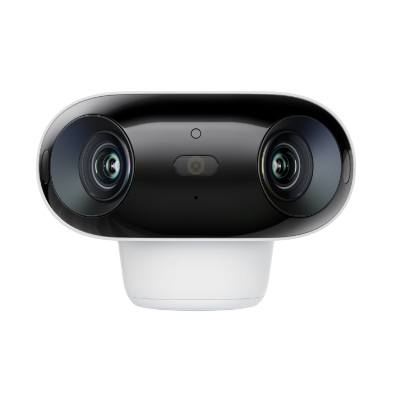
4k 180° Wire-free Color Night Vision Camera
4K UHD 180° Blindspot-free View; Color Vision Day and Night; 30% More Battery Life; Dual-band Wi-Fi 6; Smart detection.
Reolink Altas PT Ultra: Best for Homeowners Setting Up Long-Term

The Reolink Altas PT Ultra is built for homeowners who want to install once and not think about their camera again for over a year. The 20,000mAh battery lasts up to 500 days in PIR trigger mode, based on 300 seconds of recording per day. That works out to roughly 16 months on a single charge for most households.
4K resolution, 355° pan with 90° tilt, and auto-tracking mean it covers whatever moves in its range and stays on it.
A standout feature is pre-recording. The Altas PT Ultra captures up to 10 seconds of footage before a motion trigger fires. So when you get an alert, you see what happened leading up to the event, not just after it. There's also ColorX night vision and IP65 weatherproofing which makes it suitable for the outdoors. You can choose to store your videos in local storage via microSD or Reolink's very own Home Hub if you intend to install multiple cameras in your home.
At 853g with a pan-and-tilt motor, it's heavier and bulkier than a fixed camera. For a driveway post or backyard corner where you want wide-area coverage and don't need something discreet, the size isn't a drawback. For above a front door where you want something lower-profile, the Argus 4 Pro fits better.
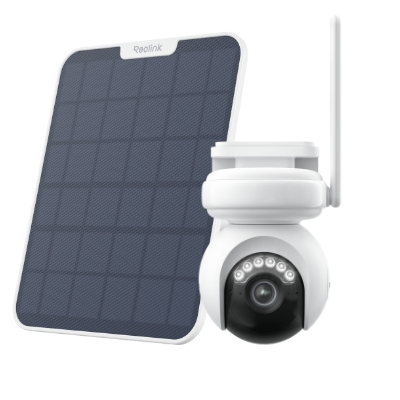
Industry-Leading 4K Continuous Recording Battery Camera
- True 4K UHD continuous recording
- ColorX night vision with 360° pan & tilt coverage
Pro Tip: Browse the full battery security cameras range if you are looking for something more portable.
FAQs
Where is the best place to live in the US right now?
Carmel, Indiana tops the list for overall quality of life, job market stability, and value. For families who weight safety as the primary factor, Irvine, California holds the second-lowest violent crime rate per capita among large US cities. Budget shapes the answer significantly: Overland Park, Kansas and Naperville, Illinois deliver comparable safety at Midwest pricing, while Cary, North Carolina and Johns Creek, Georgia offer the Southeast's job growth story with low crime rates.
What is the safest big city to live in the US?
Irvine, California is consistently one of the safest large US cities, with a violent crime rate well below the national average. Among all US cities regardless of size, Carmel, Indiana posts an estimated annual crime cost of around $186 per resident (MoneyGeek 2026). Nationally, residential burglaries fell 17% in 2025 versus 2024 according to FBI's 2025 Crime Data. Those averages apply at the city level. The specific neighborhood you move to matters more than the city's headline number.
Should I check crime rates before moving to a new city?
Check at the neighborhood level, not just the city level. CrimeMapping.com and local police department public portals give you granular data for specific ZIP codes before you sign anything. Focus on property crime rates specifically: burglary, larceny, and motor vehicle theft affect residents more directly day-to-day than violent crime statistics do. Cross-reference with platforms like Nextdoor for recent firsthand accounts that published data can't capture.
What is the best security camera for a rental or apartment?
The Reolink Argus 4 Pro suits renters well: battery-powered with no cable routing, 4K resolution and a 180° field of view, IP66-rated, and it travels with you when you move. No subscription is required for motion alerts, live view, or local recording. The mounting bracket does require drilling for outdoor installation, so confirm with your landlord before installing on exterior walls.
How do I make my new home safe when I first move in?
Change the locks on day one. Prior owners and contractors may still have copies. Get motion-activated lighting up at your main entry points within the first few days. Install at least one outdoor security camera at the front door before your first night, and introduce yourself to your immediate neighbors early in the process. For a complete walkthrough, Reolink's moving-in safety guide covers each step in practical detail.
Conclusion
Choosing where to live is the research-heavy part of a move and this is why we developed this guide in the first place. We hope you feel more at ease after reading our guide and learnt about the importance of security no matter how great a city is. Be sure to leave down any comments below if you have any questions about our security cameras. We'll be more than happy to help.
Search
Subscribe for the Latest Updates
Security insights & offers right into your inbox