
Is 300 Mbps Fast? What You Need to Know
When most individuals look at a plan with a 300 Mbps advert, they would ask themselves, Is 300 Mbps internet fast? The question is important when you compare the offers of internet providers, build a new home network, or attempt to resolve slow Wi-Fi.
This article presents clear answers. By the end of this reading, you will understand what a 300 Mbps internet speed is, how it is applied in practice, what can make it slow, and what the difference between it and 100 Mbps and 500 Mbps plans is.
What Is 300 Mbps Internet?
The companies that provide internet services calculate their speed in megabits per second (Mbps). A megabit is one million bits of information; a bit is the smallest information that computers can send and receive. A 300 Mbps plan is able to transfer as many as 300 million bits per second. That rate nearly always means download speed, since most home plans provide slower upload speed. An example would be a cable plan would have 300 Mbps down and 25 Mbps up, and a fiber plan would have 300 Mbps in both directions.
Is 300 Mbps Fast?
Yes. Put simply, 300 Mbps is fast enough in terms of most homes and small offices. It enables multiple individuals to stream, play games, update, backup images, and run smart gadgets simultaneously. You may stream a 4K film, and someone will participate in a video chat, and another one will update a game. There should be no slowdown on your part in case your home network is configured properly.
How Fast Is 300 Mbps Internet?
First you need to understand the basics, and for that, convert the megabits to megabytes. Eight bits constitute one byte. By dividing 300 by 8, you get 37.5 MB (megabytes) per second. That is the maximum download speed under perfect circumstances.
The following are simple examples that retain the numbers used previously:
- An update of about 1 GB (approximately 1,024 MB) might take approximately half a minute.
- A high-definition movie of 5 GB could take approximately 2 minutes and 15 seconds to download.
- An average game of 50 GB may take approximately 22 minutes.
Actual speed tends to be lower due to a Wi-Fi loss, server capacity, or network congestion. 300 Mbps would be fast enough to perform most tasks, even at half speed.
Where to Use 300 Mbps?
The 300 Mbps plan is suitable for a busy household and small offices. Before getting to use cases, it is important to remember that even though all of them are still responding to the fundamental question, Is 300 Mbps internet fast? The response remains positive, but the form of fast varies with the task.
Gaming
Is 300 Mbps good for gaming? Yes. Online games are more interested in low delay (ping) than out-and-out speed, but you still have to download patches, voice-chat, or stream your play. A 300 Mbps connection is used to cover real-time data of shooters, sports, or role-playing games, and other devices remain active. Cloud gaming is also quite good: it plays 1080p or even 4K video without stuttering. Hook up the router to the plug consoles or PCs by cable to maintain the lag low.
Streaming
A lot of families consider the video quality as a criterion of the speed. Is 300 Mbps fast enough for Netflix? Absolutely. Netflix claims that a single stream in 4K requires 25 Mbps. You would have to watch over ten 4K movies simultaneously before you fill up a 300 Mbps line. YouTube, Disney+, and others require an equal or lower speed. Even 8K streams, which require 80100 Mbps each, can be streamed provided that you do not stream many simultaneously. Rewinding, fast-forwarding, or pausing is immediate, since buffers are quick to fill.
Video conferencing
Smooth video calls help work, school, and family chats. Zoom, Teams, and Google Meet often use 1–3 Mbps for standard video and up to 6 Mbps for high-def. With 300 Mbps, you can host or join many calls, share screens, and back up files while someone else streams a show. Frozen faces or audio drops, common on slow lines, disappear.
Remote work
Fluid video calls assist in working, school, and family conversations. Standard video in Zoom, Teams, and Google Meet may be between 1 and 3 Mbps, with high-def going up to 6 Mbps. At 300 Mbps, you can host or attend numerous calls, share screens, and back up files as another person watches a program. Frozen faces or disconnection of audio, which usually occurs on slow lines, are gone.
Smart home devices
Smart homes incorporate cameras, TVs, speakers, doorbells, thermostats, lights, and many more. 4K security cameras can require 15 Mbps of consistent upload to the cloud per camera. Seven-fifty Mbps upstream could be used by five cameras. Even a 300 Mbps connection does not exclude streams, game downloads, or voice assistants. It is a network that keeps everything online without bandwidth battles.
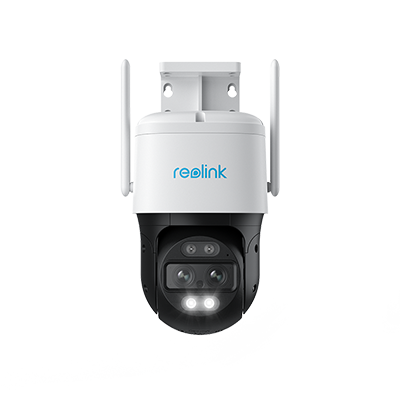
4K Dual-Lens PTZ Camera with Motion Tracking
4K 8MP UHD, Wide-Angle & Telephoto Lenses, Pan-Tilt-Zoom, Auto-Tracking, Person/Vehicle Detection, 2.4/5 GHz Dual-Band WiFi, Two-Way Audio.
What Affects 300 Mbps Speed?
Even if your provider sends a strong 300 Mbps signal to the modem, the real speed can drop inside the home. Watch these common factors.
- Router quality: A new router that supports Wi-Fi 5 or Wi-Fi 6 can pass close to the full 300 Mbps to devices. Old routers may top out far lower and drop connections when many devices join.
- Distance from the router: Wi-Fi fades with distance and walls. A phone across the house might see only a slice of 300 Mbps. A mesh system or wired link helps.
- Number of connected devices: Each laptop, console, camera, and speaker asks for bandwidth. Ten active devices split the speed ten ways. Quality-of-Service rules or a bigger plan can give balance.
- Network congestion: At busy hours, the provider’s lines serve many homes. Speeds fall during evening streaming time. Fiber, which has more capacity or a different provider, may ease the load.
300 Mbps vs. 100 Mbps vs. 500 Mbps: Which Is Better?
A 100 Mbps plan suits one or two light users. A 300 Mbps plan meets the needs of most families. A 500 Mbps plan serves larger households or serious data tasks. If price is close and you expect to add devices, 500 Mbps provides headroom. Yet for countless homes, 300 Mbps offers the best mix of value and speed.
FAQs
Is 300 Mbps enough internet speed?
Yes, to most users. With 300 Mbps, it is possible to stream 4K, play games online, make work calls, and use smart devices simultaneously. Faster tiers should only be eyed by households with extreme needs, such as daily 8K streams or massive uploads.
Is 300 Mbps good for a 2-person household?
It is more than good. Two individuals are able to watch Ultra HD, make calls, and download large files simultaneously without delay. There is room in the plan to accommodate phones, tablets, and gadgets.
Do I really need 500 Mbps internet?
Maybe not. Consider what you have to do. When you back up terabytes, operate a small studio out of the house, or share the line with a lot of heavy users, 500 Mbps comes in handy. Assuming you mostly stream, browse, and game, 300 Mbps is likely to remain a smooth experience and save you money.
Is 300 Mbps faster than 5G?
It may or may not be. Home 5G service covers up to 100 Mbps and more than 1 Gbps, depending on the carrier and signal. Fixed 300 Mbps cable or fiber prevails over average 5G speed in some regions, and vice versa. Before you make the choice, test real speed where you live.
Conclusion
Is an internet speed of 300 Mbps fast? Certainly in the majority of households and small offices. With a 300 Mbps internet speed, one can use the internet to play games, stream 4K videos, work remotely, and have a smart home. Real speed is still a product of the quality of routers, distance, devices, and congestion. Comparing 100 Mbps, 300 Mbps, and 500 Mbps, choose a tier for your users, devices, and budget.
Now you know the truth, so share with us your experience of having 300 Mbps service in the comments and give other people a chance to make their choice.
Search
Subscribe for the Latest Updates
Security insights & offers right into your inbox